

Fitness equipment tariffs now sit at the top of the industry’s concern list for the first time on record, and the response from the companies that build and distribute the machines has been to change almost nothing. The Sports & Fitness Industry Association’s 2026 State of the Industry Report, released in May, found tariffs displacing inflation and slowing consumer spending as the sector’s leading worry — while 69 percent of companies reported no change at all to their sourcing strategies.
- What the SFIA data says about fitness equipment tariffs
- The equipment dollar moved back onto the gym floor
- Fitness equipment tariffs became a cost problem, not a sourcing problem
- Growth without profit is the squeeze your supplier is carrying
- Record participation is the demand side of the same story
- What fitness equipment tariffs change on your next quote
- Before your next purchase order
- Questions operators are asking
- Should I delay buying until tariffs settle?
- Are domestic-built machines a way around this?
- How much price movement should I actually budget for?
- Does the home-equipment decline affect commercial buyers?
- Reading the cycle you are buying in
That combination is the story worth an operator’s attention. A cost pressure serious enough to top the list, met with near-total continuity in supply chains, resolves into one practical fact for anyone specifying equipment this quarter: the pressure is arriving as price, not as delay.
What the SFIA data says about fitness equipment tariffs
Three releases from the association this year sketch the shape of it. The 2026 Manufacturers’ Sales by Category Report, published in March, put wholesale sporting goods sales at roughly $130 billion for 2025 — up 3.7 percent year over year and 34.7 percent since 2020. The State of the Industry Report followed in May with 3.4 percent sector growth for the year and tariffs named as the leading concern. Mid-year participation data released in August put sports and fitness participation at 81.3 percent of Americans aged six and older, a record.
Read together, those three numbers describe a market with strong demand, growing revenue, and a cost base under pressure. Fitness equipment tariffs are the named source of that pressure, and suppliers are absorbing or passing it through rather than engineering it away.
The equipment dollar moved back onto the gym floor
The finding most directly relevant to operators sits inside the manufacturers’ sales data. SFIA reports that institutional fitness equipment — the machines bought by gyms, health clubs and commercial facilities — showed broad-based growth, while consumer and home fitness equipment segments declined.
That is a category-level reversal of the pattern that defined 2020 and 2021. Americans are not training less; the association’s wholesale sales data indicates they are increasingly doing it somewhere other than a spare bedroom. “The sporting goods industry continues to demonstrate both resilience and long-term growth potential,” said Alex Kerman, SFIA’s Senior Director and Head of Research.
For a studio or gym owner, that is the demand-side argument for capital expenditure that has been difficult to make since 2021 — arriving in the same year fitness equipment tariffs are reshaping what that expenditure costs.
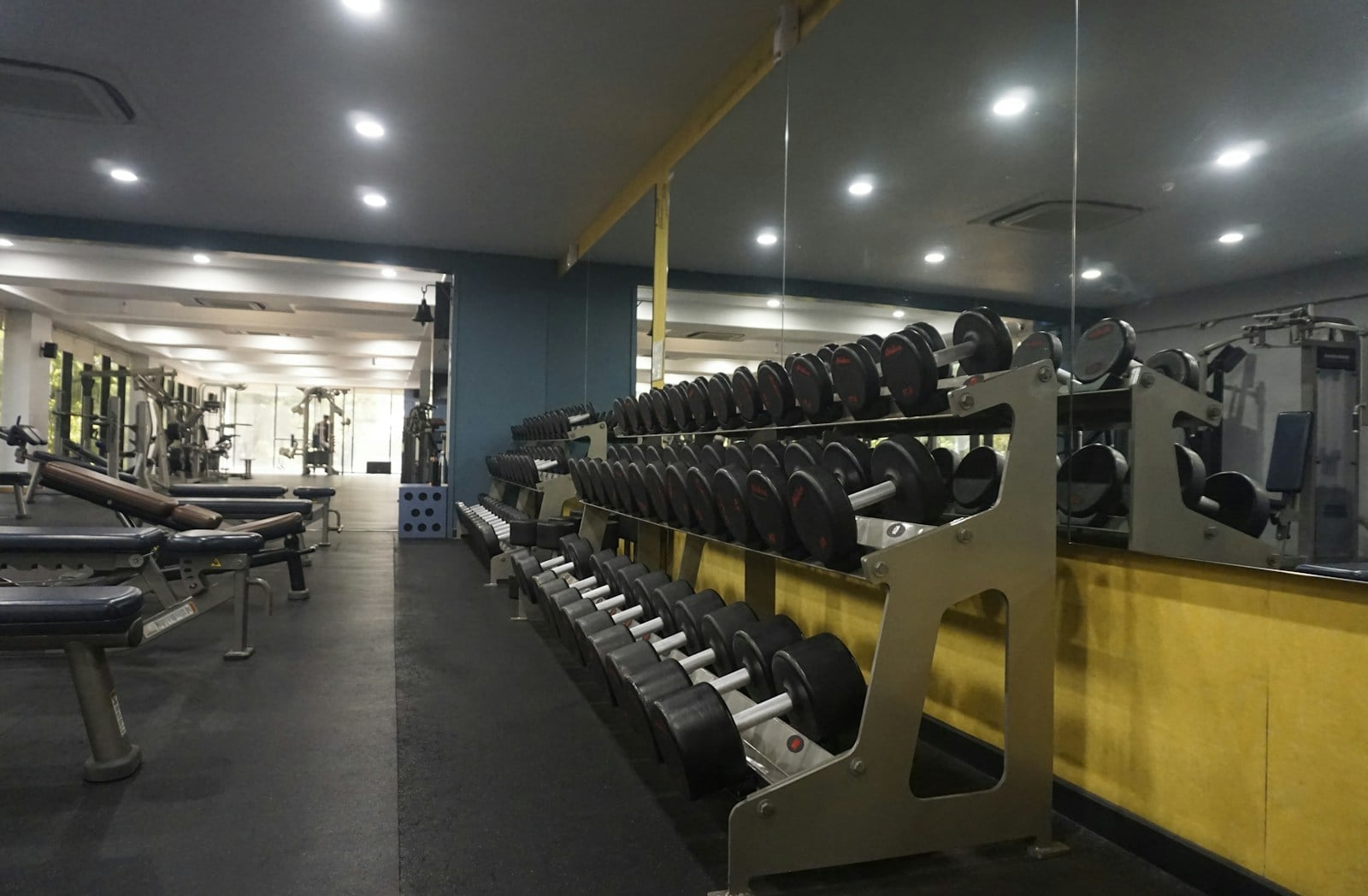
Fitness equipment tariffs became a cost problem, not a sourcing problem
The instinctive reading of a tariff story is that supply chains move. This one says they did not. Alongside the 69 percent reporting no sourcing change, SFIA found 15.5 percent of companies planning to increase manufacturing in the United States — a figure the association notes has declined over time, and which now matches the share planning to source more offshore.
Those two numbers cancel out. In aggregate, the industry is not re-shoring and it is not fleeing further offshore either. It is holding position and handling the cost inside existing systems, which in practice means absorbing margin or raising prices.
For a buyer, that removes a hope worth removing. Waiting out fitness equipment tariffs in expectation that a domestic alternative will appear at a comparable price is not a plan the sector’s own behaviour supports.
Growth without profit is the squeeze your supplier is carrying
One figure explains the negotiating posture you are likely to meet this year. SFIA found the industry grew 3.4 percent in 2025, but only 42.1 percent of companies reported increased profitability.
Revenue up, profit flat or down across a majority of the sector — the arithmetic of fitness equipment tariffs landing on a cost base that cannot fully re-price. That is the signature of costs moving faster than prices, and it tells you where the give is. A supplier in that position has limited room on headline price and considerably more room on terms — response windows, parts stocking, extended labour coverage, training days, freight handling.
Trade for the things that cost them capacity rather than margin. Our breakdown of what a service agreement is actually worth covers which of those terms carry real money.
Record participation is the demand side of the same story
The August mid-year data put participation at 81.3 percent of Americans aged six and older, with team sports growing fastest at 3.8 percent. Participation has now risen for several consecutive years.
Utilization assumptions built on a growing participant base are defensible in a way they were not two years ago. That matters when a purchase has to be justified: the denominator in your equipment ROI case is not shrinking, which means the argument can rest on throughput rather than on hope.
What fitness equipment tariffs change on your next quote
Each finding has an operational consequence. This is the translation.
| Finding | SFIA source | What it changes on your quote |
|---|---|---|
| Tariffs are the sector’s top concern | 2026 State of the Industry | Expect price movement between quote and purchase order. Get a written validity window. |
| 69% report no sourcing change | 2026 State of the Industry | Lead times are unlikely to improve. Plan from quoted dates, not hoped-for ones. |
| 15.5% plan more US manufacturing | 2026 State of the Industry | A “domestic supply” claim deserves a direct question about the factory, not an assumption. |
| Only 42.1% grew profit in 2025 | 2026 State of the Industry | Discount depth is limited. Trade for service terms rather than headline price. |
| Institutional equipment growing, home declining | 2026 Manufacturers’ Sales | Commercial allocation is competitive. Order earlier in the replacement cycle. |
| Wholesale sales near $130B, up 3.7% | 2026 Manufacturers’ Sales | Suppliers have volume. They are less likely to chase a marginal order on price alone. |
| Participation at 81.3%, a record | Mid-year data, August 2026 | Utilization assumptions in a capital case can be held rather than discounted. |
Before your next purchase order
- Date every quote. Ask in writing how long the price holds and what triggers a revision. In a year when fitness equipment tariffs are the sector’s stated top concern, an undated quote is an open position.
- Ask where it is actually built. Not the brand’s headquarters — the factory, and the country of final assembly. The answer determines your exposure.
- Move the negotiation off price. With most of the sector reporting flat or falling profit, push on response time, stocked parts, labour coverage and staff training instead.
- Bring the replacement cycle forward. If a unit is inside two years of planned replacement, price it now rather than after another cost pass. Our repair-or-replace arithmetic gives you the threshold.
- Write the escalation clause. Agree in advance who absorbs a tariff change between order and delivery, and cap it. That single sentence is worth more than a point of discount.
Questions operators are asking
Should I delay buying until tariffs settle?
The sector’s own behaviour argues against waiting. With 69 percent of companies reporting no sourcing change and re-shoring intentions flat, there is no structural relief visible in the data — only continued cost pass-through. Delay trades a known price for an unknown one, and nothing in the reporting suggests fitness equipment tariffs resolve on a schedule a buyer can plan around.
Are domestic-built machines a way around this?
Sometimes, but verify rather than assume. Only 15.5 percent of companies plan to increase US manufacturing, and that share is matched by companies planning more offshore sourcing. Ask which components are imported even when final assembly is domestic.
How much price movement should I actually budget for?
SFIA’s data identifies the pressure but does not publish a single pass-through rate for fitness equipment tariffs, and any supplier quoting you one precise figure for the year is guessing. Budget by getting the escalation terms in writing rather than by forecasting a percentage.
Does the home-equipment decline affect commercial buyers?
It helps and it complicates. Manufacturers are refocusing on the institutional category that is growing, which supports commercial product lines. It also means more competition for allocation among operators ordering in the same window.
Reading the cycle you are buying in
The data describes a market where demand is real, participation is at a record, and the machines are getting more expensive for reasons no single supplier controls. Fitness equipment tariffs are the visible cost, but the underlying condition is a sector holding its supply chains steady and passing the difference along. Buy on that basis: earlier in the cycle, on written terms, and with the negotiation aimed at service rather than at a discount that most of the sector can no longer afford to give. Our wider read on the supply-side signals worth watching covers what to track between reports, and the Health & Fitness Association’s guidance on equipment reinvestment makes the case for funding replacement on a planned annual line rather than at the point of failure.