


Every quote for commercial cardio equipment is honest about the unit price and silent about almost everything else that follows it onto the books. The document covers the machine, the freight, usually the install, and a warranty period. Then the floor opens, and money starts leaving through lines nobody priced.
- Cost Line One: Belts, Decks and Running Surfaces
- Cost Line Two: Consoles, Firmware and the Support Window
- Cost Line Three: What Commercial Cardio Equipment Draws From the Wall
- Cost Line Four: Network, and What Connected Actually Requires
- Cost Line Five: Matting, Levelling and the Floor Underneath
- Cost Line Six: Cleaning Consumables at Volume
- Cost Line Seven: Labor Per Preventive Maintenance Visit
- Cost Line Eight: Removal and Disposal at End of Life
- A Commercial Cardio Equipment Ownership Table
- Settle the Site Before Install Week
- Questions Buyers Ask After the Quote Arrives
- What is usually missing from a commercial cardio equipment quote?
- Should a service contract cover consumables like belts?
- How do I decide between repairing and replacing an older unit?
- Does connected commercial cardio equipment cost more to own?
- Pricing the Floor, Not the Machine
What follows walks those lines in the order they arrive, from the first consumable to the last dumpster. None of it is exotic. All of it is predictable, which is precisely why it belongs in the decision rather than in a surprise.
Cost Line One: Belts, Decks and Running Surfaces
The wear parts on a treadmill are the most reliably recurring cost in any commercial cardio equipment budget, and they scale with use rather than with age. A machine in a busy bank consumes belts and deck life faster than an identical unit two rows away that members avoid.
Two things drive the number up. Delaying replacement past the point where the surface starts loading the motor, and running belts under-lubricated because nobody owns the schedule. Both convert a consumable into a component failure, which is a different order of expense.
Cost Line Two: Consoles, Firmware and the Support Window
Consoles fail more often than drivetrains and cost more to replace than most buyers of commercial cardio equipment expect. They also carry a support horizon that the mechanical parts do not. When a manufacturer stops issuing firmware for a console generation, the machine underneath may still have years of service in it.
Ask for the support window in writing before purchase, and ask what happens to the connected features when it closes. The distinction between what a warranty covers and what a service contract covers is worth being precise about, and the FTC’s guidance on written and implied warranties is the right reference for that conversation.
Cost Line Three: What Commercial Cardio Equipment Draws From the Wall
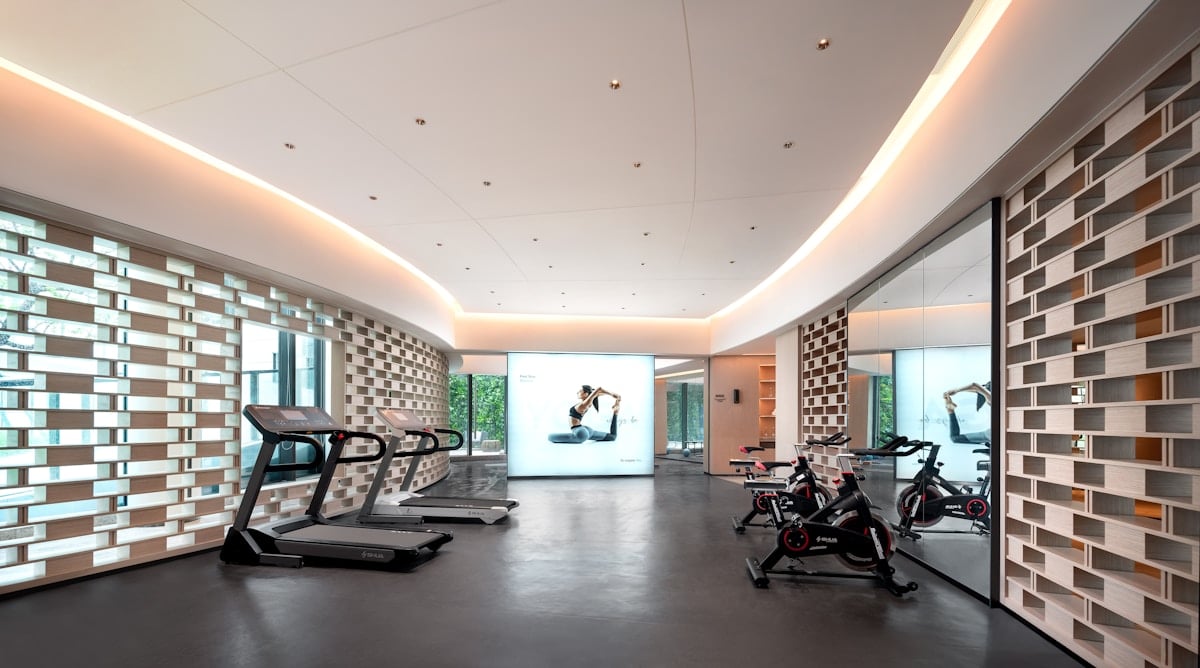
Treadmills are the heaviest electrical load most fitness floors carry, and a bank of them concentrates that load in one place. The cost appears in two forms: the ongoing draw, and the one-off electrical work when the existing circuits will not support the row you have specified.
The second is the one that derails budgets. Discovering during install that a bank needs dedicated circuits means an electrician, a permit in many jurisdictions, and a delay measured in weeks. Any serious assessment of commercial cardio equipment starts with what is already behind that wall.
Cost Line Four: Network, and What Connected Actually Requires
Connected consoles need coverage at the machine, not coverage in the building. A bank of screens in a room with one distant access point produces intermittent sessions, lost data, and members who conclude the equipment is faulty.
Budget for access points, cabling and the ongoing bandwidth, and treat every console as a device on a facility network rather than an appliance. The NIST program on cybersecurity for connected devices is a sensible frame for that, particularly where the same network carries member and payment systems.
Cost Line Five: Matting, Levelling and the Floor Underneath
Matting under commercial cardio equipment is usually specified late and priced as an accessory. It protects the subfloor, reduces transmitted noise to the floor below, and holds machines stable enough that they do not walk under load.
Levelling is the related line. An uneven subfloor puts a frame under torsion that shortens its life and produces noise that members read as a fault. Both are cheaper to solve before delivery than after, which is the recurring lesson of every equipment budget.
Cost Line Six: Cleaning Consumables at Volume
Wipes, sprays and dispensers are a small unit cost multiplied by a large number of sessions, and they are consumed faster on cardio than anywhere else on the floor. Underspecify the dispensers and members stop wiping, which shifts the cost into deep cleaning and into a perception problem.
The perception side matters more than the spend. A machine that looks unclean is bypassed regardless of its condition, which is the mechanism behind so much of the member decision to walk past a working machine.
Cost Line Seven: Labor Per Preventive Maintenance Visit
Preventive maintenance is quoted per visit, but the cost that matters is labor hours per machine per year. A large bank takes a technician longer than the visit schedule implies, and travel is billed whether or not anything is found.
The floor gives you the data to plan this. Wear patterns are readable in advance, as set out in the wear signals that precede a failure, and a floor that catches them early spends fewer emergency hours at premium rates.
Cost Line Eight: Removal and Disposal at End of Life
The last line is the one nobody plans. Old machines have to leave the building, which means lifting equipment, a vehicle, labor, and disposal that may carry an electrical waste obligation depending on jurisdiction.
The route out is frequently narrower than the route in was. Negotiate removal into the replacement order while you still have leverage, rather than discovering the cost the week the new units arrive.
A Commercial Cardio Equipment Ownership Table
Use the table as the structure for a total commercial cardio equipment cost view. It deliberately carries no figures, because the numbers are specific to your floor, your rates and your jurisdiction. The value is in making sure no line is missing.
| Cost line | When it first lands | What drives it up | Where to settle it |
|---|---|---|---|
| Belts and running surfaces | First heavy-use year | Missed lubrication, late replacement | Service scope, before signature |
| Console and firmware | Mid-life | Short support window, obsolete generation | Written support horizon at purchase |
| Power draw | First bill after opening | Bank size, hours open | Load assessment before layout is fixed |
| Electrical works | Install week | Circuits that cannot carry the bank | Site survey, not the install visit |
| Network coverage | First connected session | Distant access points, screen density | Coverage test at machine positions |
| Matting and levelling | Delivery day | Uneven subfloor, noise complaints below | Specified as a line, not an accessory |
| Cleaning consumables | Week one | Too few dispensers, high session volume | Dispenser count in the layout plan |
| Preventive maintenance labor | First contract year | Bank size, travel, emergency callouts | Hours per machine per year, not visits |
| Removal and disposal | End of life | Access route, waste obligations | Negotiated into the replacement order |
Settle the Site Before Install Week
Five checks that close the gap between the quote and the real number, all of them cheaper now than later.
- Confirm the circuits against the actual bank. Have an electrician verify capacity for the machines as laid out, not as originally sketched. Install week is the worst possible time to learn this.
- Test network coverage at machine positions. Stand where each console will stand and measure. Coverage at the desk tells you nothing about coverage in the middle of a metal-framed row.
- Get the console support window in writing. Ask how long firmware will be issued and what the connected features do afterward. Put the answer in the file with the order.
- Price removal of the outgoing units now. Include the route out, the lifting equipment and the disposal obligation. This is the only moment you have leverage on it.
- Convert the service quote into hours per machine. Divide the annual contract by the machine count and compare suppliers on that basis rather than on headline price.
Questions Buyers Ask After the Quote Arrives
What is usually missing from a commercial cardio equipment quote?
Electrical works, network provision, matting, consumables and end-of-life removal, in roughly that order of surprise. The quote is not being dishonest; those items sit outside what an equipment supplier sells. They still land on your budget, so they belong on your version of the document.
Should a service contract cover consumables like belts?
It depends on how the contract defines wear parts, and that definition is the clause worth reading twice. Contracts that exclude consumables can still be good value if labor and response are strong. What causes trouble is assuming coverage that the wording does not actually provide.
How do I decide between repairing and replacing an older unit?
Compare the repair against the remaining support window rather than against the purchase price. A mechanically sound machine with an unsupported console is a shorter asset than it appears. The full test is set out in the repair-or-replace decision.
Does connected commercial cardio equipment cost more to own?
Generally yes, once network provision and the shorter console support horizon are counted. Whether that is worth paying depends on whether the data changes decisions, which is the question examined in the cardio metrics worth acting on. Data nobody reads is a cost with no offsetting return.
Pricing the Floor, Not the Machine
A cardio quote prices a machine. An operator has to price a floor, over a life, with the electrical work, the network, the matting, the consumables, the labor and the eventual dumpster all included. Build that table once and every subsequent quote gets easier to read. The suppliers worth keeping are the ones who help you fill it in rather than the ones who hope you never build it.