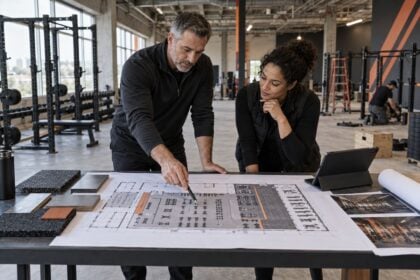


Independent gym equipment decisions rarely go wrong in the showroom. They go wrong eighteen months later, when the machine that was supposed to anchor the floor has become the one members walk past, the one occupying the only square footage that had another use, and the one waiting on a part no local technician stocks.
- The exposure a chain never feels
- 1. Buying categories instead of solving member jobs
- 2. Treating the floor plan as an afterthought
- 3. Comparing purchase price instead of ownership burden
- 4. Underestimating service response and parts availability
- 5. Paying for connected features with no operating plan
- 6. Choosing for the buyer instead of the member
- 7. Skipping a written delivery and acceptance plan
- The independent gym equipment scorecard
- Four weeks, one signature
- Questions independent operators ask
- How much of an annual budget should independent gym equipment consume?
- Is refurbished equipment a false economy?
- How many suppliers should a single-site gym use?
- When is the right moment to replace rather than repair?
- What still earns its floor space in year five
Operators running single-site and small-group facilities keep describing the same sequence. The purchase felt urgent. The comparison came down to price and appearance. And the operating consequences arrived slowly enough that nobody traced them back to the quote. What follows is built to be used before a purchase order goes out — and pulled back up at the next replacement cycle.
The exposure a chain never feels
A national operator can absorb a bad specification. Spread across two hundred clubs, one underperforming machine is a rounding error, and the category buyer simply does not repeat the order next cycle.
An independent has no cushion. On a single floor, one poorly chosen station consumes space that had exactly one alternative use. One unsupported product line turns a routine wear part into three weeks of downtime on a machine members had built their week around. The identical purchase, made by two buyers of different size, carries two entirely different levels of exposure.
So a working process starts with the operating model rather than the catalog: who the gym serves, what coaches must be able to deliver, which hours carry the load, and how the floor will need to change across the next three years. Every check below assumes those four answers are written down first.
1. Buying categories instead of solving member jobs
A specification that reads “two treadmills, one leg press, one cable station” looks complete and explains nothing. It names products without naming the work those products do.
Start from movements, training experiences and member groups the facility has to support. A strength-led gym serving experienced lifters and a coached studio serving beginners and older adults will reach different answers from the same budget.
For each proposed station, write one sentence: what it enables, roughly how often it will be used, and whether a different piece could deliver the same outcome with more flexibility. That single discipline turns independent gym equipment selection into service design rather than shopping.
2. Treating the floor plan as an afterthought
Dimensions on a spec sheet describe the machine, not the operating footprint that independent gym equipment actually occupies. Users need room to enter, adjust, load, unload and step clear. Coaches need sightlines across the zones they supervise. Cleaning teams need access behind and beneath. Members using mobility devices need a continuous route through the space.
Put scaled footprints on the actual plan before the purchase order goes out, including working clearances and the queue each station will generate at peak. Scoping is the part buyers misread: the U.S. Access Board’s guidance on exercise equipment applies its clear floor space requirement to at least one unit of every type you install rather than to every unit of one type, so the breadth of the order decides how many positions you owe. Our companion piece on the layout clues that reveal hidden congestion covers how circulation and zoning change the final mix.

3. Comparing purchase price instead of ownership burden
The invoice is the opening cost, not the cost. Freight, liftgate and stair charges, installation labor, flooring work, electrical changes, software subscriptions, preventive maintenance, replacement upholstery, cables, belts and eventual removal all belong on the same line.
Build a five-year ownership estimate for every finalist and compare those numbers instead of the quotes. The cheapest unit is frequently the expensive one: slow parts, thin service coverage and constant staff intervention are real costs that never appear on a proposal. A higher initial price is rational whenever it buys predictable uptime — the same logic that governs any honest equipment ROI case.
4. Underestimating service response and parts availability
A warranty is a promise about parts, not about time. It has limited value if no qualified technician can reach the building this week. The FTC’s primer on warranties is a useful reminder that a service contract and a warranty are not the same instrument.
Before signing, ask four questions and write down the answers. Who performs local service, and how many technicians cover this territory? Which parts are stocked domestically versus built to order? How are emergency calls prioritized against scheduled work? And what happens when a repair falls outside warranty? Request the preventive-maintenance schedule and sample prices for common wear items — belts, decks, cables, bearings, upholstery.
Then compare what you heard against the terms in our guide to when a service agreement is worth more than it costs. Independent gym equipment should be evaluated as a supported system, never as an isolated asset.
5. Paying for connected features with no operating plan
Touchscreens, usage dashboards, member profiles and remote diagnostics can each earn their cost. They also add subscriptions, network dependencies, staff training, privacy obligations and one more layer of troubleshooting between a member and a working machine.
For every connected feature, name the person who will open the data and the decision it will change. If nobody will review utilization reports or act on service alerts, the feature is a recurring cost with no owner. Technology earns its place on independent gym equipment when it removes friction, not when it adds an administrative task.
6. Choosing for the buyer instead of the member
Owners and coaches naturally favor equipment they already understand. Members respond to something else entirely: seat adjustment, entry height, handle diameter, labeling, resistance increments, noise, and how much confidence it takes to start.
Test finalists with a small, representative group of members and staff, and watch without coaching them through it. Hesitation during a controlled demonstration becomes avoidance on a busy floor. The independent gym equipment that earns its place is rarely the most impressive piece — it is the approachable one that gets used again on Thursday.
7. Skipping a written delivery and acceptance plan
An independent gym equipment purchase is not finished when the truck arrives. Confirm access dimensions and door swings, dock or curbside responsibility, floor and wall protection, assembly scope, debris removal, anchoring, electrical commissioning and staff orientation — all before delivery day.
Then build an acceptance checklist that records damage, verifies every function and every adjustment, captures serial numbers, and assigns a named owner and a date to anything unresolved. Our walkthrough of where equipment plans go off the rails follows the handoffs from quote through installation, which is exactly where these gaps open.
The independent gym equipment scorecard
Score every finalist against the same factors, weighted for this facility rather than equally. The scorecard will not make the decision. It will show where excitement, habit or a persuasive presentation is outvoting the business.
| Factor | What to verify before signing | Weight |
|---|---|---|
| Member job | The named movement or member group this station serves | High |
| Versatility | Programs it supports without reconfiguration | High |
| Spatial efficiency | Footprint plus working clearance, drawn to scale | High |
| Accessibility | Clear floor space and transfer position per ADA guidance | High |
| Expected utilization | Estimated sessions per peak hour, from observed demand | High |
| Five-year cost | Invoice, freight, install, parts, PM, removal | High |
| Local service | Named technicians and territory coverage | High |
| Parts availability | Domestic stock versus build-to-order lead time | Medium |
| Warranty terms | Parts, labor, wear items and exclusions in writing | Medium |
| Technology burden | Subscriptions, network needs, named data owner | Medium |
| Exit options | Resale value and removal cost at end of life | Low |
Four weeks, one signature
- Week 1 — Observe. Log every queue, every swap to a second-choice station and every abandoned set across three peak hours. Demand data beats opinion in every subsequent conversation.
- Week 2 — Draw it. Put scaled footprints and working clearances on the real floor plan. Mark sightlines, cleaning access and the accessible route.
- Week 3 — Interrogate service. Ask every shortlisted supplier the four service questions above and get the answers in writing, not on a call.
- Week 4 — Score and decide. Run the finalists through the scorecard, build the five-year ownership estimate, and write the acceptance checklist before you sign anything.
Questions independent operators ask
How much of an annual budget should independent gym equipment consume?
There is no universal figure, but the Health & Fitness Association points operators toward a planned annual reinvestment allowance rather than episodic replacement. The practical version: fund a maintenance and replacement line every year so a failure never forces an unplanned purchase at the worst possible moment.
Is refurbished equipment a false economy?
Not automatically. Refurbished independent gym equipment works when the seller documents what was replaced, warranties the work, and can supply parts for the platform. It fails when it is simply used equipment with new paint. Apply the same five-year ownership math you would apply to new.
How many suppliers should a single-site gym use?
Enough for leverage, few enough for accountability. Two or three relationships usually beat one — a single source removes price discipline — while six leaves nobody clearly responsible when a floor is half working on a Monday.
When is the right moment to replace rather than repair?
When the annual repair spend plus the downtime cost approaches the annualized cost of replacement, or when parts move to build-to-order lead times. Track repair history per asset; the decision becomes obvious once the numbers sit side by side. Our breakdown of the repair-or-replace decision works through the arithmetic.
What still earns its floor space in year five
Independent gym equipment should make a facility easier to use and easier to operate. Regret shrinks when an operator buys from a defined service model, validates the layout at scale, calculates ownership rather than price, tests usability with real members, and writes down what acceptance means before delivery day. The best purchase is not the machine with the longest feature list. It is the one still earning its floor space in year five.