
Most clubs discover that gym equipment firmware updates are running on their floor only when two identical treadmills start behaving differently.
- The Version Drift Nobody Schedules
- The Owner: One Named Person Holds the Version List
- The Operations Manager: Choosing the Window
- The Front Desk: What Staff Say When a Screen Is Black
- Gym Equipment Firmware Updates Are Maintenance, Not IT
- The Technician: Rollback, or the Absence of One
- The Supplier: Questions for the Purchase Order
- A Fleet Version Table for Gym Equipment Firmware Updates
- What an Accurate Asset List Also Buys You
- Six Steps to Take Control of the Update Window
- Questions Operators Ask About Gym Equipment Firmware Updates
- Can we just turn the updates off
- Does a firmware change affect a warranty or service claim
- Who should own this in a small independent club
- The Fleet You Can Actually Describe
Gym equipment firmware updates arrive with the mechanism switched on and the governance switched off. Machines reach out overnight, pull whatever the manufacturer has published, and apply it without anyone at the club approving a change to an asset worth several thousand dollars.
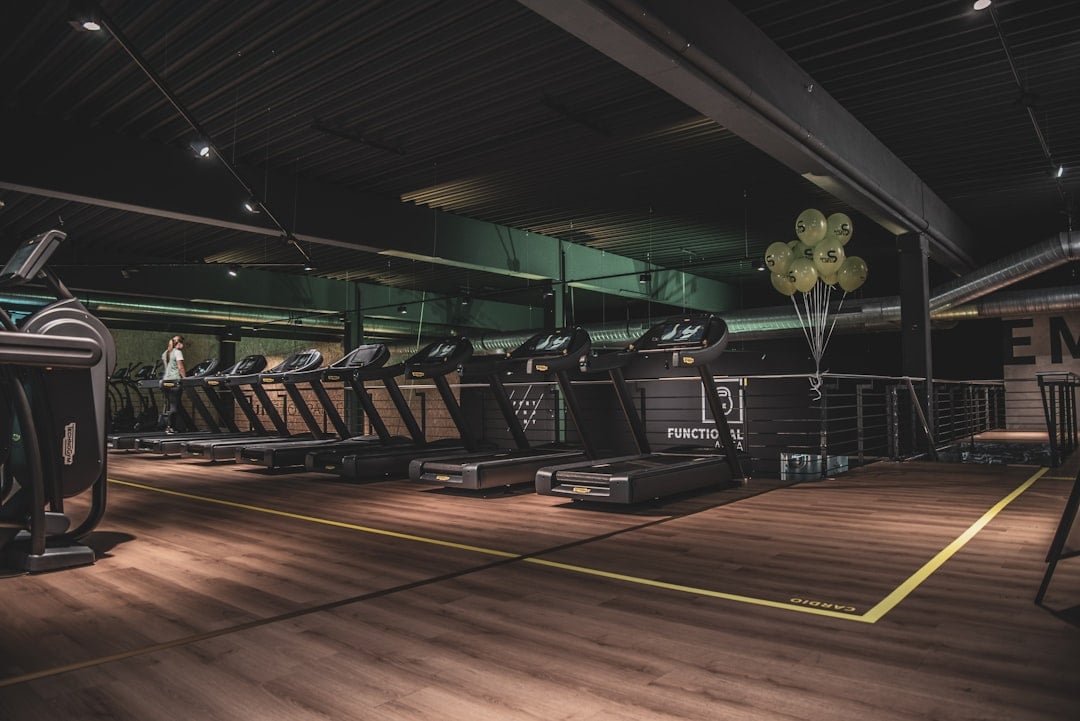
The result is version drift: a floor of nominally identical units running four or five builds, each with slightly different screen layouts, network behavior and fault codes. Sorting out who owns what is the work, and it divides cleanly by role.
The Version Drift Nobody Schedules
Drift starts benign. One unit misses a window because it was unplugged during a deep clean, another because the network dropped, a third because it sat in a back room during a floor refresh.
Six months later a member reports that the display on machine eleven does not show the same metrics as machine twelve, and the club has no way to answer without walking the floor and reading a diagnostics screen on every unit.
The Owner: One Named Person Holds the Version List
Gym equipment firmware updates need one accountable name, and an owner assigns it once. Somebody has to hold a list of every connected asset, its firmware version and the date it was last confirmed, and that person is usually the operations manager rather than anyone technical.
The list does not need software. A spreadsheet with model, serial, location, version and check date is sufficient, and it is worth more than any dashboard the supplier offers, because it is the only record that survives a change of vendor.
The Operations Manager: Choosing the Window
An update that fails leaves a machine on a progress bar, not on the floor. That is tolerable at four in the morning on a Tuesday and expensive at six in the morning on a Monday.
Pick the window deliberately, put it in writing with the supplier, and make sure someone walks the floor before open on update mornings. Clubs that schedule gym equipment firmware updates like any other overnight service task rarely get caught; clubs that let the fleet decide get caught roughly once a quarter.
The Front Desk: What Staff Say When a Screen Is Black
Floor staff need one sentence and one action. The sentence is that the machine is receiving a scheduled update and will be back shortly; the action is to tag it and log the time.
What they must not do is power-cycle a unit mid-update, which is how a routine patch becomes a mainboard replacement. That single instruction, written on the tag, prevents more damage than any other control on this list.
Gym Equipment Firmware Updates Are Maintenance, Not IT
The most useful framing comes from outside the industry. NIST Special Publication 800-40 Revision 4, Guide to Enterprise Patch Management Planning: Preventive Maintenance for Technology, published in April 2022, defines enterprise patch management as identifying, prioritizing, acquiring, installing and verifying the installation of patches, updates and upgrades across an organization.
The document’s central argument is that patching is preventive maintenance and a cost of doing business, and it recommends creating an enterprise strategy to simplify and operationalize patching while reducing risk. Read the NIST publication page and substitute treadmill for server; the structure holds. Gym equipment firmware updates belong in the preventive maintenance calendar next to belt lubrication, not in a category nobody owns.
The Technician: Rollback, or the Absence of One
Ask the question before you need the answer: can this console be returned to its previous build, by whom, and how long does it take. On a good deal of commercial equipment the honest answer is no, or not without a service visit.
The answer changes how a club should stage gym equipment firmware updates. Where rollback does not exist, staged deployment is the only protection: allow the update on two units, run them for a week, then release the rest. The same logic already governs how clubs handle the console numbers that drift from belt hours, and it applies with more force when the change is irreversible.
The Supplier: Questions for the Purchase Order
Three questions about gym equipment firmware updates belong in the buying conversation, not the support ticket. Who controls the update schedule, what happens to the console when the manufacturer stops publishing builds, and does a feature the club paid for survive a future release.
That last one is not hypothetical. Content and connectivity features have been removed from installed consoles before, and the contract is the only place to address it. Operators who have already worked through who owns the data a connected machine produces will recognize the same gap in the paperwork.
A Fleet Version Table for Gym Equipment Firmware Updates
Not every update carries the same risk, and treating them alike is how clubs end up either blocking everything or accepting everything. Sort them once.
| Update type | What it changes | Risk if deferred | Risk if applied blind | Owner |
|---|---|---|---|---|
| Security patch | Network stack, credentials | Exposed device on a shared network | Low | Operations manager |
| Console operating system | Interface, app framework | Apps stop launching | Layout changes members notice | Operations manager |
| Motor or drive controller | Speed, incline, braking behavior | Known faults persist | Feel changes, calibration drifts | Service technician |
| Sensor or calibration package | Heart rate, cadence, distance | Reported metrics stay wrong | Historical data no longer comparable | Service technician |
| Connectivity module | Wi-Fi, streaming, account sync | Units fall off the network | Reconfiguration on every unit | Whoever owns the network |
| Content or entertainment | Channels, partner apps | Member-facing features expire | Paid features silently removed | Owner, via the contract |
| Feature release | New programs and screens | None material | Staff retraining nobody planned | Operations manager |
What an Accurate Asset List Also Buys You
The version list has a second use that justifies it on its own. When a manufacturer issues a recall, the notice is written against serial ranges, and a club either matches it in ten minutes or spends a week crawling under machines.
The Consumer Product Safety Commission published an expanded recall from Johnson Health Tech in January 2026, recall number 26-203, covering about 47,000 Matrix Retail and Vision treadmills after 27 reports of overheating where the power cord met the socket. The published notice lists the affected models and a free replacement cord with a locking plug. A club with a current asset list acts on that in an afternoon.
Six Steps to Take Control of the Update Window
Gym equipment firmware updates do not need a project. They need six decisions recorded somewhere a successor can find them.
- Build the version list this week. Model, serial, location, current version and date checked, one row per connected asset, held by a named person.
- Agree the window in writing. Name the night and the hours with the supplier, and confirm what the machine does if the connection drops mid-update.
- Stage anything irreversible. Two units first, a week of normal use, then the rest, wherever rollback is unavailable.
- Write the tag instruction. Do not power-cycle, log the time, notify the manager, printed on the tag rather than explained in a meeting.
- Walk the floor before open. On update mornings someone confirms every screen is live, which turns a member complaint into a service call nobody hears about.
- Re-check versions quarterly. Drift is silent, and a quarterly pass catches the units that quietly missed three windows in a row.
Questions Operators Ask About Gym Equipment Firmware Updates
Can we just turn the updates off
Usually yes, and it is usually the wrong call. Disconnected consoles miss security patches, lose app functionality as partner services change, and eventually reach a build the manufacturer will no longer support. Control the window on gym equipment firmware updates instead of the switch, and keep the units reachable.
Does a firmware change affect a warranty or service claim
It can matter, because manufacturers frequently ask for the current version when diagnosing a fault. Keeping the version list current means answering that question in seconds rather than sending a technician to read a diagnostics screen. It also removes an easy reason for a claim to stall.
Who should own this in a small independent club
The same person who owns the maintenance calendar, which in a single-site club is usually the owner. The task is a quarterly spreadsheet check and one written agreement with the supplier, not a technical role, and the minutes consoles already take out of every shift are the reason it is worth formalizing.
The Fleet You Can Actually Describe
A club that can state what version every machine is running has already solved most of this. The list makes recalls fast, claims cleaner and supplier conversations specific, and it costs an hour a quarter to maintain. Clubs without it are not running a riskier fleet so much as an undescribable one, which is a harder position from which to argue with anybody, including the manufacturer whose software caused the problem. Start with the spreadsheet and the first hours after a failure get simpler too.