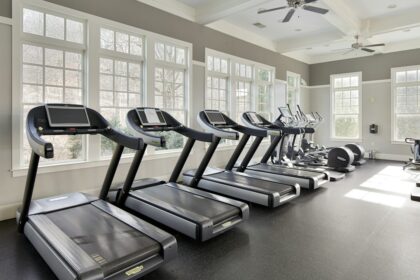

Equipment finance credit approvals have narrowed just as commercial fitness buyers reach the part of the year when many equipment orders are written. The industry-wide average approval rate fell 2.0 percentage points to 75.4 percent in August 2026, its lowest level since February 2025, according to the Equipment Leasing and Finance Association. The same release shows losses and delinquencies improving, which is an unusual pairing. For dealers quoting multi-unit packages into year-end, the practical issue is sequencing rather than sentiment.
- What the August 2026 data says about equipment finance credit approvals
- Why a two-point approval shift lands hardest in the fourth quarter
- The confidence picture behind the figures
- Six checks when equipment finance credit approvals tighten
- A worked example: what one credit tier costs on a 180,000 dollar package
- What to watch through year-end
What the August 2026 data says about equipment finance credit approvals
The ELFA CapEx Finance Index for August 2026, released on September 29, 2026, reports new business volume of 11.8 billion dollars on a seasonally adjusted basis. That is down 17.3 percent from July’s record 14.3 billion dollars, and up 19.1 percent year over year on a non-seasonally adjusted basis. Year to date, volume is up 17.3 percent against the same period in 2025. The index tracks commercial equipment financing reported by participating ELFA member companies across industries, not fitness equipment specifically.
The credit detail is where the useful signal sits. ELFA reports the industry-wide average credit approval rate fell 2.0 percentage points to 75.4 percent, its lowest reading since February 2025. Over the same month the overall delinquency rate held steady at 1.8 percent and was down 0.4 percentage points from a year earlier, while the overall loss rate fell 0.02 percentage points to 0.44 percent, its lowest in ten months.
Read together, those four numbers describe lenders holding portfolio quality while taking fewer new applicants. Book performance is strong and approvals are tighter, which generally points to selectivity at the front door rather than stress in the back book. James Cress, Acting President and CEO of ELFA, framed the volume swing by noting that “July’s volume was nearly 25% above the previous all-time monthly high due to a surge in AI spending.” A comparison against a record month is not evidence of a downturn.
Why a two-point approval shift lands hardest in the fourth quarter
Q4 is when many commercial fitness equipment decisions get finalized, because operators want units installed and in service before the January membership surge. That timing leaves very little slack. A declined application in late October can usually be reworked; the same decline on December 10 generally cannot, because the resubmission, the revised quote, the freight booking and the install crew all have to fit before the holiday shutdown.
The install calendar is the binding constraint, not the credit decision itself. A gym opening on January 2 needs equipment on the floor in December, which means freight booked in November, which means an order released in October. Credit sits at the front of that chain, so a delay there pushes every downstream date rather than absorbing into slack.
Approval rates are an average across ticket sizes, industries and credit profiles, so few dealers will see exactly 75.4 percent. What a dealer does see is more conditional approvals: a larger down payment, a shorter term, a personal guarantee, or a request for interim financials. Each of those is a renegotiation with the customer, and each one consumes days that a December install cannot spare.
The confidence picture behind the figures
Lender sentiment has not turned. ELFA’s Monthly Confidence Index for September 2026, released on September 17, 2026, came in at 62.4, unchanged from August and inside what ELFA calls the elevated range of the past seven months. The survey covers executives across what ELFA describes as the 1.3 trillion dollar equipment finance industry.
The component detail is more informative than the headline. On capital expenditure demand over the next four months, 31.8 percent of respondents expected an increase, up from 26.1 percent the prior month. On access to capital, 27.3 percent expected greater access, down from 33.3 percent, while 72.7 percent expected the same and none expected less. On business conditions, 26.1 percent expected improvement and 4.4 percent expected worsening.
Two of the named respondents in that release point the same way. David Normandin, CLFP, President and Chief Executive Officer of Wintrust Specialty Finance, said: “I think we will have a strong finish to Q3, and I am optimistic about the opportunities in the fourth quarter.” Jim DeFrank, EVP and Chief Operating Officer of Isuzu Finance of America, Inc., said: “I expect a wave of replacement and modernization activity as businesses move to invest in newer, more efficient equipment.” Replacement demand is exposed to an approval delay, because the asset being replaced is already in service.
Bank credit standards are a separate input. The Federal Reserve’s July 2026 Senior Loan Officer Opinion Survey, whose responses were due July 2, 2026, found that banks had “left standards basically unchanged, on net” for commercial and industrial loans to firms of all sizes, and reported “basically unchanged demand” for those loans from small firms on net. On pricing, it noted that “Significant and moderate net shares of banks reported charging narrower loan rate spreads to large and middle-market firms and to small firms, respectively.” That survey covered the second quarter of 2026, so it sets context rather than confirming the August figure.
The gap between those two readings is worth holding onto. Bank commercial lending standards were steady and spreads were narrowing, while the equipment finance channel reported fewer approvals a month later. Those are different populations: the equipment finance index includes captives and independents alongside banks, and it measures applications for a specific asset rather than general working capital. A dealer whose customers borrow mainly from captives or independents should weight the equipment figure more heavily than the bank survey.
There is a second-order effect on the dealer side. When equipment finance credit approvals slow, deals do not disappear so much as queue, and the queue sits in the dealer’s own working capital. Deposits arrive later, factory slots booked against expected approvals go unfilled, and stock ordered for a named project ages into general inventory. Watching the approval environment is therefore an inventory question as much as a sales one.
Six checks when equipment finance credit approvals tighten
- Move the credit step ahead of the quote revision. Submit for approval on the configuration the customer is most likely to buy, before the fourth round of spec changes. An approval in hand converts a quote into a schedulable order.
- Ask for the decision date, not just the decision. Get the lender’s expected turnaround in writing and put it on the project calendar next to the freight and install dates, so the critical path is visible to everyone.
- Prepare the second lender before you need one. Keep at least one alternate source pre-briefed on your typical ticket, term and equipment type. A resubmission to a cold lender in December costs more days than the rate difference is worth.
- Collect financials early for anything structured. Interim statements, a rent roll or a membership count are routine requests on larger tickets. Gathering them at quote time removes the most common week of delay.
- Price the conditional approval, not the headline approval. Model what a shorter term or larger down payment does to the customer’s monthly figure, and bring that version to the conversation rather than discovering it on the call.
- Stage the order so partial approval still installs something. Where the package allows, split cardio and strength into separate schedules so a held line does not freeze the whole installation.
A worked example: what one credit tier costs on a 180,000 dollar package
The figures below are illustrative assumptions used to show the arithmetic. They are not quoted rates, lender averages or industry data. Assume a 180,000 dollar strength and cardio package financed over 60 monthly payments with no down payment and no residual, and assume two outcomes: an approval at an annual nominal rate of 9.5 percent, and a conditional approval at 12.5 percent.
| Assumed outcome | Monthly payment | Total of 60 payments |
|---|---|---|
| Approval at 9.5 percent nominal | 3,780.34 dollars | 226,820.10 dollars |
| Conditional approval at 12.5 percent nominal | 4,049.63 dollars | 242,977.73 dollars |
| Difference | 269.29 dollars | 16,157.63 dollars |
The totals are computed on the unrounded monthly payment, so they differ by a few cents from sixty times the rounded figures shown.
A 269.29 dollar monthly difference is the number that decides whether the operator signs in the current quarter or defers to the next one. It is also the number a dealer can often reduce by changing the term or the structure rather than the equipment list. Running both versions before the customer call keeps the conversation about the package instead of the payment, and it is the same discipline described in comparing lease and purchase on end-of-term cost.
One caution on presentation. Quoting a payment is not the same as quoting a rate, and in some states a written financing offer carries a standardized disclosure obligation, as covered in state APR disclosure rules on lease quotes. Confirm what your lender’s documents already disclose before adding a rate to a proposal.
What to watch through year-end
- The monthly approval rate in subsequent CapEx Finance Index releases, since one month at 75.4 percent is a data point rather than a trend.
- The loss and delinquency rates, because approvals tightening while losses rise would describe a different and more serious condition than the August 2026 pairing.
- The access-to-capital component of ELFA’s confidence survey, which moved from 33.3 percent to 27.3 percent expecting greater access.
- The next Senior Loan Officer Opinion Survey, which covers bank commercial and industrial lending standards and is the broader check on the equipment-specific data.
- Your own approval and conditional-approval counts by lender, which will show a change in your book well before any index does.
For dealers carrying inventory into the first quarter, the same tightening works in two directions: customer approvals slow, and so can the terms behind your own stocking lines, a dynamic covered in setting dealer credit exposure before equipment ships. Pairing that with a dated delivery plan, as in order timing from factory to commissioning, is what turns a soft approval environment into a scheduling problem rather than a lost quarter.
The August 2026 reading is not a credit crunch. It is a reminder that in a quarter where installation dates are fixed and the calendar is short, equipment finance credit approvals belong at the front of the sales process rather than the end of it.