

The producer price data published this week explains why fitness equipment price increases keep arriving with less notice than the quotes they invalidate.
- What the August Producer Price Data Actually Said
- Goods Moved. Services Did Not. That Split Is the Story.
- Line One: The Unit Price on the Quote
- Line Two: Freight and Accessorials
- Line Three: Duty and Compliance
- Line Four: Installation Labor
- Line Five: The Cost of Holding Stock
- Reading Fitness Equipment Price Increases Against Demand
- A Quote Protection Table for Fitness Equipment Price Increases
- Five Moves When an Increase Letter Lands
- Questions Buyers Ask About Fitness Equipment Price Increases
- Can a supplier reprice an order already placed
- Is buying ahead of an increase worth it
- Does leasing insulate a club from an increase
- What the Index Cannot Tell You
On September 10, 2026, the Bureau of Labor Statistics released its Producer Price Index for August. The headline was modest and the composition was not, and the composition is what reaches an equipment invoice.
Fitness equipment price increases arrive as a single number on a letter. What follows walks the landed cost of a machine line by line, because that is where a broad index turns into a figure a buyer has to answer for.
What the August Producer Price Data Actually Said
The index for final demand moved up 0.4 percent in August on a seasonally adjusted basis. Over the twelve months ended in August, final demand increased 5.4 percent unadjusted.
Those are economy-wide producer prices, not a fitness category index, and no such published index tracks commercial gym equipment on its own. They matter because they measure what suppliers pay before anything reaches a dealer quote, which makes them the earliest honest signal a buyer gets that fitness equipment price increases are coming.
Goods Moved. Services Did Not. That Split Is the Story.
Inside that 0.4 percent, final demand goods advanced 1.1 percent while final demand services rose 0.1 percent. Goods less foods and energy increased 0.4 percent.
Read that against a machine. The steel, the electronics, the upholstery and the crating are goods; the freight brokerage, the installation labor and the service contract are closer to services. A month where goods run well ahead of services is a month where the unit price on a quote moves faster than everything else around it, and the full Producer Price Index news release sets out the detail.
Line One: The Unit Price on the Quote
Most fitness equipment price increases land on the unit price, because it is the cleanest line to move and the easiest to explain. It is also the line where a buyer has the most leverage, provided the quote said something about validity.
A quote with no stated expiry is not protection; it is an invitation to reprice at order entry. Ask for a validity period in writing, and treat thirty days without one as the real answer.
Line Two: Freight and Accessorials
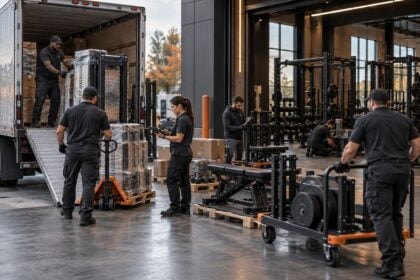
Freight rarely appears in fitness equipment price increases and frequently appears on the invoice. Liftgate, inside delivery, limited access and residential classification are the four accessorials that most often turn an agreed delivered price into a disputed one.
Ask for the accessorial schedule alongside the quote, not after the truck is booked. Buyers who pull orders forward to beat an increase compress their own receiving, and rushed receiving is exactly where a damage claim gets lost at the dock.
Line Three: Duty and Compliance
Duty is the line most often passed through without documentation. A supplier is entitled to recover it; a buyer is entitled to see how it was calculated and on what value.
Ask which component of the assembly carries the duty and whether the increase applies to stock already landed. The distinction matters on a mixed shipment, where a console built in one country arrives on a frame from another and only one of the two carries the charge. Operators who worked through the buyer-side effects of tariff exposure already know that the answer varies by supplier far more than the policy does.
Line Four: Installation Labor
Installation is quoted as a flat figure and delivered as a variable one. The August data showing services almost flat while goods climbed is a useful reminder that these lines do not move together, and a supplier holding install pricing while raising unit pricing is behaving rationally rather than generously.
The exposure here is scope, not rate. Stairs, tight corners, floor protection and out-of-hours access are the four items that convert a flat install into an hourly one. Ask for the scope as a written exclusions list, because what is excluded is where the variability actually lives.
Line Five: The Cost of Holding Stock
For distributors, fitness equipment price increases are also a decision about inventory. Buying ahead locks a price and consumes working capital; buying late preserves cash and accepts the new number.
The arithmetic is simple and rarely written down: the increase percentage against the carrying cost for the months the stock will sit. A four percent increase on goods that will sit eight months is not obviously a win, and the answer depends on capital cost rather than on how the letter is worded.
Reading Fitness Equipment Price Increases Against Demand
Cost pressure only becomes a pricing problem if demand is soft, and on the participation side the picture is not soft. SFIA’s 2026 Topline Participation Report, published in March 2026, found that 250 million Americans took part in at least one sport, fitness or leisure activity in 2025, and that the share of totally inactive Americans fell below 20 percent for the first time since the association began tracking it.
The same SFIA report records that only 32 percent of Americans meet the federal guideline of 150 minutes of weekly activity. For a supplier, that combination reads as a market with room in it, which is why fitness equipment price increases are currently being passed through rather than absorbed.
A Quote Protection Table for Fitness Equipment Price Increases
Take this into the next supplier call. Each row is a cost line, who carries it when nobody negotiates, and the document that settles the argument.
| Cost line | Absorbed by default | Where it is renegotiated | Evidence to request |
|---|---|---|---|
| Unit price | Buyer | Quote validity clause | Dated quote with an expiry |
| Freight base rate | Buyer | Delivered versus ex-works terms | Rate confirmation by lane |
| Accessorials | Buyer, on the invoice | Site survey before booking | Published accessorial schedule |
| Duty pass-through | Buyer | Order entry | Calculation basis and component |
| Installation scope | Split, badly | Pre-install walkthrough | Written scope with exclusions |
| Backorder repricing | Buyer | Purchase order terms | Price-hold language on backorders |
| Parts and consumables | Buyer | Service agreement renewal | Parts price list with an effective date |
Five Moves When an Increase Letter Lands
Fitness equipment price increases are usually announced with a fixed effective date and a quiet grace period. Both are negotiable if a buyer moves in the first week.
- Date-stamp every open quote. Pull the list, mark which expire before the effective date, and convert the ones that matter into orders that week.
- Ask what happens to backorders. Stock already ordered but not shipped is the single largest exposure in most increase letters, and the answer is rarely in the letter.
- Separate the lines. Insist the increase is stated by cost line rather than as one blended figure, because a blended number hides which part is actually rising.
- Price the hold against your capital. Compare the increase to the carrying cost of buying ahead, and write the number down so the decision is a calculation rather than an instinct.
- Reprice your own quotes the same week. A dealer quote issued at the old cost and honored after the effective date is margin donated, and every week of delay widens the gap.
Questions Buyers Ask About Fitness Equipment Price Increases
Can a supplier reprice an order already placed
It depends entirely on the purchase order terms and whether the goods have shipped. Many commercial terms allow repricing until shipment, which surprises buyers who assume an accepted order is a fixed price. Read the acknowledgment rather than the quote, because that is the document that governs.
Is buying ahead of an increase worth it
Only when the increase exceeds the cost of carrying the stock until it sells. Include warehouse space, insurance and the capital tied up, then compare. Distributors who run that calculation honestly buy ahead less often than instinct suggests, and they finance the ones they do differently.
Does leasing insulate a club from an increase
It moves the exposure rather than removing it. The lease is written against the equipment cost at the time it is funded, so an increase before funding still reaches the payment. The structure of the lease decides how visible that is on the schedule.
What the Index Cannot Tell You
A national index describes the direction of cost, not the behavior of your supplier. Two distributors facing an identical input picture will pass through different amounts, at different notice, with different treatment of backorders. That variance is the negotiable part, and it stays invisible unless the cost lines are separated. Buyers who ask for the breakdown are asking which half of the letter is arithmetic and which half is positioning, and the answer decides whether the spec and the change order remain anybody’s responsibility.