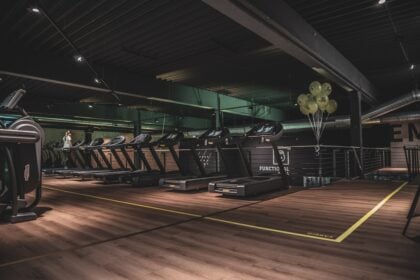


Nobody costs the minutes. A quote for fitness equipment technology lists hardware, licenses and installation, and says nothing about the twenty minutes a shift that the new consoles will quietly take from the floor team.
- Measure the shift, not the feature list
- Line one: onboarding a member at the console
- Line two: resets, logouts and the walk between machines
- Line three: fault handling from first notice to floor
- Line four: reporting and the monthly export
- Line five: training a new hire on fitness equipment technology
- Line six: the minutes technology genuinely gives back
- The fitness equipment technology time ledger
- Turning minutes into a shift decision
- Your next two shift cycles
- Fitness equipment technology: what managers ask
- How do we time a saving that has not happened yet?
- Is a negative net always a reason to say no?
- Who should run the study?
- How often should the ledger be refreshed?
- What the ledger changes
Those minutes are the real price, and they are recoverable in both directions: some technology hands time back, some takes it, and most does both at once. This is a time study, not a feature review. Every line below is measured in minutes per occurrence, multiplied by frequency, and netted at the end of the week.
Measure the shift, not the feature list
Pick one full shift and follow one member of staff with a stopwatch. Record every interaction with a screen, a console, a tablet or a report, and write the elapsed time beside it. Do it twice, on a quiet day and a busy one.
The output is a ledger, not an opinion. Once each task carries a number of minutes and a frequency, comparing two systems becomes arithmetic. Fitness equipment technology that saves ninety seconds on a task performed four times a day is worth more than one that saves ten minutes on a task performed monthly.
Line one: onboarding a member at the console
Time it end to end: greeting, account lookup, pairing the member to the machine, explaining the interface, and the first program start. Include the part where the member asks a follow-up question a week later, because that recurs.
Older machines cost almost nothing here because there is nothing to explain. Newer fitness equipment technology usually costs several minutes per member on first use and then returns time later, if the interface is genuinely self-service. Measure both halves before crediting the saving.

Line two: resets, logouts and the walk between machines
This is the line operators underestimate most. A console left logged in, a stuck screen, a program that will not clear: each is thirty to ninety seconds plus the walk, and the walk is often the larger number in a big room.
Count the walk separately. Twelve resets a day at forty seconds each is eight minutes; the same twelve resets with a sixty-second round trip is twenty. Layout and fitness equipment technology interact here, and the same walking distances that slow resets are the ones that show up in the 30-day site-readiness countdown before anything is switched on.
Line three: fault handling from first notice to floor
Time only the labor, not the repair. That means the minutes to notice a fault, verify it on the machine, log it, tape it off and tell the desk what to say. Whether an alert reached the right person is a separate question, and it belongs with the register that names who owns each dataset rather than in the time ledger.
What the ledger cares about is how many minutes each fault consumes before a technician is involved, and how many of those minutes the technology removed by identifying the unit and the code without a physical inspection. That second figure is often the strongest saving on the sheet.
Line four: reporting and the monthly export
Somebody produces the numbers. Time the export, the cleanup, the manual reconciliation between systems and the meeting preparation, then divide by the number of decisions the report actually changed last quarter. Most fitness equipment technology reporting fails this division badly.
A report that takes two hours to prepare and changes nothing is a two-hour line item with no offset. Systems that reconcile automatically save real minutes; systems that need a spreadsheet in the middle simply move the work to whoever owns the spreadsheet.
Line five: training a new hire on fitness equipment technology
Every system a club runs adds hours to induction, and induction repeats with every hire. Time how long it takes a new starter to reach independent competence on each interface, and multiply by realistic annual turnover for a floor team.
Firmware and update handling belongs here too. Keeping connected devices current is ongoing staff time rather than a one-off, and the NIST Cybersecurity for IoT Program treats update capability as a basic device requirement, which in practice means somebody on your payroll spends minutes on it every month.
Line six: the minutes technology genuinely gives back
The credit side is real and deserves the same rigor. Self-service check-in removes desk minutes, remote diagnostics remove inspection walks, and automatic session logging removes manual program cards. Usage data removes the standing argument about which machines are busy.
Credit only what you can time. A saving nobody can demonstrate on a stopwatch belongs in the sales deck, not the ledger, and separating the two is exactly what buyer tests that outlast launch hype are for.
The fitness equipment technology time ledger
Below is the ledger shape, filled with figures from a composite single-site club running one staffed floor. Replace every number with your own measured times; the arithmetic is the point, not the values.
| Task line | Minutes each time | Times per week | Weekly minutes | Direction |
|---|---|---|---|---|
| Member onboarding at console | 4 | 18 | 72 | Cost |
| Console resets and logouts | 1 | 84 | 84 | Cost |
| Walk time to and from resets | 1 | 84 | 84 | Cost |
| Fault verification and logging | 12 | 4 | 48 | Cost |
| Monthly export and cleanup | 110 | 0.25 | 28 | Cost |
| New-hire induction, amortized | 180 | 0.08 | 14 | Cost |
| Self-service check-in | 2 | 140 | 280 | Saved |
| Remote diagnostics, no walk | 15 | 3 | 45 | Saved |
| Automatic session logging | 3 | 30 | 90 | Saved |
Turning minutes into a shift decision
Net the two columns. In the example above the costs total 330 minutes a week and the savings 415, leaving 85 minutes returned to the floor: roughly a quarter of a shift. That is a defensible number to take to a budget conversation, and it converts directly into the labor line of a credible equipment ROI case.
The direction matters more than the magnitude. A system that nets negative is not automatically wrong, but it needs a reason beyond convenience, and somebody has to decide which task loses those minutes. Sector operating guidance such as the Health & Fitness Association’s facility operating practices assumes staffed floors have time to supervise, which is precisely the time this ledger protects.
Your next two shift cycles
- Cycle one, day one — shadow a shift. Follow one staff member with a stopwatch and record every screen interaction, including the walk to and from the machine.
- Cycle one, day four — repeat on a busy day. Frequencies change more than durations do, and the busy-day count is the one that sets your weekly totals.
- Cycle two, day one — build the ledger. Enter minutes, frequency and direction for every line, and leave any saving you could not time out of the sheet entirely.
- Cycle two, day three — net and name the winner. Total both columns, identify the single largest cost line, and ask the supplier specifically how their system changes that line.
- Cycle two, day five — set the recheck. Diarize a repeat of the study 90 days after any change, and compare the same lines rather than the overall impression.
Two cycles is enough to expose the shape. Anything longer becomes a project, and projects get abandoned before the numbers land.
Fitness equipment technology: what managers ask
How do we time a saving that has not happened yet?
Time the current task and ask the supplier to demonstrate the replacement on live equipment, timed by your stopwatch rather than described in a slide. If they cannot demonstrate it, record the saving as zero. Estimated savings that arrive untimed are the most common reason a technology business case fails to land.
Is a negative net always a reason to say no?
No, but it changes the conversation. If a system costs 60 minutes a week and improves retention or safety in a way you can describe, the decision is a deliberate trade rather than an accident. The failure is discovering the 60 minutes eighteen months later, after the labor budget has already absorbed it.
Who should run the study?
Somebody who works the floor, not somebody who owns the purchase. Floor staff know which tasks recur and which console quirks are routine, and they will record the walk time an office-based observer forgets. Give them a printed sheet and a stopwatch rather than an app.
How often should the ledger be refreshed?
Once a year as a baseline, and 90 days after any significant change of system, layout or staffing model. Fitness equipment technology tends to drift, as workarounds accumulate and small manual steps creep back in. A refresh catches that while it is still a habit rather than a policy.
What the ledger changes
Once minutes are on paper, arguments about technology stop being about preference. The floor team can point at the reset line, finance can see the labor offset, and the supplier is asked a sharper question than whether the interface is intuitive. Fitness equipment technology is bought on features and lived with in minutes, and only one of those two appears on the quote.