
The first fitness equipment warehouse a new dealer leases is almost always chosen on rent per square foot, and almost always regretted for a reason that has nothing to do with rent.
- Line One: Rent Is the Number Everyone Negotiates and the Least of It
- Line Two: Clear Height Decides What a Fitness Equipment Warehouse Holds
- Line Three: The Dock, or the Two People You Hire Instead
- Line Four: Racking, and the Rules That Govern How You Stack
- Line Five: A Lift Truck Costs Less Than Its Training Program
- Line Six: The Service Bay Nobody Plans For
- Line Seven: Parts, and the Shelf That Grows Without Approval
- A Fitness Equipment Warehouse Cost Table Before You Sign
- Five Moves Before the Lease Goes to Signature
- Questions New Dealers Ask About a Fitness Equipment Warehouse
- How much space does a first location need
- Is a grade-level door ever workable
- Should a dealer buy or lease the lift truck
- When does the second location become the answer
- What the Second Lease Gets Right
Equipment freight is heavy, tall, awkwardly shaped and delivered by drivers who will not wait. A building that suits a parts distributor or an apparel wholesaler is functionally wrong for a dealer moving racks, treadmills and crated reformers.
What follows is the cost walk in the order a founder meets it, from the listing rate to the lines discovered in month four.
Line One: Rent Is the Number Everyone Negotiates and the Least of It
Base rent is visible, comparable and easy to argue about, which is why founders spend their energy there. It is the line least likely to decide whether a fitness equipment warehouse works.
A cheaper building that needs two extra pairs of hands on every inbound load, or a liftgate fee on every truck, costs more by the end of the first quarter than the rent gap saved. Price the labor and the surcharges before the lease rate, and the comparison usually reverses.
Line Two: Clear Height Decides What a Fitness Equipment Warehouse Holds
Ask for clear height to the lowest obstruction rather than to the deck. Sprinkler heads, light fixtures, ducts and beams all sit below the roof, and the lowest of them is the number that matters.
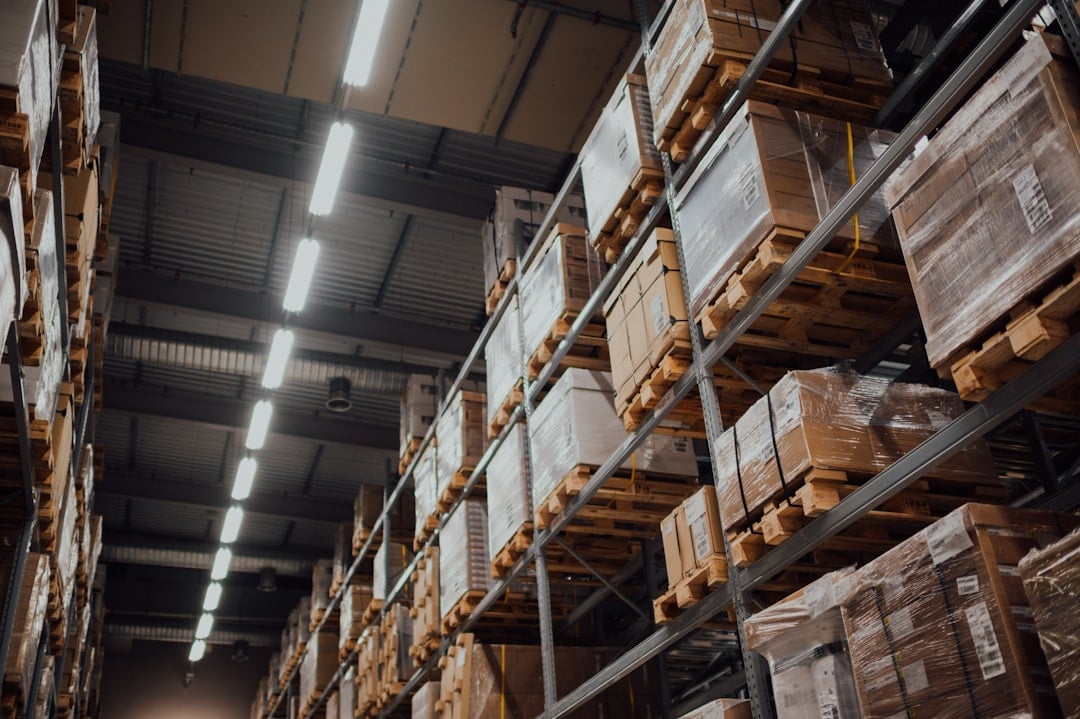
Clear height converts directly into pallet positions. A building that supports three tiers instead of two holds half again as much inventory in the same footprint, which is why a taller fitness equipment warehouse at a higher rate frequently costs less per pallet position than a cheap low one.
Crated strength equipment is the constraint to test with. Measure a real crate, not a catalog footprint, and confirm it fits a beam opening with clearance to place and retrieve it.
Line Three: The Dock, or the Two People You Hire Instead
This line separates a working fitness equipment warehouse from an expensive lesson. A dock-height door with a leveler lets a pallet jack roll freight off a trailer. A grade-level door does not.
Without a dock, every inbound load needs a liftgate, a forklift at the tailgate, or hands. All three cost money on every delivery, and the charge lands on inbound freight where margin is thinnest.
The related question is whether a 53-foot trailer can physically reach the door and maneuver. A dealer who signs first and discovers the answer later is the one refusing loads at the curb and absorbing detention charges, which is also how the signature on a delivery receipt gets rushed and a damage claim gets lost.

Line Four: Racking, and the Rules That Govern How You Stack
Used racking is cheap and tempting. Uprights and beams without legible load capacity plates are a liability rather than a bargain, because nobody can state what a bay is rated to carry.
OSHA’s materials handling standard sets the frame for this. Under 29 CFR 1910.176, sufficient safe clearances must be allowed for aisles, at loading docks, through doorways and wherever turns or passage must be made, aisles and passageways kept clear and in good repair, and materials stored in tiers stacked, blocked, interlocked and limited in height so they are stable and secure against sliding or collapse.
The standard also requires clearance limit signs where overhead restrictions exist, and storage areas kept free of accumulations that create tripping, fire, explosion or pest hazards, as set out in the regulation text on handling and storage. None of that costs much at fit-out. All of it costs money to retrofit around full racks.
Line Five: A Lift Truck Costs Less Than Its Training Program
The truck itself is a straightforward purchase or lease. The program around it is the part founders underestimate.
Operators cannot simply be handed the keys. OSHA requires formal instruction, practical training and an evaluation of performance in the workplace before an employee operates a powered industrial truck, with an evaluation of each operator at least once every three years under 1910.178(l)(4)(iii).
Refresher training is triggered by specific events, including unsafe operation, an accident or near miss, assignment to a different type of truck, or a change in workplace conditions. The employer must also certify each operator with the name, training date, evaluation date and the identity of the trainer, and the operator training provisions are worth reading before the first hire rather than after the first incident.
Line Six: The Service Bay Nobody Plans For
Every dealer ends up doing bench work. Warranty repairs, refurbishment, console swaps, pre-delivery inspection and the unit returned from a canceled order all need floor space with power, light and a bench.
Skip it and technical work happens in a pick aisle, slowing both jobs. Partition a bay from the start, and treat who staffs it alongside the thresholds that justify an employed technician.
Line Seven: Parts, and the Shelf That Grows Without Approval
Parts arrive as a courtesy and become a business line by accident. Within a year a dealer holds belts, rollers, cables, consoles and fasteners, none of it planned.
Give it dedicated, secured, small-bin shelving early. A fitness equipment warehouse that stores parts in cardboard on a pallet loses them at a rate nobody measures, and which parts are worth stocking at all is a question with a defensible answer.
A Fitness Equipment Warehouse Cost Table Before You Sign
Take this to the second viewing with the broker present. The right-hand column is the question that surfaces the trap in the column beside it.
| Cost line | What drives it | The cheap-lease trap | Question for the landlord |
|---|---|---|---|
| Base rent | Square feet and submarket | Lowest rate in a building outgrown in eighteen months | What is the expansion right on the adjacent bay |
| Clear height | Pallet tiers achievable | Low ceiling forces floor storage | What is the height to the lowest obstruction |
| Dock doors | Trailer access and turn radius | Grade-level door only | Can a 53-foot trailer reach and maneuver |
| Leveler and pit | Trailer height variance | Liftgate charge on every inbound load | Who funds a leveler installation |
| Racking | Pallet count and crate size | Used racking with no capacity plates | Can racking be anchored to this slab |
| Lift truck and training | Inbound volume and tiers | Untrained staff on a borrowed truck | Is charging power available where needed |
| Service bay | Refurbishment and warranty work | Bench work performed in a pick aisle | May a bay be partitioned and powered |
| Parts shelving | Brands supported | Cartons on pallets, shrinkage unmeasured | Is secured mezzanine or cage space available |
| Sprinkler and storage limits | Rack height against head coverage | Stacking above the design height | What storage height does the system permit |
Five Moves Before the Lease Goes to Signature
Each of these takes an afternoon and has stopped a bad lease more than once.
- Walk the building with a tape and a real crate dimension. Measure door width and height, clear height to the lowest obstruction, and the turn from the street into the yard.
- Stand in the yard while a trailer attempts the approach. Ask the broker to arrange it, and watch rather than trust a site plan drawn before the neighboring tenant parked there.
- Price two years of liftgate and labor charges. Put that total beside the rent difference between the dock building and the cheaper one, then choose.
- Get racking quoted with capacity documentation. A rack without legible load plates is a rack you cannot safely load, whatever the seller says it held before.
- Write the lift truck training plan before buying the truck. Formal instruction, practical training, workplace evaluation and a certification record, with the names of who delivers each part, as covered in the first-year realities of the equipment trade.
Questions New Dealers Ask About a Fitness Equipment Warehouse
How much space does a first location need
Less floor and more height than most founders assume. Pallet positions, a staging area deep enough to receive a full trailer without blocking aisles, and a partitioned service bay matter more than raw square footage in a fitness equipment warehouse. Staging is working space, not waste.
Is a grade-level door ever workable
Yes, for small parcel volume and light assembled goods. It stops working the moment palletized strength equipment arrives regularly, because every load then requires equipment or people at the tailgate. If the mix includes crated racks or cardio, treat a dock-height door as a requirement.
Should a dealer buy or lease the lift truck
Either works financially; the training obligation is identical. A lease including maintenance suits a first location, because downtime on a single truck stops receiving entirely. Confirm the charging arrangement matches the building before choosing a model.
When does the second location become the answer
When freight lanes rather than storage drive the decision. A fitness equipment warehouse in a second market makes sense once inbound and outbound routes justify it, not because the first building is full. Full buildings are usually a racking and staging problem before they are a real estate problem.
What the Second Lease Gets Right
Dealers who move buildings once describe the same short list: height over footprint, a dock over a discount, racking with paperwork, and a service bay drawn on the plan instead of improvised. The first fitness equipment warehouse teaches those lessons at retail price. The second one is chosen on how freight actually arrives, which is the only question the building really answers.