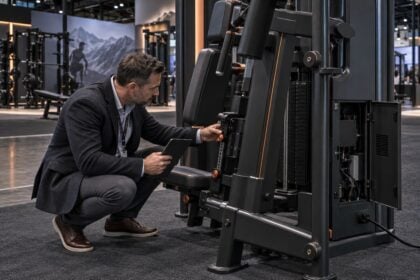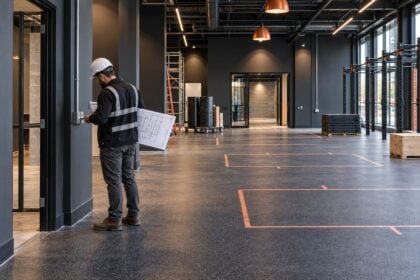


A service report will tell you a treadmill is operational, and it will be right, and the machine will still sit empty at six on a Tuesday. Cardio equipment member experience is decided by things no diagnostic runs on: what a member can see from the door, what the console asks of them, and whether the person on the next machine is uncomfortably close.
- Failure One: The Machine Cannot Be Seen From the Door
- Failure Two: The Console Asks a Question Nobody Wants to Answer
- Failure Three: The Last Person’s Sweat Is Still Visible
- Failure Four: Noise Marks a Machine as Broken
- Failure Five: Spacing Puts a Stranger Too Close
- Failure Six: Glare Turns a Screen Into a Mirror
- Failure Seven: Entry Height Excludes Quietly
- What “Operational” Misses About Cardio Equipment Member Experience
- A Floor-Walk Scorecard for Cardio Equipment Member Experience
- One Day on the Cardio Bank
- Questions Operators Ask About Empty Cardio
- How do I tell a demand problem from a cardio equipment member experience problem?
- Should I replace a machine members avoid but that passes service checks?
- Do members ever say any of this out loud?
- How often should this walk be repeated?
- What the Empty Machine Is Saying
Operators tend to read low usage as a demand problem or a placement problem. Often it is neither. It is a set of small, physical, entirely fixable failures that make a working machine feel unavailable, and they repeat across floors with remarkable consistency.
Failure One: The Machine Cannot Be Seen From the Door
Cardio equipment member experience starts before anyone touches a machine, because people choose in the first fifteen seconds after entering. A bank tucked behind a partition, around a corner, or behind the strength floor is chosen only by members who already have a routine. Everyone else takes what is in front of them, then queues for it.
The tell is uneven load across identical machines. If two rows of the same model show different occupancy, the difference is almost never mechanical. It is a sightline.
Failure Two: The Console Asks a Question Nobody Wants to Answer
A console that opens with a login prompt, a program selection, or a data-entry screen imposes a decision on someone who wanted to walk. Some members will work through it. A meaningful number will step off and take the machine that starts when you press start.
Consoles differ enormously here, and the difference rarely appears in a demo. Watch which machine new members default to and you will see the answer without asking anyone.
Failure Three: The Last Person’s Sweat Is Still Visible
Cleanliness is judged visually and instantly, and it is judged against the machine next to it. A console with residue, a handle with a fingerprint film, or a deck with dried marks moves a machine to the bottom of the choice order regardless of whether it was cleaned an hour ago.
Wipe stations matter less than wipe station placement. If a member has to cross a walkway to reach one, compliance drops, and the machine carries the evidence for the rest of the session.
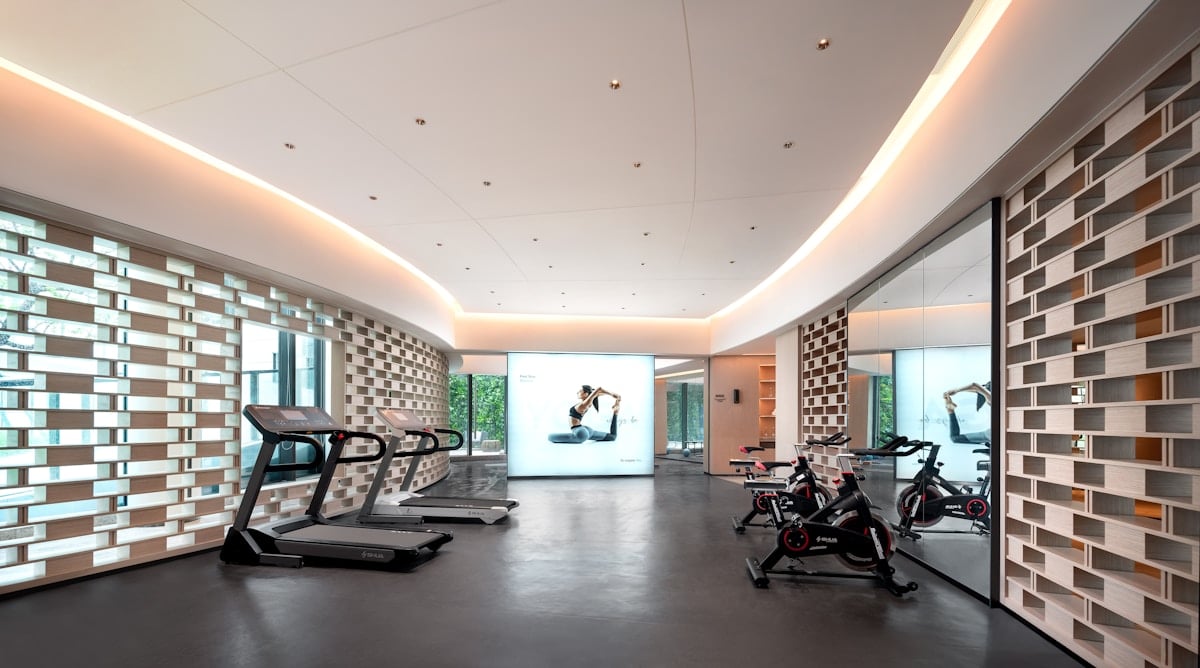
Failure Four: Noise Marks a Machine as Broken
A belt tick, a fan whine, or a bearing note that a technician would call within tolerance reads to a member as a fault. They do not have a tolerance scale. They have a machine that sounds wrong and three that do not.
This is the clearest case where cardio equipment member experience and the service record disagree completely. The unit passes every check and loses every choice, and no ticket is ever raised because nothing is broken. Noise belongs on the maintenance walk alongside the wear signals that precede a failure, even when it triggers no fault code.
Failure Five: Spacing Puts a Stranger Too Close
Side-by-side spacing that satisfies the installation drawing can still be too close for comfortable use. Members leave gaps deliberately, which means a bank of ten effectively holds five or six at busy times. Operators then read the occupancy number and conclude they need more machines.
The same logic applies front to back. A machine positioned so that people walk directly behind a running member will be chosen last, every time. Circulation and comfort are the same problem here, which is why this sits close to the layout clues that reveal hidden congestion.
Failure Six: Glare Turns a Screen Into a Mirror
Afternoon sun through a west-facing window can make an entire row unreadable for two hours a day. Members do not report this. They move, and the row shows a usage dip that looks seasonal or random until somebody walks the floor at four in the afternoon.
Overhead lighting produces the same effect at other hours. Both are cheap to fix with blinds or a small repositioning, and both are invisible to anyone who only reads reports.
Failure Seven: Entry Height Excludes Quietly
Step-up height, handle position and the reach to a first grab point determine who can use a machine confidently. Members who find an entry awkward do not complain. They choose the bike, or they choose nothing, and the pattern reads as a preference rather than a barrier.
Entry geometry is a product decision rather than a facility one, which is why it is worth asking a supplier which consensus standards a model was built against; ASTM Subcommittee F08.30 on Fitness Products is the committee that writes them. Treating step-up height as a specification rather than a matter of taste improves the cardio equipment member experience for far more people than any service check reaches.
What “Operational” Misses About Cardio Equipment Member Experience
A service report answers one question: does the machine function to specification. Cardio equipment member experience answers a different one: will somebody choose it over the machine beside it. Those questions overlap less than the reporting implies.
Connected data narrows the gap, because session counts by asset number expose the uneven usage that a floor walk can then explain. That pairing, described in the cardio metrics worth acting on, is more useful than either input alone.
A Floor-Walk Scorecard for Cardio Equipment Member Experience
Walk the bank at peak and again mid-afternoon, scoring each machine on both columns. Where the two disagree, the member column is the one that governs occupancy.
| Check | What the service record shows | What the member registers | Usual fix |
|---|---|---|---|
| Sightline from entrance | Not recorded | Nothing looks free | Reposition, or open the partition |
| Console to first stride | Firmware current | It is asking me things | Default profile and a quick-start path |
| Wipe station distance | Cleaned to schedule | Someone else was here | Move the station into the bank |
| Audible note at speed | Within tolerance | This one is broken | Raise noise as a comfort ticket |
| Lateral spacing | Meets the install drawing | Too close to a stranger | Remove a unit and widen the pitch |
| Screen readability | Display functioning | I cannot read the numbers | A blind, or rotate the row |
| Traffic behind the user | Not recorded | People keep passing me | Reroute the walkway |
| Entry and approach space | Not recorded | Awkward to get on | Clear floor space at one unit of each type |
One Day on the Cardio Bank
Before ordering anything, spend three days gathering the cardio equipment member experience evidence a service report cannot give you.
- Photograph the bank at three times of day. Open, peak and mid-afternoon. Empty machines in the same position across all three photographs are telling you something specific.
- Time the console. Count the presses between standing on the machine and moving. Anything above two is costing you selections from newer members.
- Listen down the row at working speed. Note any unit that sounds different from its neighbors and raise it as a comfort issue rather than a fault.
- Mark where people leave gaps. Chalk or tape the positions members skip at peak. That map is your real capacity, and it is usually smaller than the machine count.
- Measure the approach at one unit of each type. Record the clear floor space you find rather than the space you assume is there.
Questions Operators Ask About Empty Cardio
How do I tell a demand problem from a cardio equipment member experience problem?
Compare identical machines in the same bank. If demand were the cause, usage would fall evenly across them. Uneven usage across identical units points at position, noise, glare or spacing, and those are all fixable without buying anything. Even usage that is simply low is a genuine demand question.
Should I replace a machine members avoid but that passes service checks?
Not before you have walked it. Most avoided machines are avoided for a reason that costs a blind, a wipe station, or a two-meter move to correct. Replacement only makes sense once the physical causes are eliminated, and the cost lines that never appear on a cardio quote make that a decision worth delaying.
Do members ever say any of this out loud?
Rarely, and that is the difficulty. Nobody reports that a screen is hard to read or that a machine sounds odd; they just use a different one. Direct observation is the only reliable instrument, which is why the association’s facility operating best practices put routine floor walks at the center of the job.
How often should this walk be repeated?
Quarterly is enough for most floors, with an extra pass after any layout change, seasonal light shift or console firmware update. Each of those alters the cardio equipment member experience without touching anything the maintenance schedule tracks.
What the Empty Machine Is Saying
An unused machine on a serviced floor is not a mystery and it is not a demand signal. It is a member telling you, without words, that something about choosing it was harder than choosing the one beside it. Find that something before signing for another unit. The cheapest capacity on any cardio floor is the machines you already own that nobody wants to stand on.