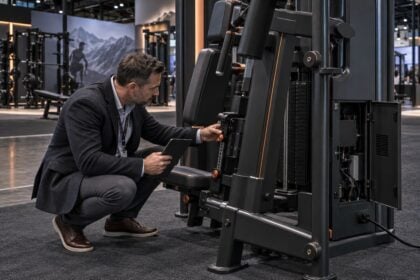

For: dealers, multi-site operators and equipment service coordinators
The decision: Can the organization locate each asset and connect it to the correct service or safety action?
60-second answer: Keep one current record per physical asset, linked to its identifiers, location and movement history. Reconcile the register with the floor and service records; a purchase-batch entry is insufficient when a specific unit must be found.
Give the physical unit a stable identity
Pull invoices, receiving and installation records, current floor lists, service tickets, loans, transfers and disposals. Assign an internal asset ID while retaining the manufacturer model and serial identifiers. A console replacement should not silently turn an existing machine into a new asset or erase its prior service history.
Capture identification photographs where safely accessible. Do not ask general staff to remove shrouds or dismantle equipment just to reach a plate; use the model documentation or qualified service assistance. The earlier claim that a stepmill’s serial plate universally sits behind four screws was unsupported.
| Record group | Fields to retain | Update trigger |
|---|---|---|
| Identity | Internal ID, manufacturer, model, serial and relevant revision | Receipt, component change or corrected identification |
| Location and custody | Site, room, status and responsible custodian | Transfer, loan, warehouse return or disposal |
| Configuration | Relevant console, software and approved options | Documented replacement or update |
| Support | Supplier, warranty documents and service contact | Changed terms, support notice or new provider |
| Service and safety | Work orders, notice matching and completion evidence | Fault, bulletin, recall or completed remedy |
Test the record with an actual task
Choose a model and ask the team to locate every installed, stored or loaned unit. Reconcile missing serials and duplicate records, then sample physical locations. Report unresolved items as exceptions with owners; do not make the register appear complete by guessing identifiers.
CPSC’s December 18, 2025 AMP MP2 recall is an example of a notice that identifies a specific product and repair process. The correct response follows that notice and manufacturer identification guidance. Not every safety notice uses the same combination of serial ranges and date windows; a model name alone may or may not settle matching.
Questions for a recall or transfer
- Where is this physical unit now, and who can confirm it?
- Does a replaced component change the relevant identification or remedy status?
- Which evidence proves the required action was completed?
- Are loaned, returned and disposed assets distinguishable from active floor stock?
Keep owner-contact information available only to staff who need it. Record transfers with the source, destination and effective date rather than overwriting location without history. If a unit has left the business, retain the evidence needed to trace its disposition under the organization’s record policy.
The business benefit is faster and more reliable identification, not a promise that every recall becomes inexpensive. A register supports the work, while qualified assessment and the official remedy determine the action. Shipment of a part, an email sent and verified completion are different statuses.
Improve the register this week
- Reconcile one equipment family across floor, warehouse, loan and transfer records.
- Assign an owner to each missing identifier or location.
- Link the latest service or recall completion evidence to the correct physical asset.
Continue with FEX
FEX editorial guidance: the decision tools and operating recommendations in this guide are FEX analysis. They are not manufacturer specifications, contractual entitlements or industry benchmarks.
Source notes
- CPSC AMP MP2 recall — Example of product identification and prescribed repair, not a universal recall workflow.
Editorial update, October 7, 2026: Removed the undocumented nine-unit recall story and universal serial-plate location claim; clarified that notice-matching requirements vary by product.