

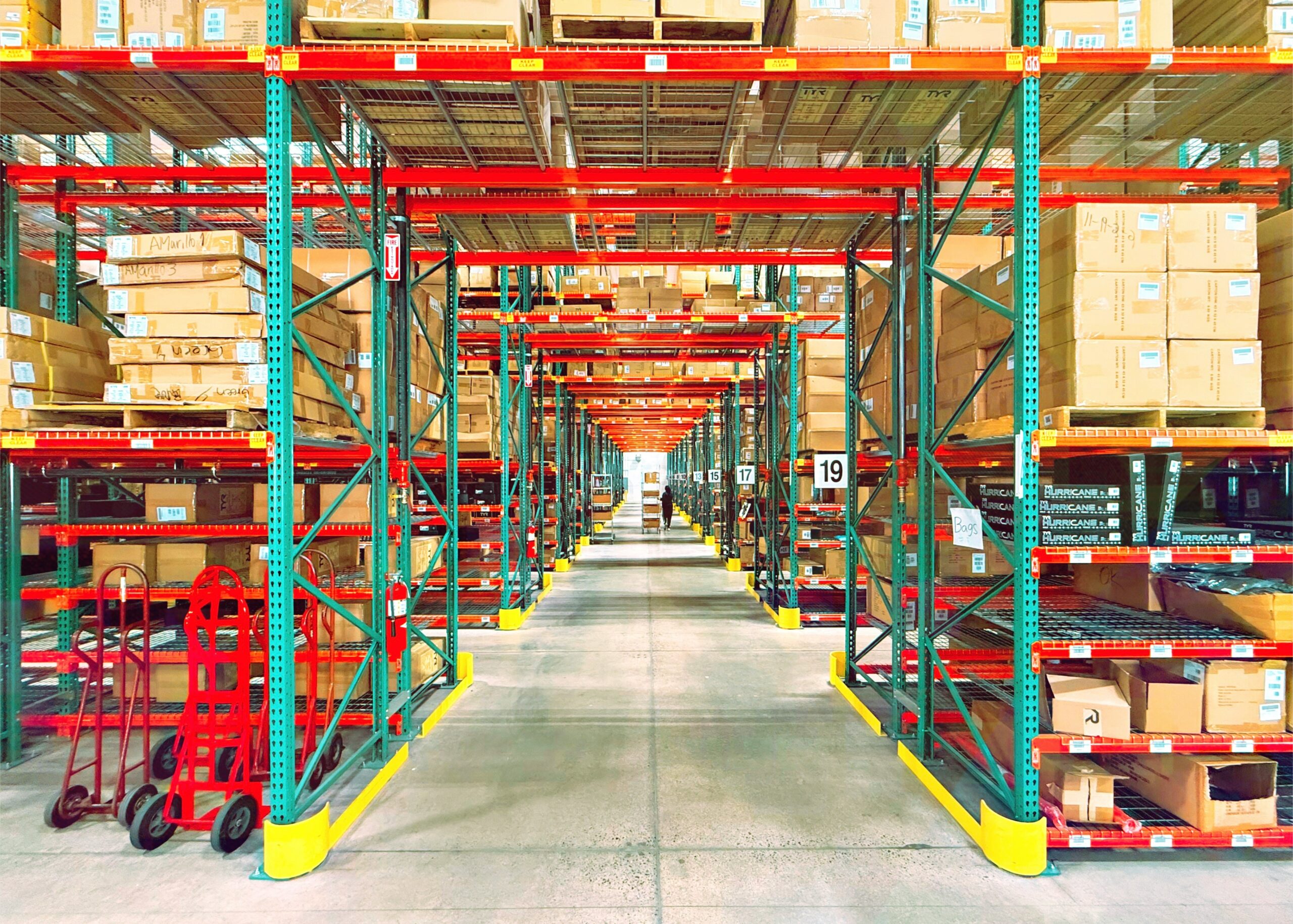
Aging equipment inventory is the quietest expense on a distributor’s income statement, because nothing on the page is labeled for it. The unit was bought, it sits in the rack, and the cost of it sitting there is spread across interest, rent, insurance and eventually a discount nobody planned.
- What aging equipment inventory actually costs to hold
- A worked example priced against the markdown
- Aging buckets and what each one should trigger
- Build the aging equipment inventory report before you discount anything
- What the tax rules say about a unit that will not sell
- The records and metrics to review monthly
- Warning signs and common mistakes
- What to do this month
The decision that matters is simple to state and hard to make: take a markdown now, or keep paying to hold the unit. Dealers who get this wrong are not careless. They are comparing a visible loss today against an invisible loss spread over a year, and the visible one always feels worse.
Putting a monthly number on the carry makes the comparison honest. Here is how to build that number, what the aging buckets should trigger, and how the tax rules treat a unit that will not sell at a normal price.
What aging equipment inventory actually costs to hold
Carrying cost has four parts, and only the first is published anywhere. Money has a price: the Federal Reserve’s H.15 statistical release dated October 9, 2026 put the bank prime loan rate at 7.00 percent, with the 1-year Treasury constant maturity at 4.44 percent on October 8, 2026.
Most distributors do not borrow at prime. For the build below, assume a line of credit or floor plan at prime plus one point, so 8 percent. That spread is an assumption for illustration, not a published rate, and your own facility letter gives you the real figure.
Add the three parts nobody invoices you for, each an illustrative assumption rather than industry data:
- Space and handling at roughly 3 percent of cost a year, covering the rack position, the labor to move the unit for cycle counts, and the pallet space a faster-moving item could have used.
- Insurance, shrink and damage at roughly 1 percent, which rises on crated units that get shuffled repeatedly.
- Value decay at 6 to 10 percent, which is the real driver on equipment. When the manufacturer releases the next console generation or revises a frame, last year’s unit loses market value whether or not it was ever uncrated.
Stack those and the annual cost of holding equipment lands somewhere between 18 and 22 percent of cost. That is a build from stated assumptions, not a benchmark, but it is close enough to run the decision, and often higher than the figure many sales managers assume.
A worked example priced against the markdown
Assume $400,000 at cost in units received more than 180 days ago, and a 20 percent annual carrying cost from the build above. Holding that stock costs about $80,000 a year, or roughly $6,700 a month.
Now price the alternative. Assume a markdown equal to 15 percent of cost moves the same stock. It gives up $60,000 of margin, once. A 15 percent cut off selling price gives up more than that, so convert any price-based markdown to dollars before comparing. If the realistic choice is twelve more months in the rack, the markdown is cheaper by about $20,000, and that is before counting what the released cash does in the business.
Multi-branch operations should run the comparison branch by branch first. Aging equipment inventory spread across three locations often turns out to be the same model aged in two of them, which is a transfer decision rather than a discount, and transfers cost freight instead of margin.
The rule that falls out of this is worth writing down. Compare the one-time margin given up against the carrying cost over the honest time to sell at full price, not the optimistic one. If a unit has moved twice in eighteen months, twelve months is the honest number.
Two cautions. Inventory held under a floor plan may carry curtailment dates that force the decision earlier than your own math would, which is covered in our look at floor plan financing and distributor inventory. And a markdown that undercuts your own dealers or your current-model pricing can cost more in channel damage than it recovers in cash.
Aging buckets and what each one should trigger
Buckets only work when each one is attached to a named action and a named approver. Without that, the report becomes a monthly recital.
| Days since receipt | What it usually signals | Default action | Approver |
|---|---|---|---|
| 0 to 60 | Normal stocking cycle | None | None |
| 61 to 120 | Slow mover or over-ordered | Flag it, recheck the reorder point | Branch manager |
| 121 to 180 | Aged | Stop reordering, add to the incentive list | Sales manager |
| 181 to 270 | At risk | Price to move, bundle, or transfer to another branch | General manager |
| 271 to 365 | Effectively dead | Trade-in credit, secondary channel, or auction | Owner or general manager |
| Over 365 | Write-down candidate | Value and dispose, with tax advice | Owner |
Where the oldest units end up matters to the recovery. Liquidation lots and trade-in credit are different tools with different economics, and we have examined both in how equipment auctions and liquidation lots price a lot and in using trade-in programs for fleet disposition.
Build the aging equipment inventory report before you discount anything
- Date every unit by physical receipt, not by invoice date or model year. An invoice date can fall days before or after the unit actually arrived, so it misstates true age.
- Value at cost, including freight and duty, so the carrying cost math is applied to money you actually spent.
- Separate owned stock from consigned and floor-planned units. They age the same way but the cash consequences and the deadlines differ.
- Exclude units committed against a signed order with a deposit, and show them on a separate line so nobody double-counts them as available.
- Match each aged unit against the last twelve months of unit demand. One sale in a year is not a slow mover, it is a one-off.
- Flag parts and accessory exposure tied to a discontinued unit, since clearing the machine while holding, say, $9,000 of its spares solves half the problem.
- Publish one page a month, in the same meeting that reviews gross margin and inventory turns, and record the decision made on each at-risk line.
The report is also the input to a healthier reorder discipline, which we set out in our guidance on reading inventory turns for stocking decisions.
What the tax rules say about a unit that will not sell
Writing a unit down in your own management reports is not the same as valuing it for tax. IRS Publication 538 lists three methods generally available for valuing inventory: cost, lower of cost or market, and the retail method.
Under lower of cost or market, the publication is explicit that the comparison is made item by item. It states that “You must value each item in the inventory separately,” and that you cannot value the whole inventory at cost and at market and then take the lower total.
It also defines the market figure: “Under ordinary circumstances for normal goods, market value means the usual bid price on the date of inventory.” For goods that are unsalable at normal prices or unusable in the normal way, the publication’s guidance is that “You should value these goods at their bona fide selling price minus direct cost of disposition, no matter which method you use to value the rest of your inventory.” The full text is in IRS Publication 538.
Two practical consequences follow. A damaged or superseded unit generally needs a defensible selling price and a disposition cost behind the number. Treasury Regulation section 1.471-2(c) defines bona fide selling price as an actual offering of the goods during a period ending not later than 30 days after the inventory date, so keep the dated offer to sell, plus the auction result or trade-in credit memo, in the file. And method changes and valuation positions are a matter for your own tax adviser, not for a stocking spreadsheet.
The records and metrics to review monthly
None of this needs a new system. Aging equipment inventory is tracked well enough in most order entry systems already, provided somebody runs the report each month and somebody else is accountable for the lines on it.
- Percentage of inventory at cost older than 180 days, trended over twelve months rather than read as a single figure.
- Weighted average age of stock on hand, which moves earlier than the aged bucket does.
- Markdown realization: what the discounted units actually sold for against the approved markdown.
- Dead stock as a percentage of total inventory cost, with the oldest ten units named.
- Cash released in the quarter from aged stock, which is the figure that makes the discipline worth keeping.
- Days between the bucket trigger and the decision, which measures the process rather than the inventory.
Warning signs and common mistakes
- Aging measured from invoice date. It misstates age by the gap between billing and physical receipt, and aging from the payment due date flatters it by the full length of your terms.
- A third consecutive season of “it will move when the season turns.” That phrase is the single most reliable indicator of a write-down coming.
- Discounting whatever the easiest customer asks for rather than the unit that is actually old, which spends margin without reducing age.
- Writing a unit down in the books while leaving it in the rack, so the carrying cost continues after the loss has been taken.
- Clearing the machine and keeping its unique spares, which leaves a smaller version of the same problem.
- Treating consigned stock as free. It occupies the space and the sales attention that owned stock needs.
What to do this month
Pull one page: every unit at cost, dated by receipt, sorted oldest first, with the last twelve months of demand beside it. Price the carry at your own borrowing rate plus the space, insurance and decay assumptions you can defend.
Then make a decision on every line past 180 days, even if the decision is to hold with a date attached. The point of the report is not the number. It is that nothing old sits on the floor without someone having chosen to keep it there.