


Gym equipment auctions look like a pricing event and behave like a logistics event, which is why the people who win lots and the people who profit from them are often different people.
- Before: a closure notice is a market signal first
- Gym equipment auctions price removal risk, not condition
- Before: the inspection window is the entire negotiation
- Before: the fees that sit behind the hammer price
- During: the other bidders are solving different problems
- During: the clock starts at the hammer, not at pickup
- After: the refurbishment bill arrives in two waves
- After: recall status is the buyer’s problem now
- A bid sheet for gym equipment auctions
- Six steps before raising a paddle
- Questions buyers ask about gym equipment auctions
- Is auction equipment worth it for a commercial floor
- What should I inspect during a preview period
- Who is responsible for removing the equipment
- Can I resell auction equipment to my own customers
- The discount is a payment for work
A closure produces a fleet with no owner and a landlord with a date. Everything that follows is compressed into days, and the compression is where the discount comes from.
Nothing about that is irrational. The seller is buying certainty and speed; the buyer is being paid to absorb risk that nobody has priced.
What follows walks one event in three parts: before the sale, during it, and the ninety days after the truck leaves.
Before: a closure notice is a market signal first
Equipment hits the secondary market in waves, and the wave shape follows the operator cycle rather than the calendar. A healthy market produces fewer distressed lots and more planned disposals.
The backdrop this year is not distress. The 2026 HFA Global Report, published September 14, 2026, recorded median operator revenue growth of 10.7 percent for 2025 and a median EBITDA margin of 22.1 percent across 244 surveyed operators, with 92.3 percent expecting revenue to rise again.
That matters to a bidder because it changes what is in the room. In a strong operator market, more lots come from refits and relocations than from failures, and refit stock is usually in better condition than distressed stock.
Gym equipment auctions price removal risk, not condition
The hammer price is only the first number. Rigging, disassembly, stair carries, floor protection, freight, storage and a dumpster all land afterward, and none of them appear in the catalog.
This is why a rack on the ground floor and an identical rack on a mezzanine are not the same asset. Gym equipment auctions reward whoever has measured the exit path before the bidding starts.
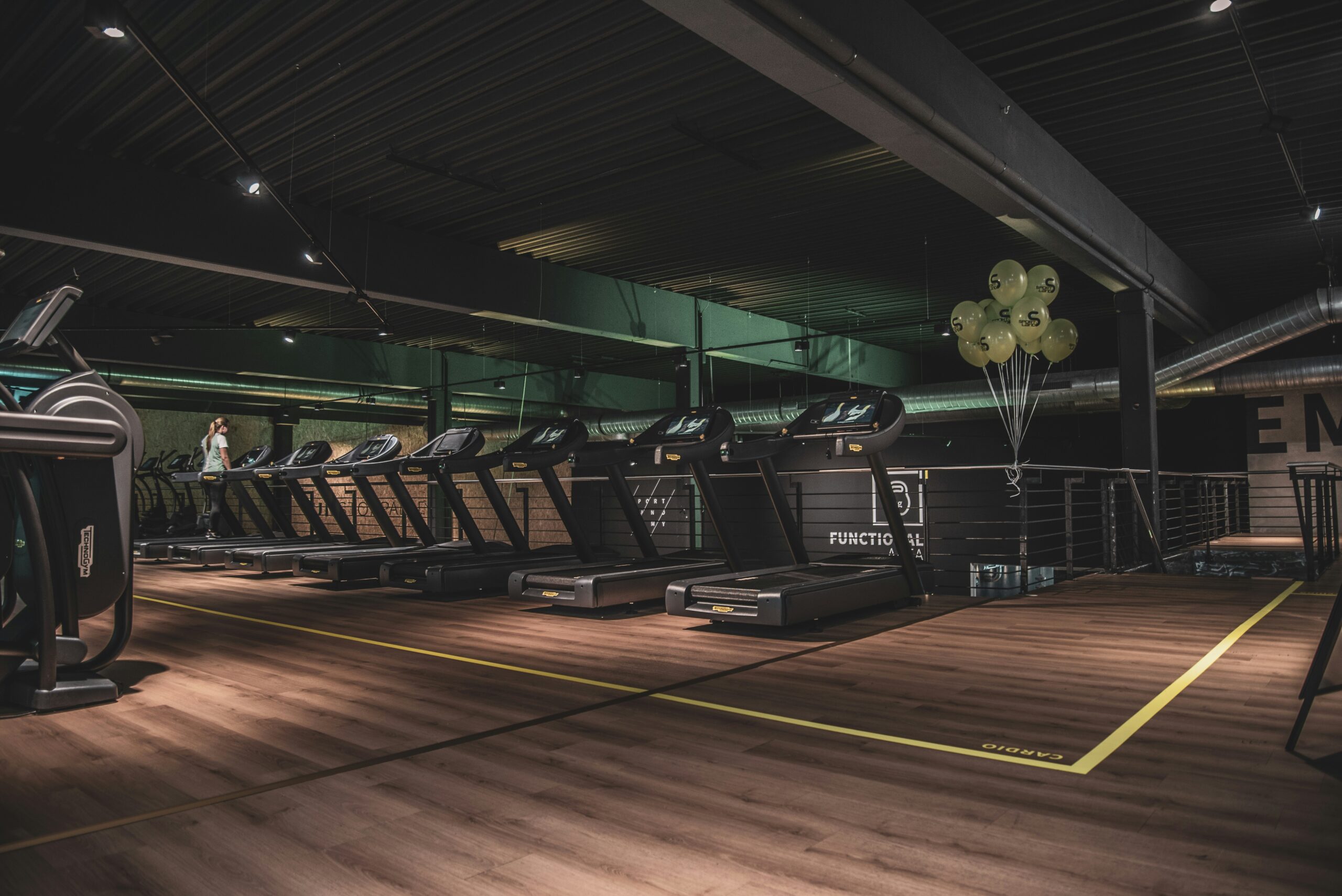
Before: the inspection window is the entire negotiation
Most sales open a preview period measured in hours. That window is where the price is actually set, because everything learned there converts directly into the maximum bid.
Power up whatever can be powered up. Read console hours, listen to bearings, check belts for edge wear, press every pad, and pull one shroud on the most expensive machine in the lot.
Photograph serial plates as you go. That record is the only way to check recall status later, and it is the spine of any warranty or parts conversation afterward.
Before: the fees that sit behind the hammer price
Buyer premiums, payment processing, sales tax, removal deposits and per-day storage charges are standard and cumulative. A bid placed without them is a bid placed on the wrong number.
Removal terms are the sharp edge. A site that requires everything gone within seventy-two hours converts a good lot into a bad week if the crew and the truck were not booked before the sale.
During: the other bidders are solving different problems
Three kinds of buyer show up at gym equipment auctions. Refurbishers bid on what they can resell, operators bid on what they need this quarter, and scrap buyers bid on weight.
Knowing which one is opposite matters. Losing a rack to a scrap bid means the reserve was low; losing it to a refurbisher means the market values it above what a single floor will pay.
During: the clock starts at the hammer, not at pickup
Title, and therefore risk, usually transfers on the fall of the hammer. From that moment, damage during removal belongs to the buyer, and so does anything a rigging crew does to the landlord’s floor.
Confirm that goods bought at gym equipment auctions are covered while they sit on somebody else’s site and while they move, because a property policy usually stops at the scheduled address.
After: the refurbishment bill arrives in two waves
The first wave after gym equipment auctions is visible and cheap: pads, grips, shrouds, paint and decals. It lands within two weeks and rarely surprises anyone.
The second wave is mechanical and arrives between weeks four and twelve, once the equipment has run under real traffic. Belts, decks, bearings, cables and drive components fail on the previous owner’s usage history, not on the new owner’s.
Grading discipline is what separates the two waves in advance, and the three wear points that decide a second life are the ones to price at the preview.
After: recall status is the buyer’s problem now
A unit bought through gym equipment auctions arrives with no registration record and no owner history, which means open safety campaigns follow the serial number rather than the customer file.
Check every serial against the federal record before the machine reaches a member. The U.S. Consumer Product Safety Commission’s notice for recall 26-150, issued December 18, 2025, covers about 1,900 AMP MP2 machines with an arm that could fail to lock, and a lot bought secondhand carries that obligation with it.
A bid sheet for gym equipment auctions
The table below grades lot types by what survives a closure and what should be assumed dead on arrival.
| Lot type | Usually survives | Assume dead | Removal difficulty | Bid signal |
|---|---|---|---|---|
| Cardio row | Frames, uprights, handrails | Belts, decks, batteries, consoles | Moderate, heavy and awkward | Bid on frame count, not on hours |
| Selectorized line | Frames, weight stacks, guide rods | Cables, pulleys, pads, bumpers | Moderate, disassembly needed | Price a full cable set per station |
| Racks and plate-loaded | Nearly everything structural | Liners, pins, pads, anchors | Low, bolted and modular | Best value per dollar in most sales |
| Free weights and dumbbells | Iron, in almost all cases | Urethane skins, knurl definition | High weight, simple handling | Bid against scrap, then add a margin |
| Functional trainers | Frames and stacks | Cables, bushings, handles | Moderate, tall and top-heavy | Assume a full cable replacement |
| Group cycles | Frames and flywheels | Bottom brackets, brake pads, seats | Low, individually portable | Sweat damage sets the whole price |
| Lockers and accessories | Steel storage and racking | Soft goods, mats, foam rollers | High labor, low value | Take only as part of a larger lot |
Six steps before raising a paddle
Each step converts gym equipment auctions from a gamble into a procurement route with a known cost.
- Walk the exit path first. Measure doors, elevators, corridors and the dock, then decide what can physically leave the building before deciding what to bid on.
- Book the crew and the truck before the sale. Removal deadlines are enforced by landlords, and a crew booked after the hammer costs a premium or forfeits the deposit.
- Photograph every serial plate at preview. That record supports recall checks, parts orders and any resale disclosure you will owe a future buyer.
- Add the second wave to the bid. Price a full set of wear parts for each station into the maximum bid rather than treating it as a later surprise.
- Confirm coverage from the hammer forward. Risk usually transfers at the fall of the hammer, so the goods need coverage while still on somebody else’s site.
- Compare against the trade-in route. Run the same fleet need through a trade-in program before bidding, because the credit is sometimes worth more than the discount.
Questions buyers ask about gym equipment auctions
Is auction equipment worth it for a commercial floor
For racks, plate-loaded stations and free weights, frequently yes. For cardio and anything console-driven, only when the wear parts are priced into the bid and a parts path exists. The structural categories hold value through a closure; the electronic ones carry the previous owner’s usage history with them.
What should I inspect during a preview period
Power up what you can, read console hours, check belt edges and deck wear, test every cable and pulley, press every pad, and photograph serial plates. Pull a shroud on the single most expensive machine in the lot. Everything you cannot inspect should be bid as though it needs replacing.
Who is responsible for removing the equipment
The buyer, almost always, and within a deadline set by the landlord rather than by the auctioneer. Rigging, floor protection, disassembly and disposal of anything left behind sit with whoever bought the lot, and a forfeited removal deposit erases the discount quickly.
Can I resell auction equipment to my own customers
Yes, with disclosure and a grading standard you can defend. Keep the serial record, document what was replaced, and state clearly what warranty, if any, travels with the unit. Some machines should be retired rather than resold, and that call belongs to the seller.
The discount is a payment for work
Nothing at a liquidation sale is cheap by accident. The gap between auction price and dealer price is compensation for inspection, rigging, storage, refurbishment and the risk that a serial number turns up on a recall list. Buyers who do that work profitably treat gym equipment auctions as a supply channel with a cost structure. Buyers who do not treat them as a bargain, and pay for the difference in month three.