

Equipment freight costs are moving in the opposite direction from freight demand, and that combination is one a delivered quote written against older rates was never built for. Federal price data shows truck transportation getting more expensive through September 2026, while the volume of freight moving on American trucks, rails and barges keeps falling. For a dealer or distributor that quotes installed or delivered pricing, the gap lands in gross margin on orders that are already signed. What follows is what the published data says, what it does not say, and the checks worth running before the next quote leaves the office.
- Equipment freight costs rose while freight volume fell
- What the September producer price report adds
- Why a falling volume index does not mean cheaper trucking
- Six checks to reset equipment freight costs in a quote
- A worked example, with the assumptions stated
- Records and metrics worth a monthly look
- Warning signs and common mistakes
- Common questions on equipment freight costs
Equipment freight costs rose while freight volume fell
The Bureau of Transportation Statistics reported that the producer price index for truck transportation services rose 19.3 percent over the twelve months from September 2025 to September 2026, in its transportation producer price index release of October 15, 2026. Its August 2026 release put truck services 41.2 percent above their January 2019 level. These are prices received by carriers, not a published average of what any single shipper pays on a given lane. They are still the clearest federal read on the direction of a line item that many equipment quotes carry as a fixed number.
Volume moved the other way. BTS put its Freight Transportation Services Index at 134.4 for August 2026 and reported that the index “fell 0.4% in August from July, falling for the second consecutive month,” in its freight index release of October 14, 2026. That reading sits 3.0 percent below the 138.5 recorded in August 2025. BTS added that “Freight TSI is now at its lowest level since September 2021,” and attributed the August decline to decreases in rail carloads, rail intermodal, trucking and water.
What the September producer price report adds
The wider price picture is not offsetting any of this. The Bureau of Labor Statistics reported in its producer price index release of October 15, 2026 that the index for final demand increased 1.3 percent in September on a seasonally adjusted basis. On an unadjusted basis, BLS reported, “the index for final demand climbed 6.3 percent for the 12 months ended in September,” which it described as the largest twelve-month increase since a 6.4 percent rise in December 2022. Prices for final demand services moved up 0.8 percent in the month.
Inside that services number, BLS reported that “The indexes for final demand transportation and warehousing services and for final demand services less trade, transportation, and warehousing also advanced, 3.4 percent and 0.3 percent, respectively.” Truck transportation of freight was among the service indexes the release listed as rising. The release also identified margins for machinery and vehicle wholesaling, up 3.9 percent, as the largest contributor to the September increase in final demand services. Both halves of that sentence land on businesses that buy and resell machinery for a living.
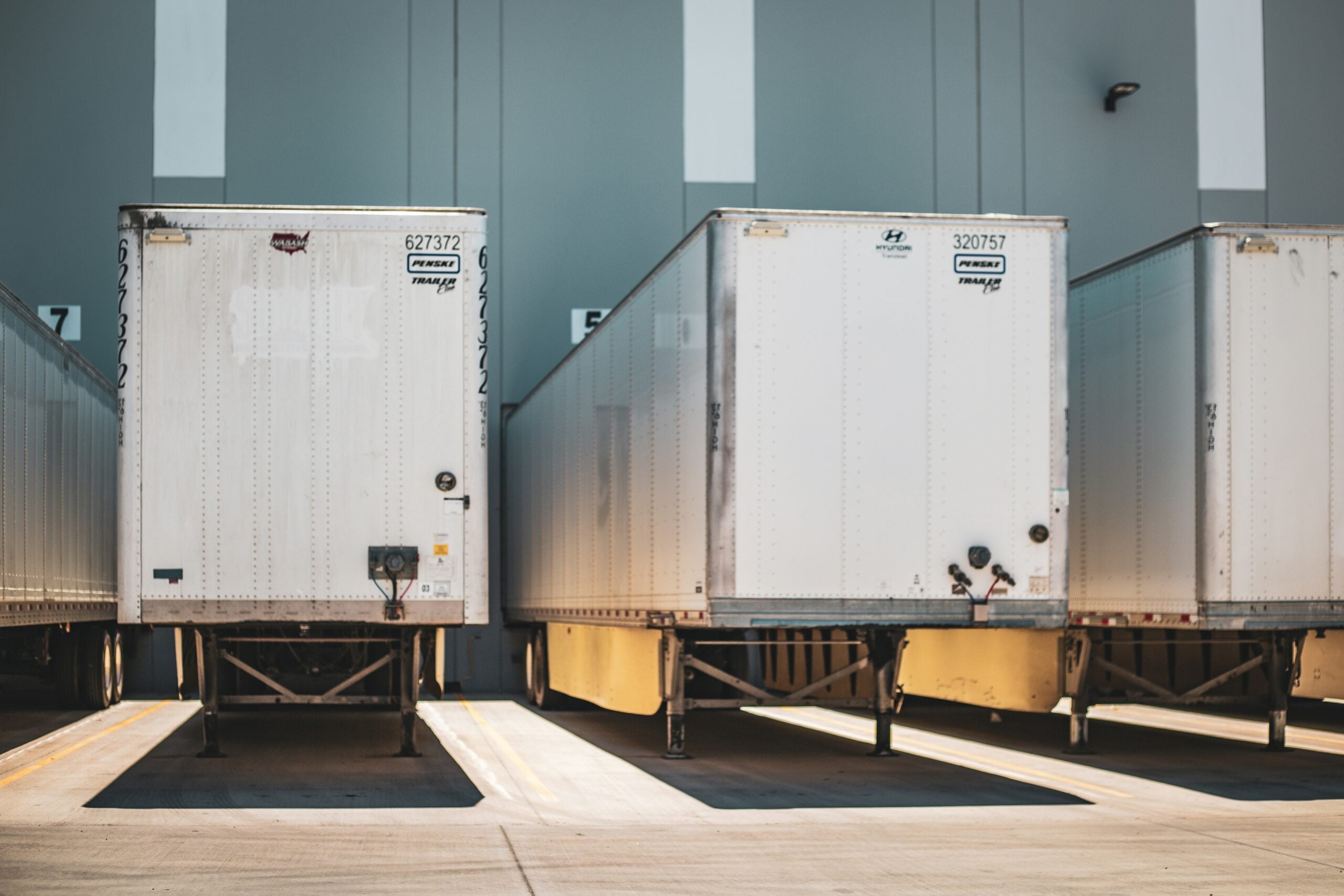
None of this is a forecast. The twelve-month truck reading did move five points between the August and September releases, from 14.3 percent to 19.3 percent. A monthly producer price index is still a backward look at prices already charged, and a single month can reverse. The useful reading is directional: the freight line in a quote written against 2024 or 2025 rates is probably understated, and the size of the error is measurable from a dealer’s own invoices rather than from a national index.
Why a falling volume index does not mean cheaper trucking
A volume index and a price index answer different questions. The Freight TSI measures output across five modes. The truck producer price index measures what carriers charge. Neither series promises that softer demand will show up as a lower invoice on the lane a given order actually ships.
Equipment makes that gap worse because it ships awkwardly. Cardio and strength units are heavy and bulky, they often class at a low density, and they frequently need a liftgate, an inside delivery or a limited-access stop. Accessorial charges of that kind are priced separately from the base rate, so a softer base rate can be swallowed whole by lines that no volume index tracks. Reading your own invoices beats reading the headline.
Fuel is its own line, and it is worth repricing on the same cycle. Our earlier review of diesel pricing and how to recost a service trip charge sets out the method using your own route records. Inbound material costs are moving too, and the effect of that on an open quote is set out in our piece on steel mill prices and what they do to a quote already issued.
Six checks to reset equipment freight costs in a quote
- Pull twelve months of freight invoices by lane. Group them by origin, destination and carrier rather than by customer. A lane-level average is the figure that belongs in a quote template.
- Split base rate from accessorials. Total the liftgate, inside delivery, limited access, residential, redelivery and detention lines separately. If those lines are growing faster than the base rate, a base-rate negotiation will not fix the problem.
- Date every freight assumption in an open quote. A freight number with no date behind it cannot be defended or repriced. Record the month the rate was confirmed and the carrier who confirmed it.
- Confirm who carries an increase under your stated terms. Prepaid, prepaid and add, collect and delivered pricing allocate that risk differently. The table below is a starting point for reading your own paperwork.
- Reprice the freight line on any order older than your validity window. Decide the window, write it on the quote, and apply it consistently. A validity clause that is never enforced is not a clause.
- Agree on a reweigh and reclass procedure in writing. Density disputes on bulky equipment are worth planning for. Settle in advance who supplies dimensions, who pays for a reweigh, and how a corrected class flows back to the customer.
| Freight term on the quote | Who generally absorbs a rate increase | What to tighten |
|---|---|---|
| Delivered or installed price | The seller, until the quote is reissued | Validity period and a dated freight assumption |
| Prepaid and add | The buyer, at actual cost billed through | Proof of actual charges and an accessorial list |
| Collect, buyer’s carrier | The buyer, through its own account | Dimensions, class and delivery-site access notes |
| Freight allowance above an order value | The seller, once the allowance is fixed | Order-value trigger and a cap on the allowance |
A worked example, with the assumptions stated
The figures below are illustrative assumptions chosen to show the arithmetic. They are not industry data, and the only sourced number in them is the 19.3 percent twelve-month change BTS reported for truck transportation services prices.
Assume a twelve-unit cardio package quoted at 48,000 dollars, with a gross margin of 22 percent, and a freight cost of 2,400 dollars taken from a rate last confirmed in September 2025. Applying the 19.3 percent increase gives 2,863.20 dollars, which is 463.20 dollars more than the quote assumed, or 38.60 dollars a unit. Gross profit on the package at 22 percent is 10,560 dollars, so the freight error consumes just under 4.4 percent of it.
Scale that to volume and the number stops looking small. Three packages a month on the same stale assumption is 1,389.60 dollars a month and 16,675.20 dollars over a year, before any accessorial growth. Run the same exercise on your own three busiest lanes, with your own invoices in place of the assumptions above, and the result is a freight figure you can quote from.
Records and metrics worth a monthly look
- Freight cost as a percentage of invoiced order value, tracked by lane and by month.
- Accessorial spend as a percentage of total freight spend.
- Count and dollar value of reclass or reweigh adjustments.
- Average age, in days, of open quotes that carry a delivered price.
- Share of orders shipped on the carrier named in the quote.
- Freight recovery: freight billed to customers divided by freight paid to carriers.
Warning signs and common mistakes
- A quote template with a single flat freight figure for every destination.
- Freight recovery drifting below 100 percent with no one assigned to watch it.
- Accessorial charges coded into one catch-all freight account, so growth is invisible.
- Treating a national index as a substitute for a carrier quote on a specific lane.
- Running your own delivery trucks to dodge carrier pricing without checking the federal rules that follow, which are set out in our guide to delivery trucks over 10,000 pounds and FMCSA obligations.
- Assuming weak demand reported in a volume index has already reached your invoices.
Common questions on equipment freight costs
Does a falling freight volume index mean rates will drop?
Not on its own. The BTS volume index and the truck producer price index measure different things, and in the data published through September 2026 they moved in opposite directions. Treat a carrier quote on your lane as the operative number.
How often should a delivered quote be repriced?
That is a commercial decision rather than a rule, and it depends on how long your orders typically sit before release. The workable version is a written validity period that someone is responsible for enforcing.
Is demand for new fitness equipment holding up?
Construction activity is one proxy, and the federal series behind it is examined in our review of recreation construction spending and what it can tell an equipment dealer. It is a directional signal, not a sales forecast.
The practical close is short. Date your freight assumptions, separate accessorials from base rates, and reprice any delivered quote that has aged past the window you set. The federal data through September 2026 says the direction of travel for equipment freight costs is up, and a quote that assumes otherwise is a margin decision made by default.