
A technician kneels behind the fourth treadmill in a row, motor hood off, while the club stays open around him. The plug sits in a floor box two machines away, within reach of anyone walking past. Whether that technician is protected depends on two things: whether the service company has a written fitness equipment lockout procedure, and whether it was followed.
- When OSHA’s Lockout Rule Applies to Service Work
- The Cord-and-Plug Exclusion Is Narrower Than It Sounds
- Consoles and Emergency Stops Are Not Energy Isolation
- Stored Energy in Fitness Equipment Lockout
- An Energy Map for Common Machines
- A Seven-Step Sequence Built on OSHA’s Order of Operations
- Working in a Client’s Club
- The Records a Fitness Equipment Lockout Program Needs
- Questions Service Managers Ask
- Do we need a written procedure for every treadmill model?
- Does unplugging a cord-connected treadmill take the job outside the rule?
- Does lockout matter for machines with no power cord?
- Start With Next Week’s Route
The federal rule is OSHA’s control of hazardous energy standard, 29 CFR 1910.147. It does not mention treadmills or weight stacks by name. Its scope covers the servicing and maintenance of machines where unexpected start-up or the release of stored energy could injure employees, which describes much of a service technician’s day.
When OSHA’s Lockout Rule Applies to Service Work
The standard defines servicing and maintenance broadly: constructing, installing, setting up, adjusting, inspecting, modifying and maintaining machines, including lubrication, cleaning and unjamming. A belt replacement, a drive-motor swap, a cable change on a functional trainer and a first-time installation all fall within that list, so a company’s procedures need to cover installation crews as well as repair technicians.
It is also among OSHA’s most cited rules. OSHA’s preliminary list of the most frequently cited standards for fiscal year 2026, covering October 1, 2025 to August 31, 2026, ranks control of hazardous energy third.
The standard has a narrow exception for minor tool changes and adjustments made during normal production operations, when the work is routine, repetitive, integral to production and protected by alternative measures. A repair visit to a club rarely looks like that, so plan as if the full rule applies.
The Cord-and-Plug Exclusion Is Narrower Than It Sounds
The standard does not treat unplugging as a form of lockout. It excludes work on cord and plug connected electric equipment from the rule altogether, but only when unplugging controls the hazard of unexpected start-up and the plug is under the exclusive control of the employee doing the work. Commercial treadmills connect to power in different ways, so the installation manual for each model is the starting point.
Both conditions matter on a club floor. A plug in a floor box behind a row of machines, where staff or another contractor can reach it, is hard to describe as under one technician’s exclusive control. A useful working test is whether anyone else could plug the unit back in without the technician knowing. If they could, the exclusion is doubtful, and the job belongs under the full procedure, for example with a lockable plug cover or a locked circuit.
Unplugging also does nothing about energy that stays in a machine after the cord is out. That is where strength equipment and heavy flywheels come in.
Consoles and Emergency Stops Are Not Energy Isolation
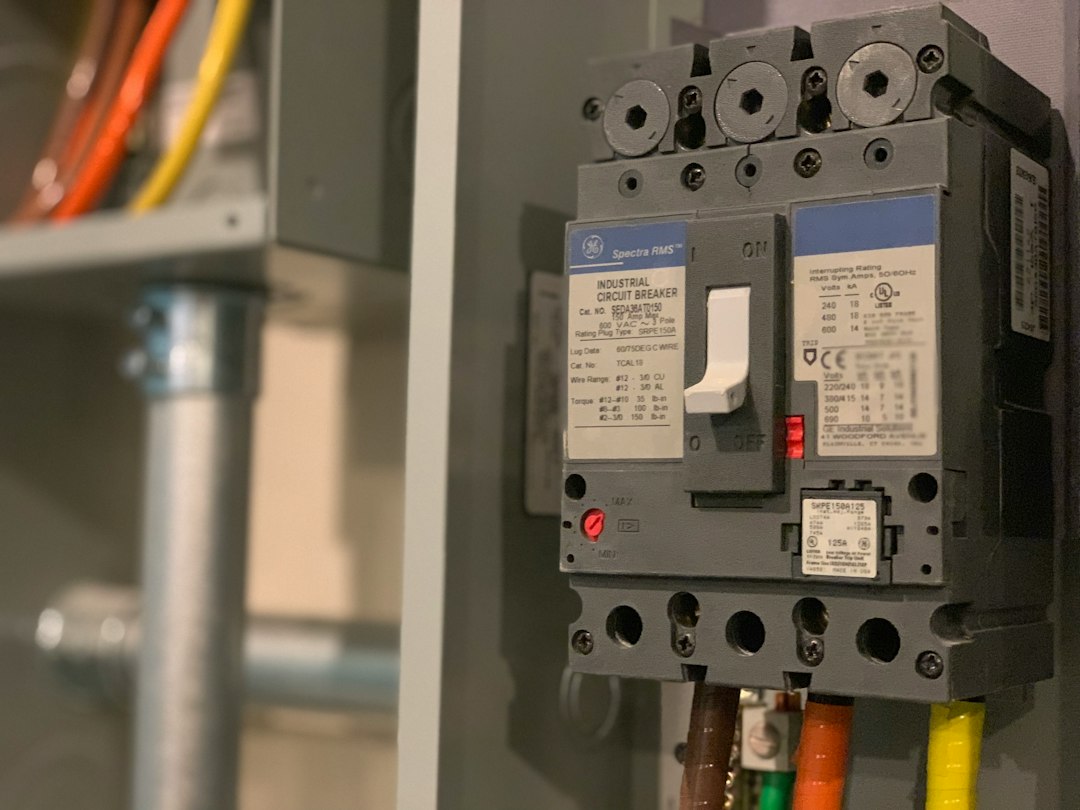
The standard defines an energy isolating device as a mechanical device that physically prevents the transmission or release of energy. It states that push buttons, selector switches and other control circuit type devices are not energy isolating devices. A console stop key, a pulled safety clip or an emergency-stop button therefore does not isolate a machine for servicing.
Those controls still matter for members, as our treadmill emergency stop checklist explains. For the technician, the plug, breaker or disconnect is what has to be controlled. Where the isolating device can take a lock, the standard requires a lock rather than a tag alone, unless the employer can show its tagout program gives an equivalent level of safety.
Stored Energy in Fitness Equipment Lockout
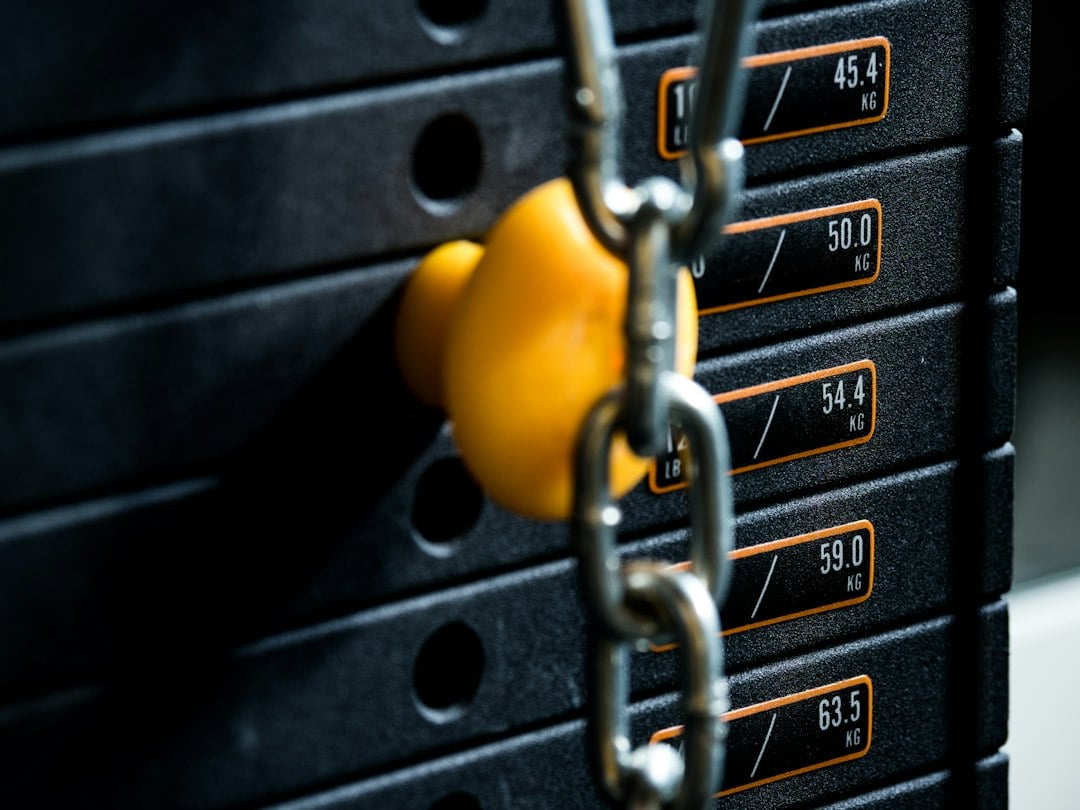
The standard requires that, once lockout devices are applied, all potentially hazardous stored or residual energy be relieved, disconnected, restrained or otherwise made safe. If stored energy could build back up, isolation must keep being verified until the work is finished. OSHA’s sample procedure in Appendix A lists capacitors, springs, elevated machine members and rotating flywheels as examples, to be dissipated or restrained by methods such as grounding, repositioning, blocking or bleeding down.
OSHA’s text does not name fitness equipment, so applying it is a judgment made machine by machine. A selectorized stack pinned in a raised position, a plate-loaded sled lifted off its stops, a tensioned cable, a reformer’s springs and a heavy flywheel on a bike or rower all hold energy that can move a part after the power is gone. A fitness equipment lockout procedure should name each one and say how it is lowered, blocked or released before hands go inside a guard.
An Energy Map for Common Machines
The table is a planning aid for writing procedures, not a substitute for the manufacturer’s service manual, which should decide the isolation point and stored-energy steps for each model.
| Equipment | Energy to identify | Isolation point to confirm | Stored energy to address |
|---|---|---|---|
| Plug-connected treadmill | Mains power to drive and incline motors | The plug, under the technician’s exclusive control or locked in a plug lockout cover | Incline fully lowered; follow the manual on drive electronics that hold charge |
| Treadmill with no accessible plug | Mains power from its circuit | Breaker or disconnect, locked and tagged | Incline fully lowered before any work under the deck |
| Self-powered bike, elliptical or stair climber | Generator output and any onboard battery | Battery disconnect where the manual specifies one | Flywheel and stride linkage stopped and secured |
| Rower or fan bike | Flywheel or fan; console battery | Confirm in the manual whether any mains connection exists | Flywheel fully stopped and held before covers come off |
| Selectorized strength machine | Gravity in the weight stack; cable tension | Usually no electrical supply | Stack lowered fully to rest and cable slack confirmed |
| Plate-loaded leg press or hack squat | Gravity in the sled or carriage and loaded plates | No electrical supply | Plates removed; carriage on its lowest stop or blocked |
| Pilates reformer | Spring tension | No electrical supply | Springs unhooked before carriage, rope or pulley work |
| Digital resistance or powered strength machine | Mains power, motor and any battery | Plug or breaker, as the manual specifies | The manufacturer’s power-down and discharge steps |
A Seven-Step Sequence Built on OSHA’s Order of Operations
The standard sets the order of operations for applying energy controls and for releasing equipment afterward. On a service visit, the written sequence looks like this.
- Prepare. Before shutting down, the technician must know the type and magnitude of the energy, its hazards and how to control it. The energy map and the service manual supply that.
- Notify the club. OSHA requires affected employees to be told before lockout is applied and after it is removed. In a client’s club, tell the manager on duty which unit is coming out of service, so the club’s staff know it must not be restarted.
- Shut down normally. Stop the machine with its own controls first, so the shutdown itself does not create a hazard.
- Isolate every energy source and apply the technician’s own lock. Unplug and keep the plug under control, or open and lock the breaker or disconnect. Each lockout or tagout device must identify the employee who applied it.
- Relieve or restrain stored energy. Lower stacks, unload and block carriages, unhook springs and let flywheels stop. Where energy could build back up, keep checking until the work is done.
- Verify before work starts. Confirm the machine is isolated and deenergized, for example by trying the normal operating controls, then return those controls to off, as OSHA’s sample procedure describes.
- Release and restore safely. Before energy is restored, inspect the work area to confirm tools and other nonessential items are removed and the machine’s components, including covers and guards, are operationally intact. Check that everyone is clear, have the technician who applied the lock remove it, and tell the club the lock is off before the unit is restarted.
One situation has its own rule. If a machine must be powered mid-repair to test or position it, the standard sets a sequence: clear tools and materials, remove employees from the area, remove the lockout devices, energize and test, then deenergize and reapply the full controls before servicing continues. Our return-to-service guarding checklist covers the guard check before a unit goes back to members.
Working in a Client’s Club
When outside servicing personnel do work covered by the standard, the on-site employer and the outside employer must inform each other of their lockout or tagout procedures. For a service company, that means every club contract or site onboarding should include an exchange of procedures, a named contact on each side and an agreement on where tagged units are parked and signed.
This is also a capacity question. If you are deciding whether to keep service in-house or buy it in, our guide to in-house or contracted equipment service sets out the cost case, and energy-control training belongs in it.
The Records a Fitness Equipment Lockout Program Needs
The standard calls for a program made up of energy control procedures, employee training and periodic inspections. Each part leaves a record an inspector can ask to see.
- Written procedures. Procedures must be developed, documented and used, with specific steps for shutting down, isolating, blocking and securing equipment and for verifying that isolation worked. Documentation is waived only when eight conditions are all met, including that the machine has no stored or residual energy and a single energy source that can be readily identified and isolated.
- Training certification. The employer must certify that training has been accomplished and is kept up to date, with each employee’s name and training dates. Retraining is required when job assignments, machines or procedures change.
- Annual inspection. At least once a year, an authorized employee other than the ones using the procedure must inspect it. The employer certifies the inspection with the machine, date, employees and inspector.
- Visit records. OSHA does not require it, but recording the lockout steps on the service ticket shows who isolated each unit and when it returned to service. Our guide to maintenance records as evidence explains why that file matters later.
Questions Service Managers Ask
Do we need a written procedure for every treadmill model?
The rule requires documented procedures that cover each machine’s energy sources and control steps. It waives documentation only when all eight of its conditions are met, and a machine with stored energy fails the first one. Organizing procedures by equipment family, with model-specific notes taken from the service manuals, keeps the set manageable without leaving machines out.
Does unplugging a cord-connected treadmill take the job outside the rule?
Only when unplugging controls the start-up hazard and the plug stays under the exclusive control of the technician doing the work. Even then, unplugging does nothing about stored energy, such as a raised incline or drive electronics that hold charge. If either condition is in doubt, apply the full lockout sequence.
Does lockout matter for machines with no power cord?
The standard covers servicing where a release of stored energy could cause injury, and OSHA’s sample procedure lists springs and elevated machine members among its examples. OSHA does not name fitness equipment, so the call is yours. A raised weight stack or a tensioned spring is a reasonable place to apply the same discipline.
Start With Next Week’s Route
Pull next week’s service tickets and list every machine type on them. For each one, write down the isolation point and the stored energy a technician must deal with, using the service manual as the authority. That list is the first draft of a written fitness equipment lockout procedure, and it takes a service manager an afternoon. Then train the technicians on it, certify the training and put the first annual inspection on the calendar.