

Gym equipment pop pins cost a few dollars each and carry several hundred pounds of consequence. The part is a spring-loaded shaft with two detent balls near the tip, pushed through a hole in a vertical rail, holding a pulley carriage or a bench upright exactly where a member set it.
- The part that holds everything adjustable
- Failure mode one: partial engagement
- Failure mode two: a worn detent ball
- Failure mode three: an elongated rail hole
- Gym equipment pop pins that were never the right pin
- Failure modes five and six: spring fatigue and the unreachable pin
- An inspection matrix for gym equipment pop pins
- What the Precor recall documents
- The reporting duty sitting behind all of this
- Five moves that take pins off the risk register
- Questions floor managers ask
- Can a pop pin be lubricated instead of replaced
- How do we tell an elongated hole from a loose pin
- Are gym equipment pop pins covered under a frame warranty
- Which machines should be checked most often
- Small part, short list
Walk a strength floor and you will pass forty of them before you reach the far wall. They sit in half racks, adjustable benches, functional trainers, cable carriages and every piece of equipment that moves through a range of positions. Almost none of them appear on a preventive maintenance sheet.
The part that holds everything adjustable
Adjustability is the defining feature of modern strength equipment, and gym equipment pop pins are what make it possible. Every position a machine offers is a hole in a rail and a pin that has to fill it completely.
Complete is the operative word. A pin that enters the hole but does not seat past both detent balls looks identical from three feet away and carries a fraction of the load. That gap between looks-fine and is-fine is the whole subject.
Failure mode one: partial engagement
The most common failure among gym equipment pop pins is not the pin breaking. It is the pin sitting in the hole without the detents clearing the far side of the rail.
This happens when a user pushes the pin in while the carriage still carries weight, so friction binds the shaft before it seats. It also happens when paint or powder coat has built up inside the hole. The carriage holds until it does not, usually the moment someone loads it.
Failure mode two: a worn detent ball
The detent balls on gym equipment pop pins are what stop the pin backing out. They are also the smallest wearing surface on the machine, riding in and out of steel holes several thousand times a year.
Worn balls lose their positive click. A pin that slides in and out with no perceptible detent has already failed, whatever it is currently holding. Gym equipment pop pins in high-traffic positions wear faster than the same pin in a rarely used hole on the same machine.
Failure mode three: an elongated rail hole
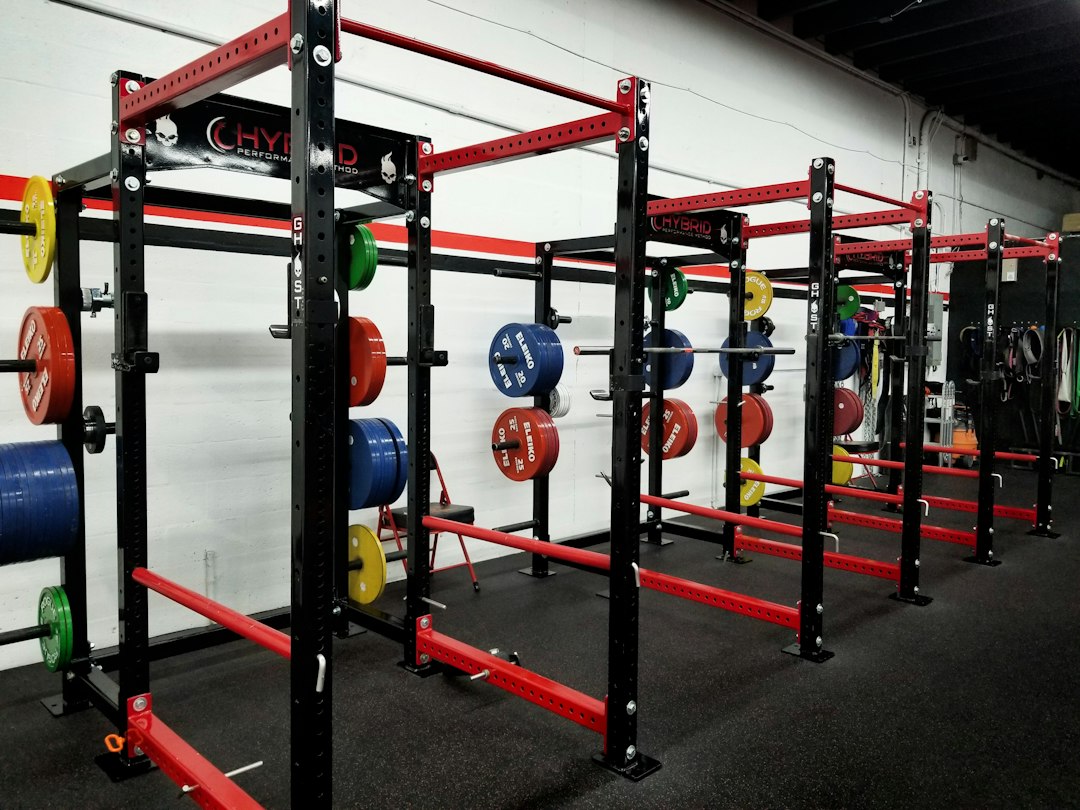
The rail wears as fast as the gym equipment pop pins running through it. Repeated loading against a pin shaft slowly ovals the hole, particularly on the positions members use most.
An elongated hole lets the carriage settle a few millimeters under load, which feels like play and reads as a loose machine. It also reduces the bearing area on the pin, concentrating force on a smaller part of the shaft. This is a frame issue rather than a pin issue, and replacing the pin does not fix it.
Gym equipment pop pins that were never the right pin
Failure mode four is substitution, and it is how most gym equipment pop pins end up wrong. A pin goes missing, a staff member finds a similar one in a drawer, and the machine goes back into service looking complete.
Diameter, grip length, detent spacing and material grade all matter, and none of them are visible at a glance. Gym equipment pop pins are model-specific hardware, not generic fasteners. A short-grip pin in a deep rail is the exact geometry that produces partial engagement on every single use.
Failure modes five and six: spring fatigue and the unreachable pin
Spring fatigue in gym equipment pop pins is slow and quiet. The return spring weakens, the pin no longer snaps fully home when released, and it relies on gravity and orientation to finish seating.
The unreachable pin is a design and placement problem. When a pin sits where a member has to reach across a loaded carriage to operate it, they will operate it one-handed, at an angle, under load. Position determines how a part gets used, and equipment placed tight against a wall or a neighboring machine turns a good pin into a bad one.
An inspection matrix for gym equipment pop pins
Eight checks, all of them performable by hand without removing anything from the floor. A failure in any row takes the machine out of service until the part is replaced.
| Item | Test | Pass | Fail |
|---|---|---|---|
| Detent click | Cycle the pin in free air | Firm, audible detent both ways | Slides freely, no click |
| Engagement depth | Seat the pin, look at the far rail face | Detent balls visible past the rail | Balls inside the rail thickness |
| Shaft condition | Run a fingernail along the shaft | Smooth, no burrs or galling | Scoring, bending or bright wear |
| Spring return | Release from full depression | Snaps back in one motion | Returns slowly or sticks |
| Rail hole | Load the position, watch for settle | No visible movement | Carriage drops on load |
| Tether | Pull the lanyard firmly | Attached at both ends | Broken, missing or knotted short |
| Part match | Compare against the model parts list | Matches the listed part number | Unknown origin or drawer spare |
| Warning decal | Read it from the user position | Legible and present | Worn off or painted over |
What the Precor recall documents
There is a published case with the failure written out in full. In a recall dated December 26, 2024, CPSC and Precor announced that the pop-pin on the Resolute Cable Multi-Station, model RMS905, could fail to fully engage in the vertical rail and let the pulley carriage drop during use.
About 834 units were involved, sold to fitness facilities nationwide between July 2023 and October 2024 at $3,020 to $3,340 per station. CPSC recorded nine reports of the pulley dropping, including two minor head injuries. The remedy was an on-site repair by a qualified technician fitting a redesigned pop-pin and a warning label. Note the shape of that: a commercial manufacturer, a current product, and a part that needed redesigning rather than replacing.
The reporting duty sitting behind all of this
Operators sometimes treat an equipment incident as an insurance matter and stop there. Manufacturers and distributors have a separate obligation, and the penalty for missing it is not theoretical.
CPSC announced on August 4, 2026 that Johnson Health Tech Trading agreed to pay a $16.875 million civil penalty for failing to immediately report a fall hazard with Horizon T101-05 treadmills, according to the agency’s news release archive. For a distributor, the practical read is that incident reports from customers are regulatory information, not customer service noise. Keeping a contemporaneous floor log serves both purposes at once.
Five moves that take pins off the risk register
Three of these cost nothing, and the other two cost less than a single incident report.
- Add the detent test to the weekly walk. Cycle one pin per adjustable machine in free air. It takes two seconds and catches spring fatigue and worn balls together.
- Order spares by part number, not by sight. Pull the number from the parts list for every adjustable machine on the floor and keep two of each.
- Ban the drawer. Any pin not traceable to a parts list comes off the floor. Substituted hardware is the failure mode you cannot inspect your way out of.
- Check clearance at the pin, not at the machine. If a member has to reach across a loaded carriage, the equipment is too close to its neighbor.
- Log every drop report. One member mentioning a carriage that moved is an anecdote. Three in a file is a pattern, and a pattern is what a manufacturer needs to act.
Questions floor managers ask
Can a pop pin be lubricated instead of replaced
Light lubrication helps a sticking shaft and does nothing for a worn detent or a fatigued spring. Clean and lubricate as routine, then run the detent test afterward. If the positive click has not returned, the pin is worn rather than dirty and replacement is the only fix.
How do we tell an elongated hole from a loose pin
Swap in a known-good pin of the correct part number and load the position again. If the settle disappears, the pin was the problem. If the carriage still moves, the rail hole has worn and the frame needs the manufacturer’s assessment rather than another pin.
Are gym equipment pop pins covered under a frame warranty
Usually not. Most commercial warranties separate frame, moving parts and wear items, and pins fall into the last category with a much shorter term. Confirm the classification at quote stage, the same way you would check any other documentation attached to a purchase order.
Which machines should be checked most often
Anything adjusted by members rather than staff, and anything holding load overhead. Cable carriages, adjustable benches and Smith machine safety stops sit at the top. Pin positions in the middle of a rail see the most cycles and wear first, so check those before the extremes.
Small part, short list
The pin is not a maintenance problem in the usual sense. It does not degrade on a schedule, it does not announce itself, and it does not cost enough to appear in a budget conversation. It simply stops holding one day, under load, with someone underneath it. Eight checks, two seconds each, and a parts list taped inside the service cupboard door are the entire remedy. The same reasoning applies to the cord at the back of every treadmill.