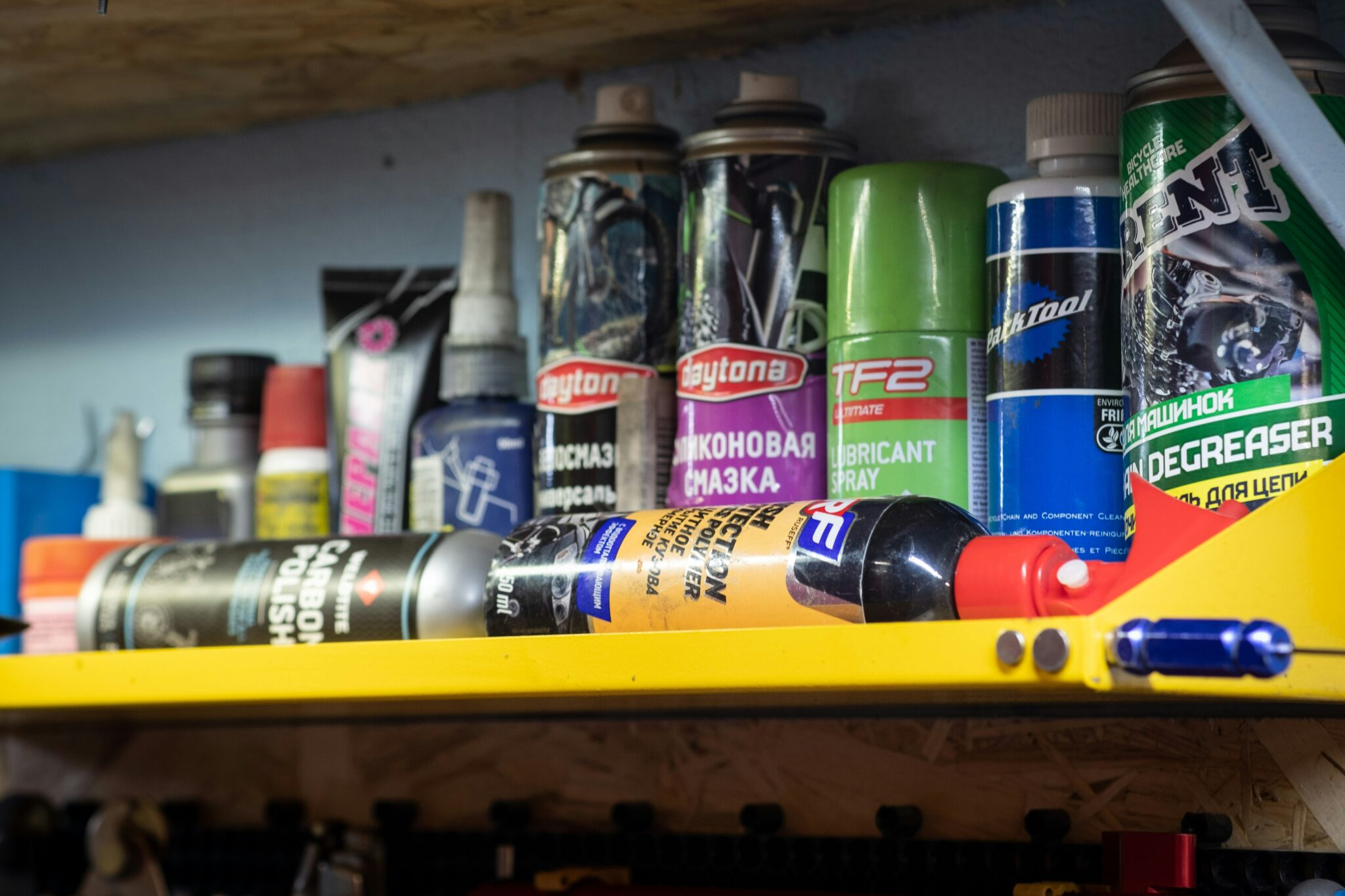

The hazard communication deadline now facing fitness equipment businesses is November 20, 2026, and it runs to hazardous substances rather than to every product on the shelf. OSHA moved it there in a final rule effective January 15, 2026, which pushed four compliance dates in the updated Hazard Communication Standard back by four months. The duty that lands on that date sits with employers, not only with the companies that make and ship the chemicals. A shop that stocks belt lubricant, solvent cleaner, aerosol degreaser, thread locker or touch-up paint is generally an employer with hazardous chemicals on the premises, and its first job is sorting which products fall on which date.
- What the hazard communication deadline requires of employers
- The four extended dates, and which one is yours
- Why a fitness equipment shop sits inside the rule
- Seven checks before the hazard communication deadline
- A worked example for a two-technician shop
- Records to pull and warning signs
- Frequently asked questions
- Does an unopened case of lubricant need a workplace label?
- Is training required again if nothing in the shop changed?
- What happens to the 2012 labels already on the shelf?
- What to do this month
That describes a common setup in this industry. Service departments, parts rooms, remanufacturing benches, install trucks and distribution warehouses all hold the same short list of consumables. None of it is a machine standard or a product recall, so it tends to sit below the line on an operations meeting agenda. It is also the kind of documentation gap an inspector can establish quickly.
What the hazard communication deadline requires of employers
In the January 2026 rule, OSHA wrote that “the compliance date in § 1910.1200(j)(2)(ii) is extended from July 20, 2026 to November 20, 2026.” That paragraph is the employer paragraph for substances, and the rule describes it as applying to all employers. Mixtures sit on a later track: the employer date for those is May 19, 2028 under paragraph (j)(3)(ii), and many shop consumables are formulated mixtures rather than single substances, so the safety data sheet for each product is what tells you which date applies.
Per the same document, the work (j)(2)(ii) covers is, as necessary, updating any alternative workplace labeling, updating the hazard communication program, and providing any additional employee training for newly identified physical hazards, health hazards or other hazards covered by the standard.
So there are three deliverables to review, not one. The first is workplace labeling: the labels a shop writes itself for containers it fills on site, plus the signs, placards or process sheets some shops use in place of a label on a stationary process container. The second is the written program document that says who does what. The third is training that reflects the classification and label changes OSHA adopted in 2024, delivered to the people who handle the material.
The four extended dates, and which one is yours
The January 2026 rule moved four dates. Two belong to chemical manufacturers, importers and distributors; two belong to employers. Reading the table below against your own role matters, because a dealer that repackages or relabels product for resale can sit on both sides of it. State-plan states adopt standards on their own schedule, so a shop operating under one should confirm the dates that apply locally.
| Paragraph | Who | Category | Was | Now |
|---|---|---|---|---|
| 1910.1200(j)(2)(i) | Manufacturers, importers, distributors | Substances | January 19, 2026 | May 19, 2026 |
| 1910.1200(j)(2)(ii) | All employers | Substances | July 20, 2026 | November 20, 2026 |
| 1910.1200(j)(3)(i) | Manufacturers, importers, distributors | Mixtures | July 19, 2027 | November 19, 2027 |
| 1910.1200(j)(3)(ii) | All employers | Mixtures | January 19, 2028 | May 19, 2028 |
The rule also left paragraph (j)(4) alone, which, in OSHA’s description, lets employers and chemical manufacturers, importers and distributors comply with the 2012 standard, the updated standard, or both until the applicable date arrives. Read on its own terms, that is a transition allowance with an end point, not an open option. The full text of the extension is published in the Federal Register notice extending the compliance dates.
One practical consequence is worth flagging for anyone who buys. Suppliers were due to meet the substance requirements by May 19, 2026, so a case that arrives now with an older-format label is a reasonable question to put to the vendor rather than a problem to absorb quietly. Receiving is one of the cheapest places in the building to catch it.
Why a fitness equipment shop sits inside the rule
The underlying amendments took effect July 19, 2024, and OSHA described their purpose as conforming the Hazard Communication Standard to the United Nations Globally Harmonized System and improving alignment with other agencies and trading partners. Per OSHA’s summary of that rule, the changes include new classification categories for aerosols, desensitized explosives and flammable gases, new labeling provisions for small containers, revised label-updating rules for product released for shipment and for bulk shipments, a trade secret allowance for concentration ranges, and technical amendments to safety data sheet contents.
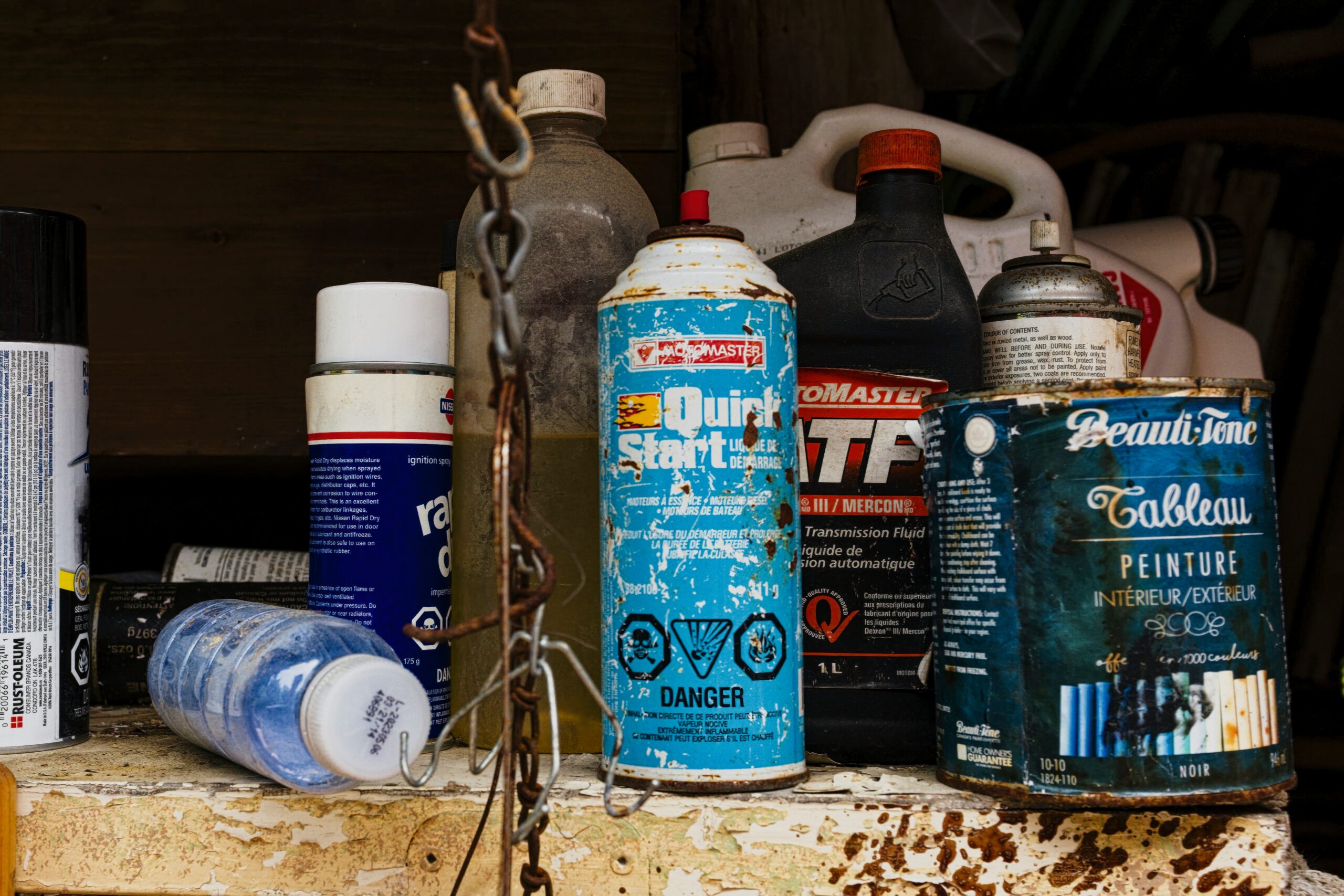
Several of those touch this trade directly. Aerosol lubricants and brake-style cleaners are common on a service van. Small containers are what a technician actually carries, often a decanted bottle with a hand-written name on it. And the safety data sheets a parts buyer files are the documents whose format changed, which is what makes the training piece more than a formality.
None of this turns on the size of the business. The hazard communication deadline attaches to the employer relationship rather than to headcount, square footage or whether a company calls itself a dealer, a distributor or a service contractor. A two-van operation and a regional warehouse face the same three questions, and the smaller one usually has the shorter inventory.
Chemical hazard is not the only standard that reaches a repair bay. The same bench may fall under OSHA’s lockout rule for technicians servicing treadmills and strength machines, and a bay that welds stainless can sit inside the chromium (VI) exposure limits that apply to welding fume. Treating them as one program usually costs less than running three.
Seven checks before the hazard communication deadline
- Walk the inventory and write it down. Every aerosol, bottle, pail, tube and cartridge in the service department, parts room, van stock and warehouse. Include the items nobody orders through purchasing, such as a technician’s own silicone spray.
- Match a current safety data sheet to each line. Request the current sheet from the supplier rather than reusing the PDF in the shared drive. Note the revision date on each one, because that date is the evidence that you asked.
- Fix the containers you fill yourself. Secondary and decanted containers are where workplace labeling applies, and alternative labeling covers the signs, placards or process sheets some shops use instead of a label on a stationary process container. An unlabeled spray bottle on a cart is an easy finding on the floor.
- Rewrite the written program, not just the binder tab. Name the person responsible, say where the sheets live, say how a new product enters the shop, and date the revision.
- Train the people who handle the material, and record it. Technicians, parts staff, receiving and anyone who cleans equipment. A sign-in sheet with the date, the topics and the trainer is generally what substantiates it later.
- Check what arrived after May 19, 2026. Product shipped by manufacturers and distributors after that date should reflect the updated substance requirements, so incoming labels are a useful cross-check on your own.
- Calendar the mixtures dates now. November 19, 2027 for suppliers and May 19, 2028 for employers, so the second wave does not arrive as a surprise.
A worked example for a two-technician shop
The figures below are illustrative assumptions for planning, not industry data. Recompute them against your own payroll and product list before you budget anything.
- Assume 22 distinct chemical products across the bay, the parts room and two vans.
- Assume 20 minutes per product to request and file a current safety data sheet, and 6 hours to rewrite the written program.
- Assume 5 employees in scope at a 45-minute training session, at a fully loaded labor rate of 48 dollars per hour.
On those assumptions the sheet work is 22 times 20 minutes, or 7 hours 20 minutes. Program rewrite adds 6 hours, for 13 hours 20 minutes of administrative time. Training is 5 times 0.75 hours, or 3.75 hours, which at 48 dollars is 180 dollars of labor. The total is roughly 17 hours of internal time, of which the 3.75 training hours are the 180 dollars in wages above, before any purchase of printed labels.
The more useful output of the exercise is the product list, which tends to reveal duplicate consumables bought by two departments at different prices.
Records to pull and warning signs
Four documents carry the weight: the chemical inventory, the safety data sheet file, the written program with a revision date, and the training roster. If a manager cannot produce all four in ten minutes, the program is not ready regardless of what the binder says. Assembling them in one folder before the hazard communication deadline also makes the next inspection or insurance review a shorter conversation.
- Spray bottles or squeeze bottles on a cart with no label, or a label written in abbreviations only the senior technician reads.
- A safety data sheet file whose newest revision date predates 2024.
- A written program that still names an employee who left.
- Training records that cover technicians but not receiving or cleaning staff.
- Van stock that never appears on any inventory because it was bought on a shop credit card.
Adjacent record systems are worth checking in the same pass, since the triggers overlap. It is a reasonable moment to confirm which equipment dealers have to keep OSHA injury logs, and to reconcile the chemical list against the cleaning products matched to equipment surfaces and contact time.
Frequently asked questions
Does an unopened case of lubricant need a workplace label?
A container that still carries the supplier label as shipped is generally the supplier’s labeling obligation rather than yours. The employer labeling duty is aimed at the containers a workplace creates or alters. The practical test on a shop floor is whether anyone transferred the product into something else.
Is training required again if nothing in the shop changed?
The employer duty OSHA tied to November 20, 2026 includes providing additional training, and the label and data sheet changes came from the rule rather than from your product list. A shop that bought nothing new in two years still has staff reading newly formatted sheets. Confirm the scope for your own operation with your safety adviser or counsel.
What happens to the 2012 labels already on the shelf?
OSHA’s extension notice describes paragraph (j)(4) as allowing compliance with the 2012 standard, the updated standard, or both until the applicable compliance date. After that date the allowance has run, which is why the inventory walk in check one matters more than it looks.
What to do this month
Treat the hazard communication deadline as an operations task with an owner rather than a compliance memo. Give one named person the inventory walk and a two-week limit. Order the current safety data sheets in a single batch request to each supplier rather than product by product. Book the training session before the calendar fills, and keep the sign-in sheet with the program document rather than in a payroll folder. The underlying amendments and OSHA’s own summary of what changed are in OSHA’s copy of the 2024 Hazard Communication final rule, and a safety adviser or counsel is the right check on how the standard applies to a specific operation.