

IEEPA tariff refunds moved into a new phase in October 2026, and the change matters to fitness equipment businesses that imported treadmills, racks or accessories in 2025. On October 6, U.S. Customs and Border Protection (CBP) opened CAPE Phase 3 for finally liquidated entries, but only for importers that are plaintiffs in their own Court of International Trade cases. Two days later, the court certified a nationwide class of importers. Which route applies to a shipment now depends on where its entry sits in the liquidation cycle, and on whether the importer has sued.
How IEEPA tariff refunds got here
On February 20, 2026, the Supreme Court held in Learning Resources, Inc. v. Trump that “IEEPA does not authorize the President to impose tariffs.” The majority opinion did not address refunds of duties already collected. CBP then built a refund tool, the Consolidated Administration and Processing of Entries (CAPE), and opened its first phase in the ACE Portal on April 20, 2026.
That first phase, according to CBP’s CSMS # 68315804, was “limited to certain unliquidated entries and certain entries within 80 days of liquidation.” A June update added certain entries flagged for reconciliation. Entries that had already passed those windows had no CAPE route at all.
The tool has moved a large amount of money. In a September 15, 2026 declaration to the Court of International Trade, CBP’s Brandon Lord reported that refunds of duties plus interest of approximately $122 billion had been completed through CAPE, using data as of September 11. The court’s October 8 opinion put the figure at approximately $126 billion in duties plus interest as of October 2, 2026, and said: “The CAPE program has been a remarkable success.”
What changed in October
The court’s opinion describes the first change directly: “On October 6, 2026, Customs deployed CAPE Phase 3, which permits the plaintiffs in the more than 4,000 cases where the court’s order has been entered to file a CAPE declaration.” CBP’s declaration said plaintiffs that submitted a valid importer of record number to CBP by July 30, 2026 would be able to file Phase 3 declarations. The opinion defines an entry as “finally liquidated” when it “has been liquidated for more than 90 days and is thus beyond the period for voluntary reliquidation” by CBP.
The second change came on October 8, 2026, in Freestyle World, Inc. v. U.S. Customs and Border Protection. Judge Richard K. Eaton certified a class defined as “All importers of record who paid duties imposed by the Challenged Tariff Orders between February 1, 2025, and February 19, 2026, excluding any entity that has separately filed an action seeking to recover IEEPA duties payments.” The class was certified under Rule 23(b)(2), and the opinion states that membership in such a class “is mandatory and fixed.”
The court noted that CAPE does not accept certain categories of entries, including finally liquidated entries of importers that have not sued. It also wrote that if CAPE stopped functioning, “approximately $30 billion in unlawfully collected duties would remain on deposit in the Treasury.” The opinion certifies the class and orders the parties to submit a joint proposed scheduling order by October 22, 2026. It does not itself order refunds to class members.
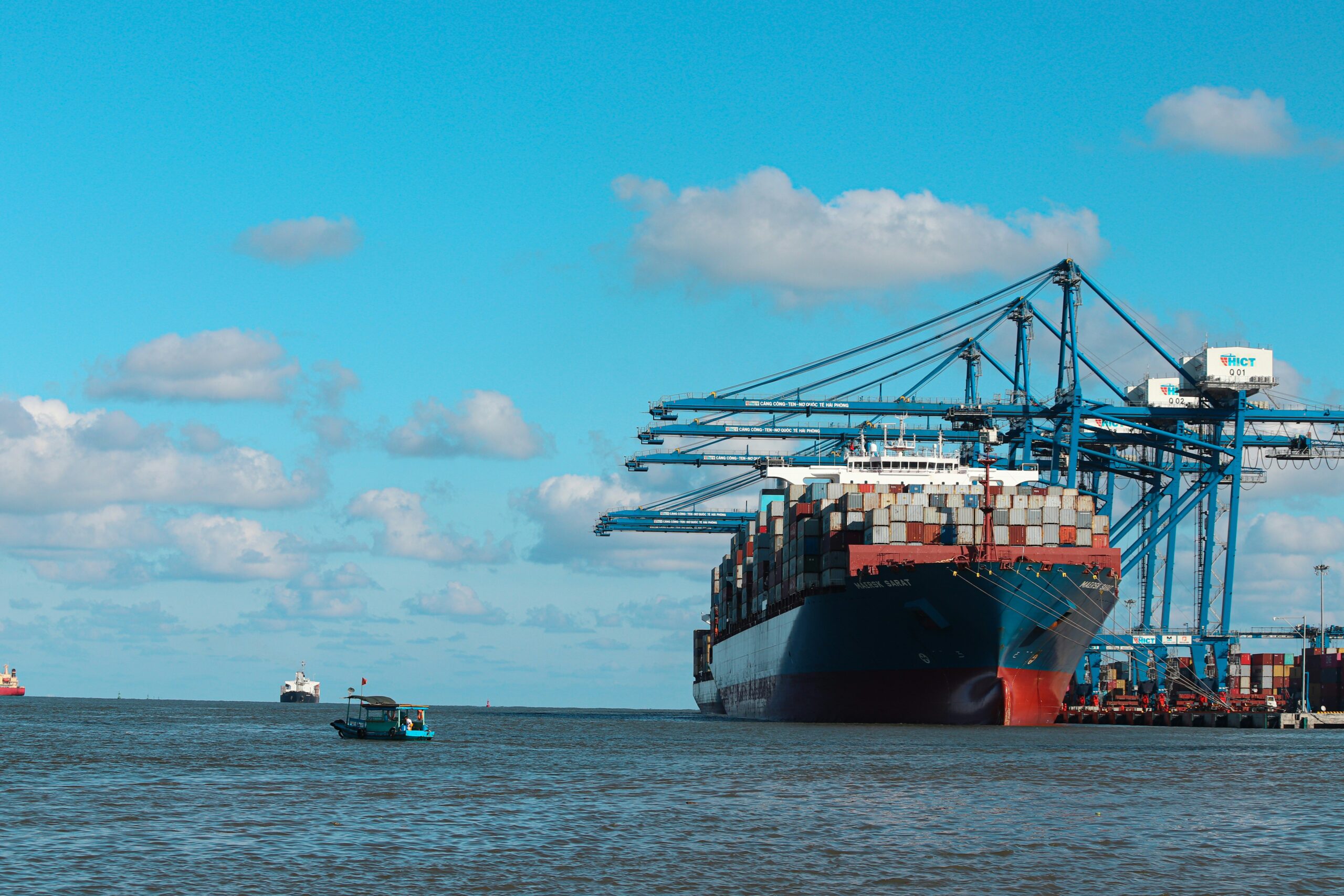
Entry status decides the route for IEEPA tariff refunds
The rows below cover the main situations; some entries fall outside them, such as entries liquidated 81 to 90 days ago, warehouse entries and reconciliation entries already filed, and need review with a broker. The CAPE rules come from CBP’s Cargo Systems Messaging Service (CSMS) bulletins; the last two rows come from the court record.
| Entry status | Route as of mid-October 2026 | Source |
|---|---|---|
| Certain unliquidated entries, or certain entries within 80 days of liquidation | CAPE declaration by the importer of record or the broker that filed the entry | CSMS # 68315804 and # 68340863 |
| Flagged for reconciliation, no reconciliation entry filed, unliquidated or within 80 days of liquidation | CAPE, from June 29, 2026 | CSMS # 69035485 |
| Open or suspended protest | Rejected by CAPE | CSMS # 68340863 |
| Finally liquidated, importer is a plaintiff with a court order entered in its case that gave CBP a valid importer of record number by July 30, 2026 | CAPE Phase 3, from October 6, 2026 | CBP declaration; court opinion |
| Finally liquidated, importer has not sued | No CAPE route; class member if it paid trafficking or reciprocal IEEPA duties between February 1, 2025 and February 19, 2026 | Court opinion of October 8, 2026 |
The CAPE rules also have mechanical limits. According to CSMS # 68340863, each declaration file can list up to 9,999 entry numbers, entries must carry at least one IEEPA Chapter 99 tariff number, and entries more than 80 days past their liquidation date are rejected.
Who receives the money
CBP pays the importer of record or the party it designates on CBP Form 4811. The same bulletin says a CAPE declaration “may only be submitted by the IOR associated with the entry summaries,” or by the broker that filed those entry summaries, and that “Interest is calculated on these refunds” under 19 CFR 24.36. CSMS # 68315804 says refunds are consolidated by importer of record, or by the party designated on CBP Form 4811, and that recipients must provide bank details for electronic refunds through the ACE Portal.
Bank details have become a real bottleneck. CBP’s September declaration reported that 20,184 refunds totaling approximately $1.3 billion had not been transmitted to the Treasury because the importer of record or its Form 4811 designee had not provided Automated Clearing House (ACH) information. From October 10, 2026, CSMS # 70162211 requires a security token, sent by email with an option to also receive it by text message, to complete an addition or change to ACH refund information in the ACE Portal.
Dealers that paid a supplier’s tariff surcharge
A dealer that bought through a domestic distributor was not the importer of record on those goods. Nothing in CBP’s CAPE bulletins describes a payment to a downstream buyer; refunds go to the importer of record or its Form 4811 designee. Whether any part of a refund flows back to a dealer generally depends on the purchase terms and the relationship, not on CBP.
Here is a worked example with stated assumptions. Assume a dealer’s 2025 invoices from one distributor show tariff surcharge lines totaling $18,400 across three orders, and the distributor confirms the surcharge passed duty through at cost. Its broker’s records show $12,000 of that duty was IEEPA duty and $6,400 was Section 301 duty on goods of Chinese origin, which together make $18,400.
Only the $12,000 is in scope for an IEEPA refund; Section 301 duties were not part of the Supreme Court case. The $12,000 is the figure to raise with the distributor, and the contract will generally decide the answer. Ask the distributor in writing whether it has filed CAPE declarations for the relevant entries, whether those entries are part of a court case, and what it intends for customers that paid surcharges. A written answer is the record any later negotiation will rest on.
The same logic runs the other way. A dealer that added IEEPA surcharges to its own invoices to clubs and studios should expect some customers to ask whether those charges will be credited. The duty layers and quote terms behind those surcharges are set out in the guide to fitness equipment tariffs and quote escalation terms, and the margin side in protecting open quotes when supplier prices rise.
Five checks for an equipment importer this month
- Pull an ACE report of every entry since February 1, 2025 that carries IEEPA Chapter 99 lines, and sort it by liquidation status.
- File CAPE declarations, directly or through the broker that filed the entries, for eligible entries still unliquidated or within 80 days of liquidation, before more entries age out of that window.
- Confirm ACH refund enrollment for the importer of record or its Form 4811 designee, and decide who in the business will receive the new security token.
- For finally liquidated entries, decide with trade counsel whether to rely on the class or file your own action. Under 28 U.S.C. 2636(i), an action under the court’s residual jurisdiction, 28 U.S.C. 1581(i), is barred unless commenced “within two years after the cause of action first accrues,” and when that clock started for IEEPA claims is a question for counsel.
- Reconcile tariff surcharges you paid to suppliers and charged to customers against the IEEPA lines on the underlying entries, and set a written policy on whether refunds flow through.
Mistakes to avoid
- Treating class membership as a refund. The October 8 opinion certifies the class; it does not order payment.
- Expecting Section 232 or Section 301 duties back. The Supreme Court case concerned IEEPA tariffs only.
- Letting bank details lapse. An approved refund still waits if CBP has no ACH information.
- Filing CAPE declarations for entries with an open or suspended protest, which CAPE rejects.
For an equipment importer, IEEPA tariff refunds now start with records: know every entry’s status, keep bank details current and decide early on the finally liquidated entries. Importers coordinating with brokers and carriers will find the related handoffs in the container import playbook on free time and demurrage evidence. This article is general information, not legal or customs advice; confirm your entries with a licensed customs broker and your options with trade counsel.