
For: distributors, dealers and commercial strength-equipment buyers
The decision: Which stations merit a demonstration, customer-backed order or inventory commitment?
60-second answer: Treat a range expansion as a reason to investigate demand, not proof of local sell-through. Compare movement gaps, complete installed cost, demo value and support readiness model by model.
The announcement and its limits
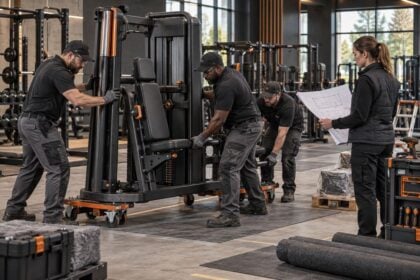
A Matrix Fitness press release dated September 30, 2026 described fourteen additions to its plate-loaded range, introduced at events with BWT Alpine Formula One Team and Wigan Warriors. The announced examples included pendulum squat, belt squat, standing hip thrust and several row stations.
That is evidence of this manufacturer’s catalog investment. It does not establish dealer margins, local purchasing demand, stock availability or comparative durability. The buying framework below is FEX analysis; confirm each model’s specification and commercial terms directly.
Translate interest into an orderable requirement
Review recent inquiries, lost quotes and existing customer floors. Separate a named request from a general expression of interest in strength equipment. Identify the movement, user group and operating constraint the proposed station would address. Several new machines can serve overlapping needs; stocking an entire range may add duplication before it adds useful choice.
| Decision factor | Evidence to pull | Decision it informs |
|---|---|---|
| Local demand | Dated inquiries, quotes and customer commitments | Stock, demonstrate or quote to order. |
| Use-space fit | Dimensioned operating envelope and loading access | Whether the station fits the actual floor. |
| Complete cost | Machine, plates, storage, freight and installation | The customer proposal and dealer cash exposure. |
| Demonstration value | Questions a hands-on trial can resolve | Whether a showroom position is justified. |
| Service readiness | Manuals, wear-part numbers and support route | Whether you can support the sale. |
| Exit conditions | Returns, demo resale, revision and cancellation terms | How to limit an unsuccessful inventory commitment. |
Compare a station, not an empty frame
Ask whether plates and storage are included, how loading and unloading affect circulation, and which anchoring or building checks apply. Confirm the assembly and movement route before quoting delivery. Use the manufacturer’s requirements rather than treating a static catalog footprint as the working space.
For the dealer, add freight, receiving, demonstration preparation, training and stock holding to the commitment review. Show support and warranty obligations beside expected gross profit. A mechanically simpler product does not automatically have lower total ownership cost at every site.
Choose a bounded next step
- Stock a model only where demand and replenishment evidence support the commitment.
- Use a demo when a trial can resolve a meaningful purchase question.
- Quote to order where demand is infrequent or configurations vary.
- Defer where support, fit or commercial terms remain unresolved.
Set the review date and success criteria before the first commitment. Record quote conversion, delivery performance and service issues against your own baseline. Avoid a universal turnover threshold for a specialty line.
What to do this week
- Select the few models most relevant to actual customer requests.
- Obtain written commercial terms and model-specific documents.
- Prepare one complete installed-cost proposal.
- Choose stock, demo or order-only status and record the reason.
Use the inventory worksheet and budget allocation framework to make the final commitment.