
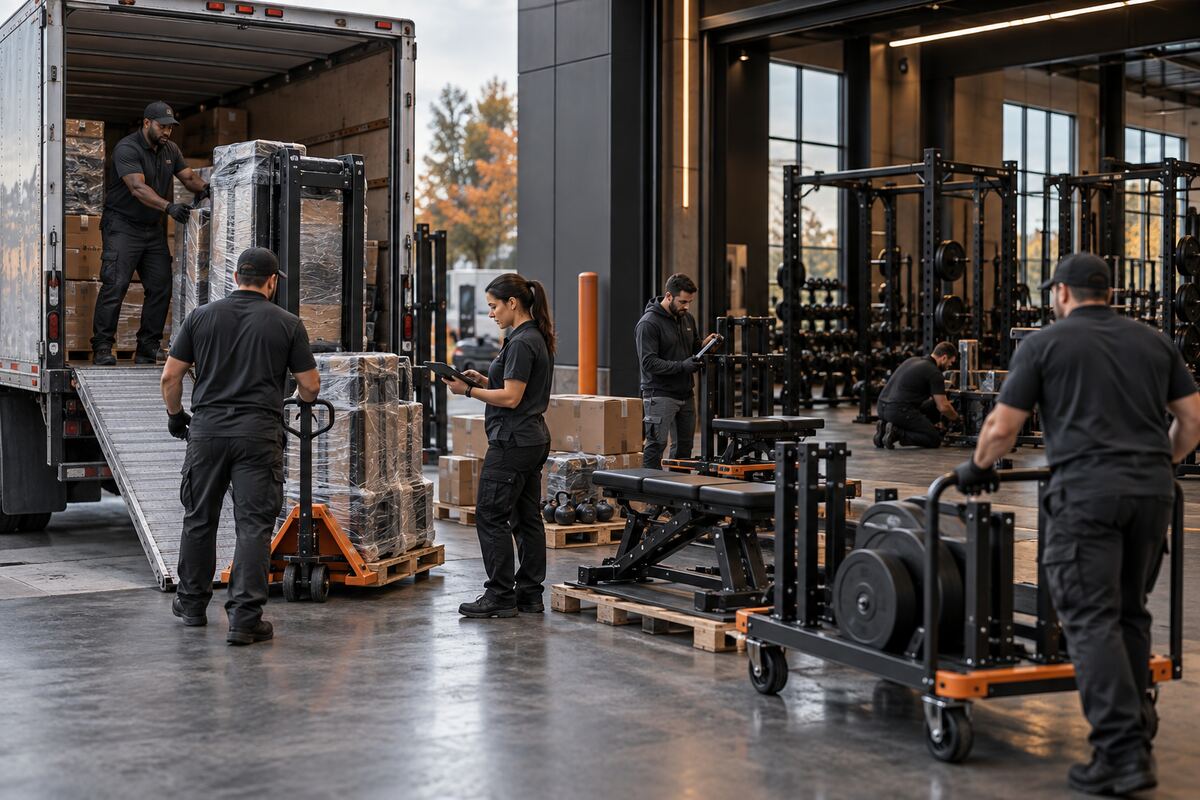

Fitness equipment distribution is usually reported on as a logistics number: the truck arrived on the day it said it would. That number tells you nothing about whether the operator can open. A trailer emptied onto a floor is a pile of boxed liability until somebody has counted it, tested it and signed for it.
- Fitness equipment distribution is settled at one event, not across a project
- Before: one person has to hold the acceptance authority
- Before: the paperwork that has to be on site, not in an inbox
- During: the count and the condition record
- During: serial capture is an asset register, not a formality
- During: assembled and commissioned are different statuses
- The fitness equipment distribution acceptance matrix
- After: the punch list that actually closes
- After: warranty registration has a clock on it
- The first 72 hours
- Questions operators ask once the truck has gone
- Should I sign the delivery note if I have not opened anything?
- How long do I have to report damage found after unwrapping?
- What counts as acceptance in fitness equipment distribution?
- Who should hold the asset register afterward?
- What acceptance actually signs off
The whole of that judgment happens around one event, the acceptance walk. This piece is organized around it: what has to exist before it, what happens during it, and what is still owed afterward.
Fitness equipment distribution is settled at one event, not across a project
Site readiness is a separate discipline with its own deadlines, and it ends the moment the delivery slot is confirmed. If that part is still open, work through the site-readiness countdown that runs before the truck is booked first, because nothing below repairs a site that was not ready.
From the moment the doors open, acceptance is the only status that matters. Delivered, unwrapped, assembled and accepted are four different conditions, and money, warranty clocks and claim windows attach to different ones.
Before: one person has to hold the acceptance authority
Name the person who can reject an item, in writing, before the vehicle arrives. Not a committee, not whoever happens to be nearest the door. That person needs the equipment schedule, the placement plan, a camera, and the authority to refuse a substitution without phoning anybody.
Give them a second name to escalate to and an agreed response time. Fitness equipment distribution goes wrong most often in the gap between someone noticing a problem and someone being allowed to do something about it.
Before: the paperwork that has to be on site, not in an inbox
The delivery note, the packing list, the equipment schedule with serial fields left blank, the placement plan, and a blank exception log. Print them. A signature captured on a driver’s handheld at the curb is not a record you control.
Agree in advance what wording goes on the delivery note if anything is wrong, and who signs. “Signed unexamined” is a phrase worth writing down before it is needed. Almost every fitness equipment distribution dispute is decided by what a document said on the day, not by what two people remember afterward.
During: the count and the condition record
Count packages against the packing list before the vehicle leaves, not after. Photograph every crate that shows a scuff, a crushed corner, a torn wrap or a tipped indicator, with the label visible in the same frame. Record the shortfall in writing while the driver is still present.
Concealed damage is the harder case. Wrap comes off hours later, and by then the carrier has gone. Unwrap high-value items first for exactly this reason, and keep the packaging until the item has been function-tested. Fitness equipment distribution claims are won on photographs taken in the first two hours and lost on packaging that went into a dumpster.
During: serial capture is an asset register, not a formality
Every serial number gets recorded against a zone, a position on the placement plan, a delivery date and a warranty start date. Photograph the plate rather than transcribing it, then type it once from the photograph. A digit transposed on delivery day becomes a rejected warranty claim eighteen months later.
Small accessories, keys, adapters and console hardware get tied to their parent asset in the same record. These are the items that vanish between unwrap and opening, and they are almost never covered by anyone’s insurance. A fitness equipment distribution handover without a serial-level register hands operations a floor it cannot service.
During: assembled and commissioned are different statuses
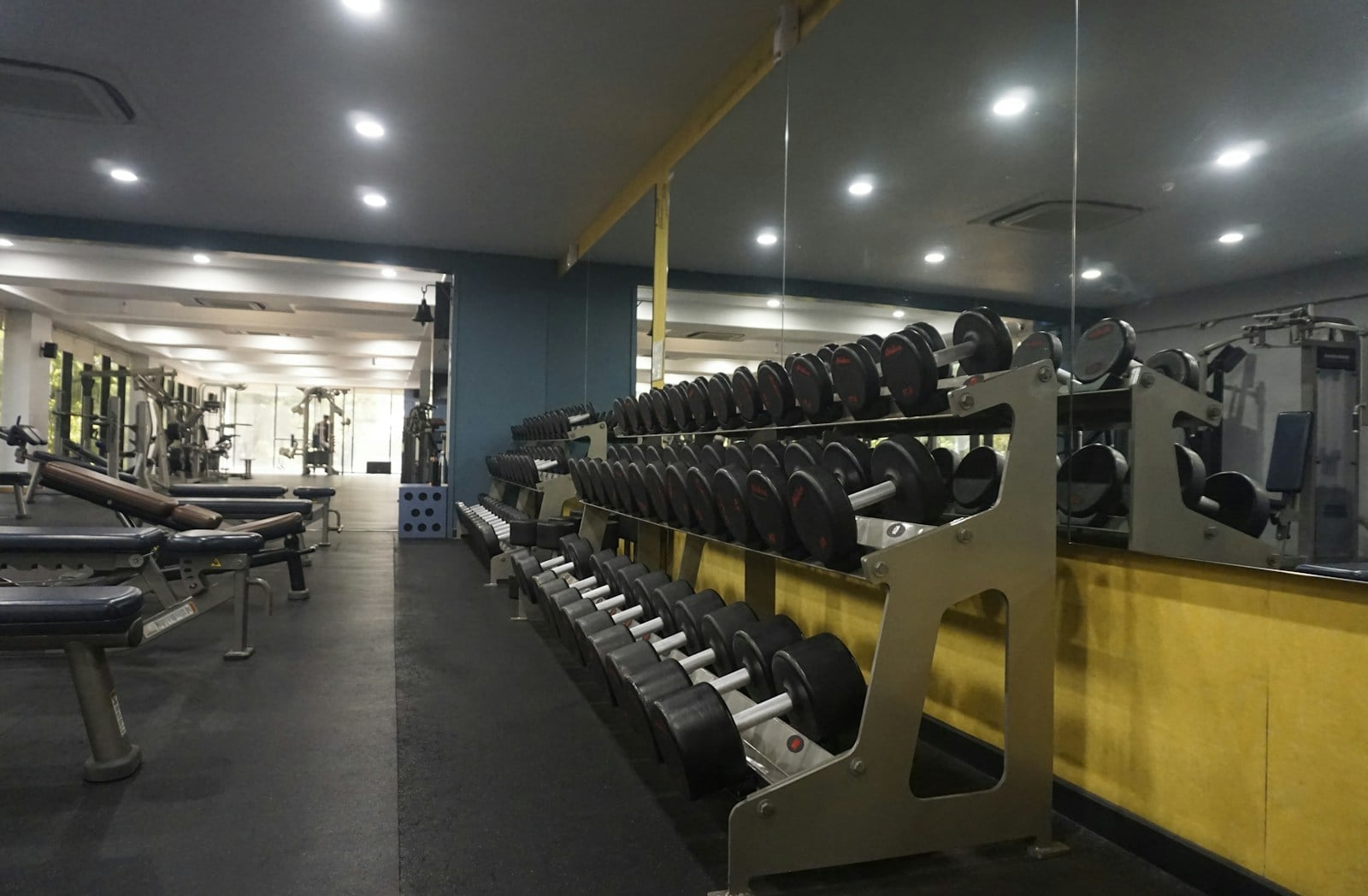
Assembly is a build. Commissioning is a proof. Cycle every adjustment through its full range, load the resistance, run the console through its modes, check the connectivity, verify emergency stops where fitted, test stability under a realistic load and confirm the labels and guards are present.
Write down the result per unit. A tick against a model number is not a commissioning record; a dated result against a serial number is. Standards work in this category sits with ASTM Subcommittee F08.30 on fitness products, which is the body that develops the consensus standards manufacturers reference.
The fitness equipment distribution acceptance matrix
Every finding at acceptance falls into one of these categories. The category decides who owns it, when the clock starts and what actually closes it.
| Finding | Record it as | Owner | Clock starts | Closed by |
|---|---|---|---|---|
| Crate damaged, contents intact | Noted exception on the delivery note | Carrier or distributor | Before the driver leaves | Photo set plus a written release |
| Damage found once wrap is off | Concealed damage claim | Distributor | Delivery date, within the contract window | Replacement fitted and re-tested |
| Missing accessory or hardware | Shortage | Distributor | Day of delivery | Item received and matched to a serial |
| Wrong model or finish supplied | Substitution dispute | Distributor plus acceptance authority | Before assembly begins | Written acceptance or collection booked |
| Assembled but fails a function test | Commissioning exception | Installer | At commissioning | Witnessed re-test, dated and recorded |
| Console will not join the network | Onboarding exception | Operator IT plus distributor | At commissioning | Device online and reporting |
| Cosmetic mark, unit usable | Punch item | Installer | At the acceptance walk | Repair accepted in writing |
| Manual, key or label missing | Documentation gap | Distributor | At handover | Item filed in the asset pack |
| Anchor or leveling not final | Safety-critical punch item | Installer | Immediately | Re-torque recorded and signed |
After: the punch list that actually closes
Most punch lists are abandoned rather than completed. They die because they have no owner per line, no date, and no definition of what closure looks like. A list of thirty items with one collective owner is a list nobody is failing to deliver. This is where fitness equipment distribution quietly separates a competent supplier from a merely punctual one.
Give every line a name, a date, an evidence requirement and a review meeting that happens whether or not anything has changed. Hold a small retention or a final sign-off against completion where the contract allows it. The difference between a closed punch list and an abandoned one is almost never effort; it is whether anything happens on the day an item goes overdue.
After: warranty registration has a clock on it
Register every serial with the manufacturer inside the stated window and file the confirmation with the asset record. Warranty terms and service terms are separate things bought from potentially separate parties, and the FTC’s consumer guidance on warranties is a clear general explanation of why a service contract is not a warranty.
Then decide, while everything is documented, whether a paid agreement is worth holding on this asset mix. That is a numbers question, and when a service agreement earns more than it costs is easier to answer with a fresh asset register than a year later. The same register is what later lets you read the wear signals that arrive before a failure against a specific machine rather than a category.
The first 72 hours
- Close the delivery note before the driver leaves. Counted, photographed, exceptions written on the document you keep a copy of. Nothing signed clean that has not been looked at.
- Unwrap high-value units first and keep the packaging. Function-test them the same day, and hold the wrap and pallets until the concealed-damage window has closed.
- Build the asset register from photographs. Serial, zone, position, delivery date, warranty start. One row per unit, typed once and checked by a second person. This register outlives the fitness equipment distribution project by a decade.
- Convert the exception log into a punch list with names and dates. Every line gets an owner, a due date and a stated evidence requirement before anyone leaves site.
- Book the first punch review for day seven. Put it in diaries while the crew is still on site, and hold it even if nothing has moved.
Questions operators ask once the truck has gone
Should I sign the delivery note if I have not opened anything?
Sign it, but annotate it. Write that the goods are received unexamined and subject to inspection, note any visible crate damage, and photograph what you have written. An unqualified clean signature makes a later concealed-damage claim considerably harder to argue.
How long do I have to report damage found after unwrapping?
It depends on the contract and the carrier’s terms, so read them before delivery rather than after. The practical answer is that the window is short and it is measured from delivery, not from when you noticed. Unwrap early and test early.
What counts as acceptance in fitness equipment distribution?
Acceptance means every unit is commissioned, tested, documented and usable by a member, with the exception log converted into an owned punch list. It is not the same as substantial completion, and it should be defined in the contract rather than assumed on the day.
Who should hold the asset register afterward?
Operations, not the project team, because the project team disbands. Store it where the person who takes the first breakdown call can reach it. That handover matters, since what happens in the first day of a failure depends on somebody finding a serial number quickly.
What acceptance actually signs off
Signing acceptance says four things at once: the count was right, the condition was recorded, every unit was proved under load, and the remaining work has a name against it. Good fitness equipment distribution makes all four defensible months later, from documents rather than memory. A trailer leaving is a logistics event. A floor opening is the one anybody will remember.