
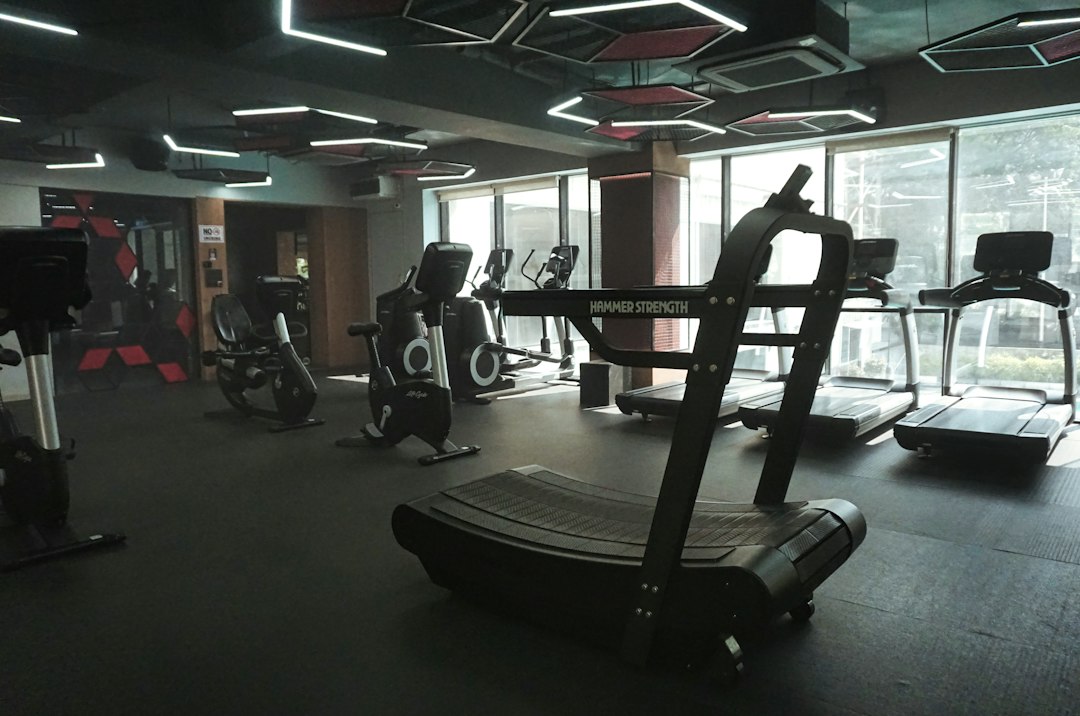

The serial plate on a stepmill sits behind a side shroud, four screws deep, and an equipment asset register is the only thing standing between that plate and a two-day scavenger hunt. Clubs rarely think about the record until a manufacturer asks which units they own. Then somebody walks the floor with a phone camera. The answer takes three days and is wrong in two places.
- Four questions an equipment asset register has to answer in five minutes
- Serial numbers are the only field nobody can reconstruct
- Where the record lives decides whether anyone updates it
- The seven fields that carry the weight
- A recall notice is the hardest test the record faces
- The capital request an equipment asset register writes for you
- Warranty expiry is a date, not a feeling
- Standing up the record inside one quarter
- Operator questions on equipment asset registers
- How many fields should a small independent club actually track?
- Do we need barcode or RFID tags on every machine?
- What do we do about used machines that arrived with no paperwork?
- The day the record pays for itself
The stepmill is a useful example because it moves. Machines get shuffled between sites during a refit, consoles get swapped under warranty, and the tag on the frame stops matching the line in the spreadsheet. A treadmill bought in 2021, relocated in 2023 and re-consoled in 2025 carries three identities in most systems. It carries one serial number, and that serial is the only fact about it that never changed.
Four questions an equipment asset register has to answer in five minutes
The test is not whether a record exists. It is whether four questions can be answered from a desk without a site visit: what do we own, where is each unit today, how old is it, and who still carries an obligation on it. Most operators can answer three. An equipment asset register earns its name on the fourth.
That fourth question is ownership of risk. A machine still inside its parts warranty, a machine sitting on a service contract and a machine that is fully exposed all look identical on the floor. They are three different lines in a repair budget. Our breakdown of what a dead station actually costs covers what that exposure looks like across a month of lost use.
Serial numbers are the only field nobody can reconstruct
Every other field can be rebuilt from paperwork. Purchase dates live on invoices, warranty terms live in the contract, and location can be established by walking the building with a clipboard. Serial numbers cannot be rebuilt once a machine leaves, because the plate leaves with it.
That is the argument for capturing serials at the dock rather than during a later tidy-up. The installer already has the unit unwrapped and the plate exposed. Ten minutes of photography on install day beats an afternoon spent crawling behind a cardio row eighteen months later, and it is the cheapest insurance an equipment asset register will ever buy.
Where the record lives decides whether anyone updates it
An equipment asset register kept in one person’s spreadsheet dies the week that person is away. A record kept inside the maintenance system gets touched every time a work order is raised, which is the only update cadence that survives contact with a working club.
The practical rule is that the record belongs wherever service calls are logged. If a technician has to open a second system to note a part change, that second system falls behind within a quarter. Tie the data to the work order and it maintains itself as a by-product of work that was happening anyway.
Multi-site operators add one requirement: a single identifier that follows the machine between locations. Site-prefixed asset numbers look tidy on day one and turn into a liability the first time a unit is transferred across town.
The seven fields that carry the weight
An equipment asset register fails in two directions: too thin to answer anything, or so detailed that nobody keeps it current. Seven fields cover almost every question a club, a distributor or an insurer will ask across the life of a machine.
| Field | What it records | Captured by | What breaks without it |
|---|---|---|---|
| Serial number | Plate ID exactly as stamped | Installer at delivery | Recall filtering, warranty claims |
| Asset ID | Your own permanent number, never reused | Purchasing at PO stage | Tracking transfers between sites |
| Model and build year | Catalog name plus year of manufacture | Purchase order | Parts lookup, obsolescence calls |
| In-service date | Day the unit first carried a member | Site manager | Warranty clock, depreciation |
| Location and position | Site, room and floor position | Work order system | Technician routing, floor audits |
| Warranty terms | Parts, labor and frame end dates | Contract file | Paying for covered repairs |
| Cumulative repair spend | Running total of parts and labor | Service invoices | Repair-or-replace decisions |
A recall notice is the hardest test the record faces
Recalls arrive as serial ranges and date windows rather than as model names, and they arrive with a clock attached. In December 2025 the CPSC published a recall of about 1,900 AMP MP2 smart fitness machines, wall-mounted strength units sold online for roughly $1,800 between January and August 2025, after the firm documented ten incidents of an arm failing to lock. The remedy required an in-home visit by an authorized technician.
The harder case is the one with no recall at all. CPSC issued a warning in April 2026 telling consumers to stop using Sperax walking pads and treadmills, citing 201 reports of uncontrollable speed or abrupt stops, at least 66 falls or injuries, and 573 reports of overheating, fires and other thermal incidents. The agency stated the importer had refused to agree to an acceptable recall. There is no remedy to administer in that situation and nobody funding it, which is covered further in our account of where recall response goes wrong. An equipment asset register is what tells you whether the problem is yours at all.
The capital request an equipment asset register writes for you
Budget season rewards operators who can produce an age profile on demand. Sort the equipment asset register by in-service date, overlay cumulative repair spend, and the replacement case argues itself without adjectives. Finance does not need a story about how tired the cardio row feels.
The same table answers the question finance asks next, which is what happens if the spend is deferred twelve months. Units already past their repair-cost crossover become visible as a group rather than as individual complaints from site managers.
It also settles disposal. Machines that come off the floor need a documented destination, and the end-of-life plan depends on knowing which serials left, when, and to whom.
Warranty expiry is a date, not a feeling
Parts and labor coverage rarely expires together, and frame coverage can outlast both by years. A record that stores one expiry date per machine guarantees somebody will eventually pay for a covered repair. Store the dates by component group instead.
The payoff shows up at claim time. Denied claims usually fail on documentation rather than on the part itself, which is the pattern set out in our review of how warranty claims get rejected. Serial, install date and service history are the three fields a manufacturer asks for first.
Standing up the record inside one quarter
- Fix the field list before counting anything. Agree the seven columns, the format of each one and who owns them. Changing the schema halfway through a floor walk guarantees a second floor walk.
- Photograph every plate in one pass. Send two people with phones and a floor plan; one shoots the serial plate, the other records room and position. A 200-unit club takes most of a day.
- Reconcile against invoices, not memory. Match each captured serial to a purchase order and a delivery note. Units with no paper trail get flagged rather than guessed at.
- Attach the data to the work order system. Every future service call should open from the asset line, so repair spend and part changes accumulate without anyone retyping them.
- Name an owner and a quarterly reconciliation date. Transfers, disposals and new deliveries get checked against the floor four times a year. Without a named owner the record drifts inside two quarters.
Operator questions on equipment asset registers
How many fields should a small independent club actually track?
Seven is the working minimum at any size, because the questions do not get simpler at twenty machines. A single-site operator can skip site codes and still needs serial, model, in-service date, location, warranty expiry and running repair cost. Effort scales with machine count, not with field count.
Do we need barcode or RFID tags on every machine?
Not at the start. A printed asset number on a durable label is enough for most fleets under a few hundred units, and phone photography handles the rest. Barcodes pay off when technicians log calls from the floor several times a day, which is a multi-site pattern rather than a single-club one.
What do we do about used machines that arrived with no paperwork?
Record the serial from the plate, set the in-service date as the day you put it on the floor, and mark warranty status as none until a document proves otherwise. An estimated build year is better than a blank field, provided it is flagged as estimated rather than confirmed.
The day the record pays for itself
Nobody builds this for a normal Tuesday. It pays on the day a serial range lands in the inbox, the day an insurer asks what was in the building, or the day finance asks why the replacement number moved. On those days the difference between a three-day answer and a five-minute one is the entire value of the exercise.