

In a busy studio, group cycle bikes are retired for corrosion long before anything on them wears out from riding.
- The Failure Curve Is Corrosion, Not Miles
- Green: What a Healthy Bike Sounds Like
- Amber: The Signals That Precede a Callout
- Red: Off the Floor Today
- Where Group Cycle Bikes Actually Wear
- The Class Distinction Most Buyers Skip
- A Tiered Inspection Table for Group Cycle Bikes
- What the Standard Expects You to Keep
- Five Steps to Put a Fleet on Tiers
- Questions Studio Owners Ask About Group Cycle Bikes
- Is magnetic resistance worth the premium
- How often should a fleet be deep serviced
- Do wipes and disinfectant accelerate the damage
- The Cost of Waiting for Red
That is an uncomfortable finding for anyone who budgeted on ride hours. Sweat is saline, it falls on the same three or four places on every bike, and it works downward into the exact components that are expensive to replace and awkward to reach.
Group cycle bikes that hold their value are not the ones ridden less. They are the ones inspected on tiers, where a green bike is left alone, an amber bike gets a scheduled intervention, and a red bike comes off the floor that day.
The Failure Curve Is Corrosion, Not Miles
Draw the line of where sweat lands on group cycle bikes: the top tube area, the handlebar stem, the seat post collar, and the frame directly beneath the rider. Now list what sits under those points. On most designs it is the bottom bracket, the seat post, the stem adjuster and the drive components inside the shroud.
This is why two studios with identical class schedules see different service bills. The one that wipes frames after every class and the one that wipes them at close are not running the same equipment, whatever the invoice said. Operators who already run reformer wear checks in the same building will recognize the pattern.
Green: What a Healthy Bike Sounds Like
Green group cycle bikes are quiet under load, hold resistance without drift, and have adjusters that move with even friction across their full range. Seat and handlebar collars lock without being forced.
Most importantly, a green bike feels identical to the bike beside it. Riders notice variance long before they notice wear, and the first complaint in a studio is almost always comparative: this one feels different.
Amber: The Signals That Precede a Callout
Amber is a noise, a hesitation or a play that a technician can still fix on a scheduled visit. A faint crunch at the bottom of the pedal stroke, a seat post that needs a shove to move, a slight lateral rock at the crank, a console that wakes late.
None of these stops a class, and amber bikes run all week without anyone raising a ticket. All of them are the same fault at an earlier stage, and all of them get cheaper if they are caught while the part they threaten is still serviceable. Studios that log these the way clubs log early failure signals on cardio equipment spend materially less on emergency callouts.
Red: Off the Floor Today
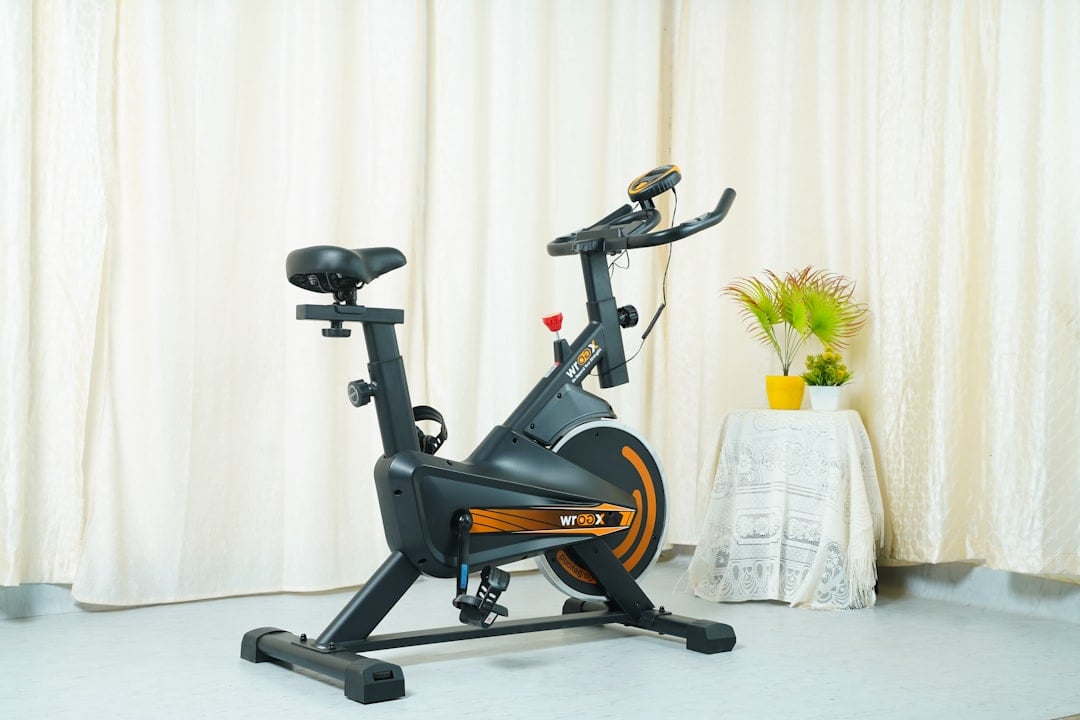
Red is anything that can injure a rider or destroy a frame. A seat post that slips under load, a crank arm with detectable play, a pedal that will not hold a cleat, a brake or resistance mechanism that does not release.
Red group cycle bikes are not judgment calls and should not wait for the next scheduled visit. Tag the bike, remove the pedals so it cannot be quietly used, and log the date, because that log is what supports any later warranty claim.
Where Group Cycle Bikes Actually Wear
Four components account for most of the spend. The bottom bracket goes first on most fleets, because it sits directly under the heaviest sweat load and its failure is gradual enough to be ignored.
Next come the seat post and its collar, then the pedals, then the resistance mechanism. On friction systems the pad is a consumable and behaves like one. On magnetic systems there is nothing to wear, but the actuator and its cable are still mechanical parts that corrode and stretch. Either way the consumable line behaves like the cardio costs that skip the quote and land anyway.
The Class Distinction Most Buyers Skip
ASTM International’s Standard Specification for Stationary Upright and Recumbent Exercise Bicycles and Upper and Total Body Ergometers, designated F1250-20, divides these products into four classes. Class A covers non-free-wheeling bikes with a directly driven flywheel, which is what almost every studio bike is. Class B covers free-wheeling bikes, Class C ergometers built for precise work measurement, and Class D conversion units for road bicycles.
Almost all group cycle bikes on a commercial studio floor are Class A. The distinction matters because a directly driven flywheel keeps turning with the rider’s legs. That is a handling characteristic, a training characteristic and a maintenance characteristic, and it is the reason pedal and crank play is a red item on a studio bike rather than an annoyance.
A Tiered Inspection Table for Group Cycle Bikes
Hand this to whoever opens the studio. The point is not diagnosis; it is sorting group cycle bikes into three buckets fast enough to do it every day.
| Component | Green | Amber | Red | Action at amber |
|---|---|---|---|---|
| Bottom bracket | Silent under load | Faint grinding at the base of the stroke | Audible knock or visible play | Schedule bearing service within two weeks |
| Seat post and collar | Slides and locks clean | Needs force to adjust | Slips under a seated rider | Strip, clean and grease the post |
| Pedals and crank | No lateral movement | Slight rock at the pedal | Play at the crank arm | Torque check, replace pedals in pairs |
| Resistance mechanism | Smooth across the range | Drifts or catches at one point | Will not release | Inspect pad, cable and actuator |
| Flywheel and drive belt | True and quiet | Squeal under load | Visible wobble or belt fraying | Tension check, belt on next visit |
| Frame and welds | Clean, paint intact | Surface rust at sweat points | Cracked weld or deep pitting | Treat and seal before it penetrates |
| Console and sensor | Wakes instantly, cadence steady | Slow wake or dropouts | No output during class | Replace battery, check sensor gap |
What the Standard Expects You to Keep
The specification covering group cycle bikes is not only about construction. It also addresses documentation: the owner’s manual, assembly instructions, maintenance guidance, user weight restrictions and warning labels that address hazards during storage, movement, entry, use and exit.
That paperwork is the first thing a studio loses and the first thing anyone asks for after an incident. The ANSI overview of what F1250-20 covers notes that the standard sets requirements for pedals, seat posts, handlebars, crank endurance and the saddle, and that it is intended to be used alongside related ASTM documents. Keep the manuals with the asset record, not in a drawer.
Five Steps to Put a Fleet on Tiers
Group cycle bikes respond to a rhythm more than to a budget. Five steps put one in place without new headcount.
- Number every bike physically. Vinyl numerals on the frame, matched to the asset record, so a rider report names a bike instead of describing one.
- Run a sixty-second open. Whoever unlocks the studio spins each bike, checks post and pedal, and marks green, amber or red on a single sheet.
- Rotate the fleet on a fixed cycle. Front-row bikes take the most hours; moving them back monthly evens the wear instead of concentrating it on six frames.
- Pull shrouds quarterly. Corrosion is invisible until a cover comes off, and a quarterly look at the drivetrain is what turns red events into amber ones.
- Buy the wear parts as a kit. Bottom bracket, collars, pedals and pads for the whole fleet, ordered together, which is cheaper and stops a single missing part from holding a bike off the floor.
Questions Studio Owners Ask About Group Cycle Bikes
Is magnetic resistance worth the premium
For a fleet running many classes a day, usually yes, because it removes the pad as a recurring consumable and one source of noise complaints. The actuator and cable still need attention, so the saving is in parts and downtime rather than in maintenance disappearing. Price the difference against your current pad spend before deciding.
How often should a fleet be deep serviced
Tie it to class volume rather than the calendar. A studio running a bike in six classes a day is accumulating wear roughly six times faster than one running it in a single class, and quarterly shroud-off inspections suit the former while twice yearly suits the latter. The tiers tell you when the interval is wrong.
Do wipes and disinfectant accelerate the damage
The residue does, if it is left to dry on hardware. Disinfectant that pools at the seat collar and the stem is more corrosive than sweat alone. Wiping frames dry after the last class of the day costs a few minutes and protects the components underneath those exact points.
The Cost of Waiting for Red
A tiered fleet is not better maintained so much as differently timed. The same parts are replaced either way; the question is whether they are replaced on a planned visit at a parts price or during peak hours at an emergency rate with a class standing around. Studios that run the open-of-day check find that most of their bikes stay green for years, and that the handful which do not are always the same handful. That, not the purchase price, is where the fleet cost is decided.