

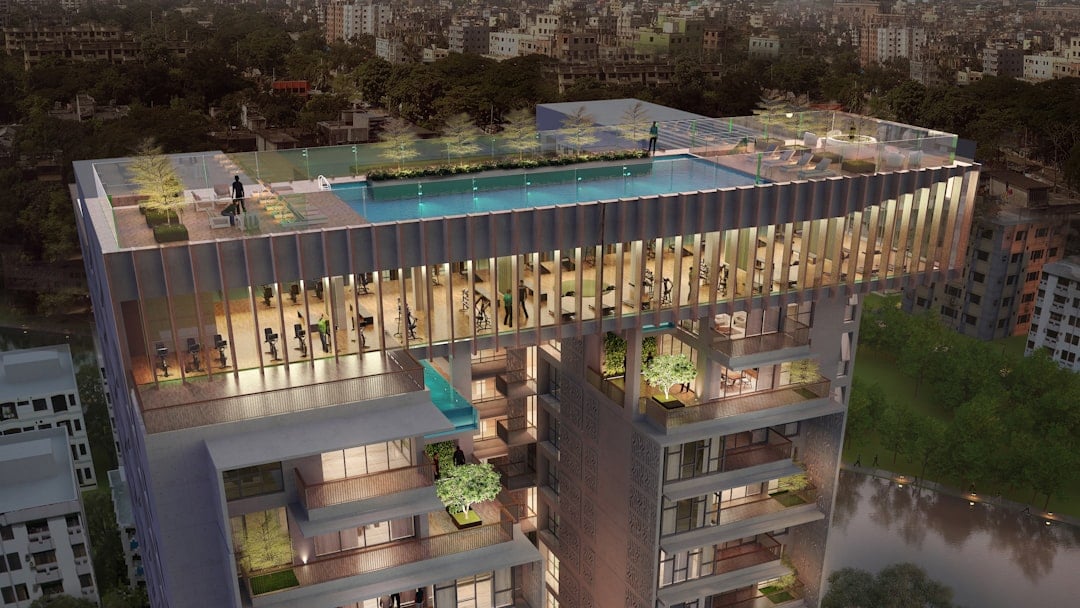
Amenity decks, hotel pool terraces and courtyard training areas keep appearing in fit-out packages, and almost none of the outdoor fitness equipment that lands on them was specified against a standard written for outdoor use.
- Two Standards, and a Gap Between Them
- Gap One: Anchoring Is a Structural Submittal, Not a Bolt
- Gap Two: Drainage Decides the Frame’s Second Winter
- Gap Three: Coatings Fail at the Fastener First
- Outdoor Fitness Equipment and the Warranty Exclusion Nobody Reads
- Gap Four: Unsupervised Use Changes the Labeling Job
- Gap Five: Surfacing and Clearance Travel Together
- The Remaining Spec Lines, Scored
- Specifying Outdoor Fitness Equipment in Six Steps
- The Seasonal Service Line Nobody Budgets
- Questions Buyers Ask About Outdoor Fitness Equipment
- Can we move our existing indoor machines outside under a canopy
- Do outdoor stations need an accessible route
- How much does frame corrosion actually shorten service life
- The Deck Is Not a Floor
The equipment arrives looking right. It is powder coated, it carries a commercial warranty, and the brochure shows it on a terrace.
Eighteen months later the fasteners bloom rust, the decals have gone white, and the warranty claim comes back declined. The failure was written into the purchase order.
Two Standards, and a Gap Between Them
ASTM F2276, the Standard Specification for Fitness Equipment, is the document most commercial machines are built against. Its scope is explicit: it is intended that these fitness products be used in an indoor setting or environment.
Alongside it sits ASTM F3101, the Standard Specification for Unsupervised Public Use Outdoor Fitness Equipment, which covers permanently anchored stations used without supervision by people aged thirteen and above.
Most amenity decks fall between the two. The machines are indoor-spec, the setting is outdoor, and the supervision model is somewhere in the middle. Nothing in the purchase chain flags the mismatch, so outdoor fitness equipment gets bought as though the deck were a floor.
Gap One: Anchoring Is a Structural Submittal, Not a Bolt
F3101 assumes permanent anchoring. On grade that is a footing detail; on a podium deck it is a structural review of a waterproofing membrane somebody else warranties.
Every penetration through that membrane is a future leak and a future argument about who owns it. Roofing warranties are voided routinely by anchor bolts installed without the roofer present.
Ask for a stamped anchor plan before the order, not after delivery. The cost of an engineer’s review is trivial against a deck replacement.
Gap Two: Drainage Decides the Frame’s Second Winter
Steel tube frames built for indoor use are often sealed. Outdoors they fill with condensation, and the water sits in the lowest bend through every freeze cycle.
The frame does not fail where anyone looks. It fails from inside the tube, and by the time a weld shows a stain the section is already compromised.
Vented tubes and drilled end caps are the difference, and they cost nothing at the factory. Specified after the fact on outdoor fitness equipment, they are a warranty-voiding field modification.
Gap Three: Coatings Fail at the Fastener First
On outdoor fitness equipment, corrosion is a galvanic problem before it is a weather problem. A zinc-plated bolt through a coated steel frame becomes the sacrificial metal, and it goes first.
Specify fastener metallurgy line by line rather than accepting a unit-level statement. Stainless hardware in a marine or pool environment is not an upgrade, it is the baseline.
Ask for the coating type, the film thickness and, critically, the field repair kit. Any deck installation will be chipped during the first year of service.
Outdoor Fitness Equipment and the Warranty Exclusion Nobody Reads
Commercial warranties on indoor product almost always carry an environmental exclusion. It is rarely on the spec sheet and it is always in the terms.
The language is usually broad: damage from moisture, temperature extremes, ultraviolet exposure or corrosive atmospheres. A pool deck satisfies three of those conditions before anyone trains on it.
Get the exclusion read before the deposit clears. A supplier who will warrant a unit outdoors will say so in writing, and one who will not has told you what the product is.
Where a claim does land, the records behind it decide the outcome, exactly as they do in our work on the evidence file behind an equipment claim.
Gap Four: Unsupervised Use Changes the Labeling Job
An indoor machine is used within reach of staff. A deck station is used at six in the morning by a guest who has never seen that equipment before.
That shifts instructional graphics from a nicety to a functional requirement, and it puts them in direct sun. Indoor decals chalk and lift inside two seasons, and pool-deck chemistry accelerates it the way cleaning chemistry attacks upholstery on an indoor floor.
Specify UV-rated graphics with a stated exposure life, and hold the supplier to a replacement schedule. Legibility is the only safety system outdoor fitness equipment has when nobody is watching.
Gap Five: Surfacing and Clearance Travel Together
F3101 states plainly that it specifies requirements for the equipment and its installation, not the design of the facility or grounds. The surface under the station is therefore the buyer’s problem.
That surface has to stay firm, stable and slip-resistant while wet, and it has to connect to an accessible route. Rubber tiles laid over an unprepared base move within a season.
Clearances carry the same logic indoors, as set out in our piece on clear floor space shared between two machines.
The Remaining Spec Lines, Scored
Below is the scorecard we would attach to a deck package before it goes out to bid. Anything failing the threshold column should be priced as a change order now rather than discovered later, because outdoor fitness equipment rarely gets a second specification pass.
| Spec line | What to require | Pass threshold | Typical failure |
|---|---|---|---|
| Anchor detail | Stamped anchor plan from the manufacturer | Signed for this deck by a structural engineer | Generic bolt pattern, no load case |
| Fastener metallurgy | Grade stated per fastener, not per unit | Equal or nobler metal than the frame | Zinc bolts in a coated steel frame |
| Coating system | Type, film thickness and field repair kit | Documented touch-up procedure supplied | Powder coat with no field repair path |
| Drainage | Vented tubes and drilled end caps | Water cannot stand inside any section | Sealed tubes that trap condensation |
| Surfacing | Impact surface plus its accessible route | Firm, stable and slip-resistant when wet | Rubber tiles over an unprepared base |
| Graphics | UV-rated instructional and warning panels | Legible after a stated exposure period | Indoor decals on an outdoor frame |
| Service parts | Parts list with outdoor-specific consumables | Bearings and cables stocked regionally | Indoor parts book supplied by default |
Specifying Outdoor Fitness Equipment in Six Steps
The sequence matters more than the content. Each step below removes a decision that would otherwise be made on site by whoever is holding the drill.
- Fix the supervision model first. Staffed, card-access or fully unsupervised changes the standard that applies, the labeling burden and the insurance conversation.
- Get the anchor submittal before the deposit. Route it to the structural engineer and the roofing warranty holder in the same email.
- Demand the environmental exclusion in writing. Ask the supplier to confirm coverage for the specific exposure, naming chlorine, salt air or freeze cycling as applicable.
- Price surfacing and route in the same package. Splitting them across two trades is how a compliant station ends up with a non-compliant approach.
- Stock the outdoor consumables regionally. Bearings, cables and fasteners that live outside wear on a different clock than the indoor parts book assumes.
- Book the seasonal service before opening. Two visits a year, contracted, cost less than one unplanned frame replacement.
The Seasonal Service Line Nobody Budgets
Indoor preventive maintenance schedules assume stable temperature and no precipitation, which is why outdoor fitness equipment needs a calendar of its own. Outdoors, fastener torque, cable tension and coating integrity all move with the season.
A realistic program is a spring inspection covering anchors, fasteners and coatings, and a fall inspection covering drainage, cable condition and graphics. Neither takes long.
What they cost is a line item that most outdoor fitness equipment projects never carried, because the budget was drawn from an indoor template. Add it at specification, not at the first failure.
Questions Buyers Ask About Outdoor Fitness Equipment
Can we move our existing indoor machines outside under a canopy
A canopy stops direct rain and nothing else. Humidity, temperature swings, ultraviolet exposure at the edges and airborne salt or chlorine all continue. The machines will also fall outside their warranty the moment they leave the building. Treat a covered terrace as an outdoor location and specify accordingly.
Do outdoor stations need an accessible route
Plan for one. The equipment standard covers the unit and its installation, not the grounds, so the route, the surface and the approach are the owner’s responsibility. ASTM F3021 addresses inclusive design of fitness equipment, including assistive technologies and color contrast requirements, which matters more outdoors where glare degrades legibility.
How much does frame corrosion actually shorten service life
It depends entirely on the metallurgy and the environment, and any supplier quoting a single number is guessing. What is consistent is the pattern: fasteners fail first, then coating at the weld, then the section itself. Inspecting the fasteners twice a year tells you where the frame is long before a weld shows a stain, as our work on the cheaper parts that decide service life describes.
The Deck Is Not a Floor
Amenity decks get specified from indoor product lines because that is where the relationships and the catalogs already are. The equipment is not wrong; the location is undeclared. Naming the exposure at specification, holding the supplier to a written warranty position, and carrying a seasonal service line turns a deck from a recurring capital problem into an ordinary asset. It costs almost nothing to do at the right moment.