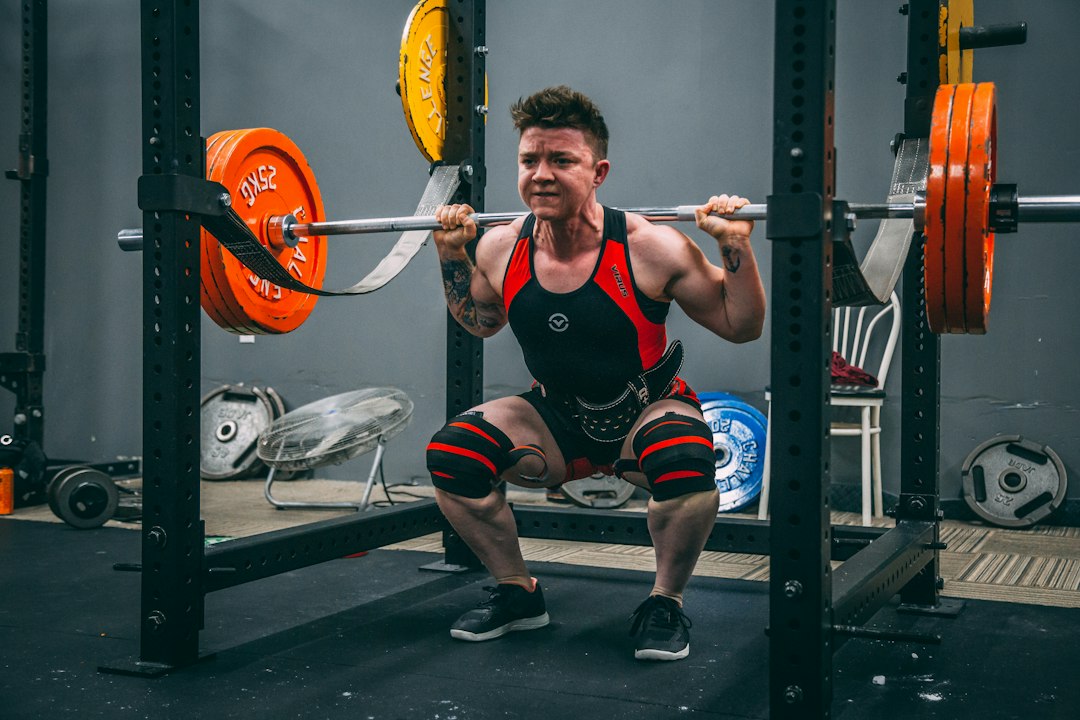

The inside face of a half rack upright, where a loaded barbell gets dropped into the J-cup twice a minute, is the one square foot of a gym that tells you everything about equipment powder coating and the factory that applied it. Members do not look at it. Buyers rarely do either. Nine months into service it is either intact or it is bare steel with a rust bloom starting at the edge.
- Powder is an application method, not a product
- Failure one: pretreatment nobody can inspect later
- Failure two: thin film where the plate lands
- Failure three: a cure schedule cut short to move the line
- Failure four: resin chemistry chosen for the catalog, not the room
- Failure five: equipment powder coating cannot be touched up on site
- Failure six: a spec that names a color and nothing else
- Questions that change an equipment powder coating quote
- Buyer questions on equipment powder coating
- Is powder better than chrome on a rack?
- Can a distributor re-coat used equipment profitably?
- What can we tell from a showroom sample?
- The finish is the part members touch
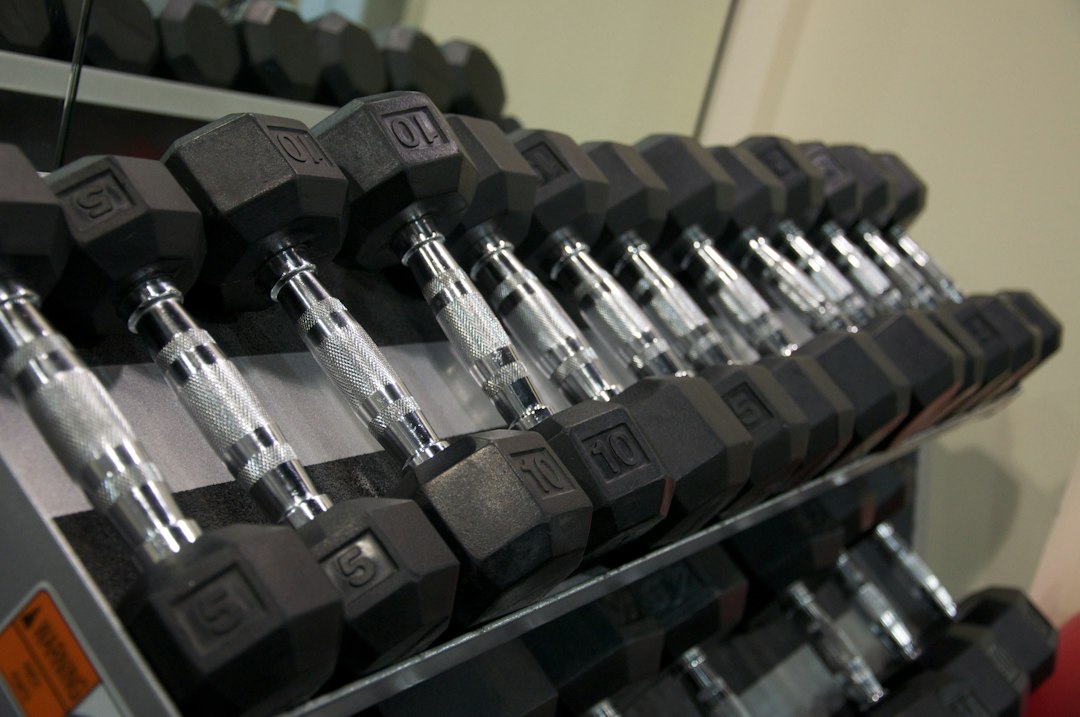
The same story repeats on dumbbell cradles, bench frames and the plate horns on a leg press. A finish that looked identical to a better one in the showroom starts shedding, and the club blames the members. The members were never the variable. The process was.
Powder is an application method, not a product
The most useful framing comes from outside the fitness trade. The Construction Specifier, in its review of powder and liquid coatings, makes the point that powder coating is an application method rather than a specific product, which is why specification clarity matters so much. Two quotes for equipment powder coating can describe completely different chemistry, thickness and cure.
That is also why price comparison across coated goods is so unreliable. A cheaper frame is not necessarily a thinner frame. It is frequently the same steel with a shorter process behind it, and the difference only surfaces after a winter of chalk, sweat and plate contact.
Failure one: pretreatment nobody can inspect later
Every coating failure that starts under the film rather than on top of it traces back to pretreatment. Steel that goes into the booth carrying mill scale, cutting oil or weld spatter will hold powder well enough to pass a visual check and release it eighteen months later. Good equipment powder coating starts with a multi-stage wash and a conversion coating, and neither is visible in a finished part.
The buyer’s only defense is to make pretreatment an explicit line in the equipment powder coating specification, named stage by stage. A supplier that can describe its wash stages without hesitation runs them. One that answers by talking about the color has already given you the answer.
Failure two: thin film where the plate lands
Coating thickness is not uniform across a welded frame, and the thin spots are predictable: outside corners, weld beads, tube ends and the leading edge of anything a plate touches. Those are the same places a commercial floor attacks first.
Electrostatic application is what carries powder into those areas, and it is also the efficiency argument. EPA’s control techniques guideline for miscellaneous metal and plastic parts coating puts transfer efficiency for electrostatic spray at 60 to 90 percent against 25 to 40 percent for conventional air atomized spray, which is a coverage story as much as a waste story.
Failure three: a cure schedule cut short to move the line
Powder does not dry, it cross-links, and cross-linking is a function of time at temperature measured at the part rather than in the oven. A frame that reaches temperature late and leaves early looks finished and is not. The result is a coating that scratches with a fingernail inside a year.
Under-cure is the single most common defect in cheap equipment powder coating because it is invisible at the loading dock and it is the fastest way to add throughput to a paint line. It is also the failure mode that a buyer can never detect from a photograph.
Failure four: resin chemistry chosen for the catalog, not the room
Polyester systems handle daylight and moisture better than epoxy; epoxy systems are harder and more chemical-resistant but chalk badly under sunlight. A rooftop deck, a pool-adjacent studio and an interior strength floor are three different environments, and one house standard for equipment powder coating covers them all imperfectly. Suppliers will specify against stated conditions when the inquiry describes them, and will default to whatever the line happens to be running when it does not.
Environmental performance is the one place where the material is uncontroversial. EPA’s guideline notes that no VOC is released during powder application and recommends a VOC content limit of 0.05 kg/l, or 0.4 pounds per gallon, for powder coatings at a 2-mil thickness. Recycling of oversprayed powder, which The Construction Specifier puts at nearly 95 percent of material, is part of the same economics.
Failure five: equipment powder coating cannot be touched up on site
This is the practical difference that operators discover at the worst moment. Liquid paint can be repaired in place by a competent technician. A powder finish cannot be re-applied without an oven, so every chip is permanent until the part is replaced or stripped and re-run.
That changes what a service parts policy is worth. Ask whether the manufacturer supplies a matched repair system and whether replacement uprights, shrouds and cradles are stocked in the same color. Our review of how refurbished machines get graded covers what happens when they are not.
Failure six: a spec that names a color and nothing else
Most equipment powder coating disputes are unwinnable because the purchase order said black and nothing more. A specification that names process steps and acceptance criteria converts an argument about opinion into an argument about a document.
| Checkpoint | What the spec should say | What a weak quote says | Where it shows up on the floor |
|---|---|---|---|
| Pretreatment | Named wash stages plus conversion coating | Cleaned prior to coating | Rust creeping out from under welds |
| Film thickness | A stated range, measured on finished parts | No mention at all | Edges that chip in the first season |
| Cure | Time and temperature measured at the part | Cured per supplier standard | Finish that marks with a fingernail |
| Adhesion testing | A named test method and sample frequency | Visual inspection only | Coating lifting in sheets after impact |
| Edge and weld coverage | Explicit coverage on corners and welds | Silence | Bare metal lines along uprights |
| Color control | Batch matching across a multi-year order | Standard black | Mismatched replacement parts in year three |
| Repair policy | Factory-matched repair system supplied | Nothing supplied | Improvised touch-ups by site staff |
Questions that change an equipment powder coating quote
- Ask the supplier to describe its wash stages. A factory that runs a real pretreatment line answers immediately and in sequence. Hesitation here predicts every other answer.
- Request a thickness range in the specification. Put it on the purchase order rather than in an email, and state that it is measured on finished parts.
- Ask how cure is verified. The useful answer involves data loggers on parts, not a temperature setting on an oven controller.
- Match the chemistry to the room. Name sunlight, humidity and pool chemistry in the inquiry, and let the supplier specify against conditions instead of a catalog default.
- Settle repair and replacement color before signing. Confirm stocked replacement parts in the same finish and a matched repair kit, because on-site re-coating is not available.
Buyer questions on equipment powder coating
Is powder better than chrome on a rack?
They fail differently rather than one being universally better. Chrome resists scratching but pits and flakes once moisture reaches the base metal, and repair is not practical. Powder tolerates impact better and hides handling marks, but a chip is permanent. For indoor strength frames most buyers land on powder for cost and appearance.
Can a distributor re-coat used equipment profitably?
Sometimes, and the math turns on disassembly rather than on coating. Stripping, masking bearings and bushings, and re-running frames through an oven is labor-heavy, so it pays on high-value frames and rarely on small parts. Our piece on which parts actually decide service life covers where that money is best spent.
What can we tell from a showroom sample?
Look at edges, welds and the inside faces rather than the flat panels everyone photographs. Run a fingernail hard across a corner, check for gloss differences between adjacent parts, and look for bare metal on tube ends. Also ask about the chemicals used to clean it, since disinfectant dwell time damages finishes over time.
The finish is the part members touch
Nobody renews a membership because of a coating, and plenty of people quietly avoid a machine that looks neglected. Equipment powder coating is the cheapest component on a frame and the first one a member reads as a judgment about the club, which makes it a poor place to accept process shortcuts nobody can see at delivery. The same logic applies to how plates are specified, where the covering rather than the iron decides how the set ages.