
For: dealers, distributors and commercial buyers
The decision: Which replacements and capacity additions deserve the next equipment dollar?
60-second answer: Separate necessary replacements from growth purchases. Then compare observed demand, full installed cost, support life and available building capacity. There is no universal cardio-to-strength spending ratio.
Build two lists before you choose a ratio
A dealer can improve a budget conversation by showing the buyer two separate decisions. The first is which existing assets need repair or replacement to maintain a safe, supported operation. The second is where additional capacity could serve documented demand. Combining them into one cardio-versus-strength percentage can hide both problems.
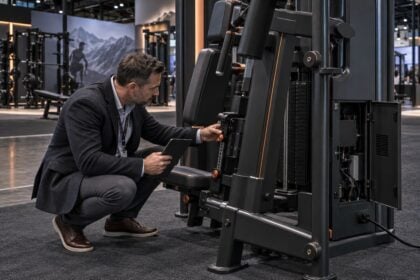
Start with a dated asset register. For each machine or station, record model, serial number, installation date, condition, downtime, service spending and any confirmed parts or software support deadline. For strength equipment, include pads, cables, adjustment mechanisms and attachments; a sound frame alone does not establish the condition of the complete station.
Pull the records that change the proposal
- Peak-period counts of stations in use, people waiting and stations unavailable, using the same observation windows in each zone.
- Maintenance invoices and downtime logs for the last twelve months, with one-off damage separated from recurring faults.
- Class waitlists, coaching demand and documented requests. Keep anecdotal requests separate from paid bookings.
- Current equipment and installation quotes, including freight, removal, electrical work, anchoring and any building review.
As an FEX planning exercise, observe more than one representative week and include both busy and quieter sessions. This is a sampling recommendation, not an industry benchmark. Use the same definition of utilization across comparisons and note unusual closures or promotions.

Use a decision table, not an automatic spending formula
| Evidence in your own business | Question to resolve | Possible decision |
|---|---|---|
| An existing unit is unsafe or cannot be supported | What remedy does the qualified service provider recommend? | Address the asset separately from expansion. |
| Repeated queues while comparable stations stay busy | Would another station relieve the observed constraint? | Price a targeted addition after checking the layout. |
| Queues beside idle equipment | Is the issue equipment choice, setup, coaching or access? | Test a layout or programming change before buying. |
| Repair costs or downtime are rising | How do repair, replacement and support options compare? | Build a repair-versus-replace case for that model. |
| Demand is plausible but unmeasured | What small trial could establish actual use? | Use a demo or limited pilot with a review date. |
| Power, loading or clearance is unresolved | Has the relevant qualified professional approved the installation? | Hold the affected purchase until the constraint is resolved. |
Compare the same cost boundary
For each option, total the equipment, freight, installation, site preparation, accessories, expected maintenance, subscriptions and eventual removal. Deduct only a defensible resale estimate. State the planning period and show low, base and high estimates where costs remain uncertain. Do not count finance principal twice if the equipment price is already included; show financing charges and the payment schedule separately.
A useful comparison is planning-period ownership cost divided by estimated usable station-hours over that same period. If you use member-hours instead, account explicitly for shared rack sessions and make the assumptions comparable. A denominator based on capacity that nobody uses will flatter the wrong purchase.
What the distributor should put in the recommendation
- A replacement list and an expansion list with a reason beside each item.
- The evidence that supports each addition, including what remains unproven.
- An installed-cost comparison with exclusions and support commitments attached.
- A sequence tied to realistic delivery, site readiness and commissioning dates.
- A date to review actual use and costs after installation.
Ask the buyer which program or member problem each line solves. Ask the manufacturer for dimensioned use-space drawings, maintenance requirements and written support terms. Do not infer a safe deferral period from age alone, or treat a spending percentage as a substitute for inspecting equipment.
What to do this week
- Build the two asset lists with the buyer.
- Measure one contested zone using consistent observation periods.
- Obtain installed-cost quotes for the leading options.
- Document the assumptions and agree on the next review date.
Continue with the cardio replacement planning guide and the quote comparison worksheet. This allocation framework is FEX editorial guidance; the buyer’s records and model-specific requirements determine the final plan.