
A club that bought twenty-four treadmills on one purchase order also bought a single end-of-life date, and a cardio fleet refresh is the plan that either anticipates that date or gets ambushed by it.
- The Purchase Order That Set the Clock
- Two Shapes a Cardio Fleet Refresh Can Take
- The Install Mobilization Nobody Prices Separately
- What a Split Floor Does to the Parts Room
- Thresholds That Decide the Shape
- Where Rolling Replacement Genuinely Wins
- The Capital Argument, Stated Honestly
- Reading the Market Before a Cardio Fleet Refresh Is Committed
- Sequencing a Cardio Fleet Refresh Across Six Quarters
- Questions Operators Ask Before Signing
- Is it cheaper to replace an entire cardio row at once
- How many treadmill hours should trigger replacement
- What happens to trade-in value with six units a year
- Can a cardio fleet refresh be split between two suppliers
- What the Decision Really Turns On
The machines rarely fail together in any dramatic way. Decks thin under the strike zone, belts slip when a heavier member picks up the pace, and drive motors that ran quietly in year two start announcing themselves. By year seven the service calls stop being events and turn into a rhythm.
The Purchase Order That Set the Clock
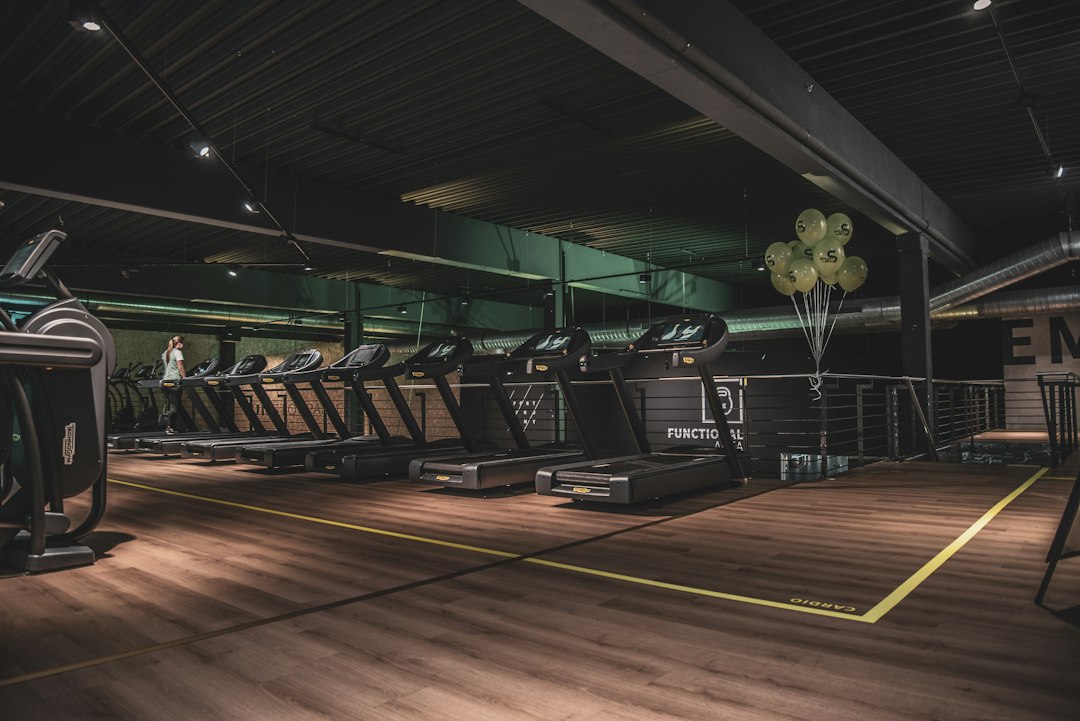
Nobody sets out to build a synchronized fleet. It happens because a build-out or a brand conversion put every treadmill, elliptical and stepmill on the floor inside the same eight weeks. The consequence arrives six or seven years later as one very large number.
That is when most operators discover the replacement question was settled years earlier by the shape of the original order. A floor bought as a block ages as a block. A cardio fleet refresh planned at that stage is less a purchase than an unwinding.
The repair log said so first. Rising call frequency on a subset of units is the earliest honest signal, the same evidence behind the replacement timing a repair log argues for all year.
Two Shapes a Cardio Fleet Refresh Can Take
The first shape is batch. The row goes out and a new row comes in, on one contract, in one weekend, from one manufacturer, against one punch list.
The second is rolling: six units a year for four years, spreading capital across budget cycles. Operators reach for it reflexively because it reads as prudence.
It also turns one freight and installation event into four, and one parts profile into two or three coexisting on the same row. Neither shape is wrong; they fail in different places.

The Install Mobilization Nobody Prices Separately
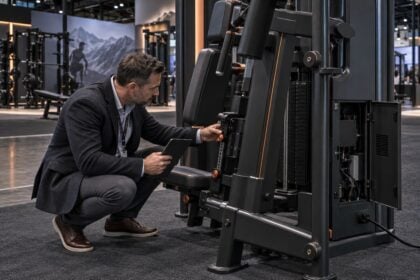
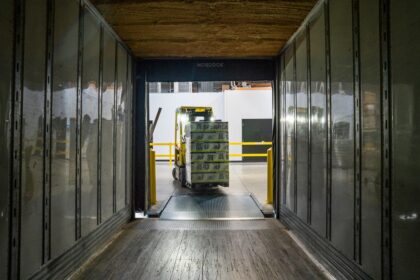
Freight and installation are quoted per unit, which hides the fixed component inside them. A crew travels, a dock is booked, part of the floor closes, and a supervisor walks a punch list. None of that scales down when an order shrinks from twenty-four units to six.
Splitting a cardio fleet refresh into four annual tranches means paying that mobilization four separate times. It also means four disruptions to the busiest part of the floor and four sets of removal logistics. The per-unit freight line looks similar on paper; the delivered cost does not.
The same arithmetic runs through disposal. Machines leaving in ones and twos rarely attract a serious bid, while a full row in one condition grade is a lot buyers compete for.
What a Split Floor Does to the Parts Room
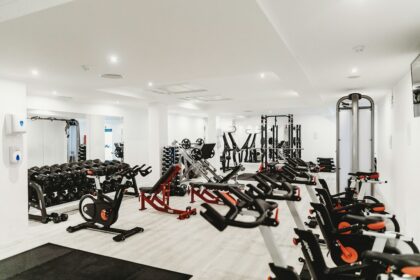
A rolling program guarantees a mixed floor. Three console generations, two belt part numbers and sometimes two drive systems sit in the same row, and each needs its own spares. Technicians carry more, learn more and guess more.
That cost never appears in the capital request, because it lands in the service budget eighteen months later. Operators who track it recognize the pattern from the cardio costs that skip the quote and land anyway.
A middle path is worth pricing first. Resurfacing buys a defined extension on units that are otherwise sound, and the thresholds for flipping a treadmill deck rather than replacing the machine are specific enough to test in an afternoon.
Thresholds That Decide the Shape
The choice is not philosophical. A short list of measurable conditions pushes it one way or the other, and most floors display three or four of them plainly before a cardio fleet refresh is signed.
| Condition on the floor | Points to batch | Points to rolling | Why it decides |
|---|---|---|---|
| Age spread across the category | Under 12 months of spread | More than three years of spread | A synchronized fleet cannot be un-synchronized cheaply |
| Unit count in the category | Twenty or more machines | Fewer than ten machines | Mobilization cost per unit falls sharply with order size |
| Console generations present | One generation across the row | Already two or more | A mixed floor already carries a parts cost |
| Floor closure feasibility | An overnight or weekend window exists | No closure window exists at all | Batch work needs contiguous access |
| Service contract structure | One agreement covering the whole category | Per-unit or per-brand agreements | Batch consolidates coverage; rolling fragments it |
| Removal and resale channel | A full row in one condition grade | Odd units in mixed grades | Lots sell to dealers; orphans sit |
| Lease term remaining | Longer than the expected service life | Shorter than the expected service life | Nobody should own a fleet past the lease |
| Capital availability | Approved in a single cycle | Rationed annually by policy | Real even when the arithmetic favors batch |
Where Rolling Replacement Genuinely Wins
Rolling is the correct answer more often than its critics admit. A floor that was never synchronized gains nothing from forcing one transaction onto machines with three years of spread.
It also wins when a club is testing a new supplier. Six units on the floor for twelve months produce service data no demo will, and a rolling cardio fleet refresh buys that information cheaply.
And it wins wherever closure is impossible. A 24-hour club with no dark window cannot absorb a batch install, so a phased cardio fleet refresh is the only shape that fits.
The Capital Argument, Stated Honestly
Operator economics have been strong enough to fund either shape. The Health and Fitness Association reported in its 2026 HFA Global Report of September 14, 2026, median revenue growth of 10.7 percent among surveyed operators in 2025, a median EBITDA margin of 22.1 percent, and 92.3 percent of respondents expecting revenue to increase, across 244 operators in 33 countries.
Margin funds a cardio fleet refresh; it does not make the decision. The shape is still settled by the floor, the calendar and the dock.
Reading the Market Before a Cardio Fleet Refresh Is Committed
Supply conditions matter to timing more than to price. SFIA reported in its 2026 Manufacturers’ Sales by Category Report of March 31, 2026, that wholesale sporting goods sales reached $130 billion in 2025, up 3.7 percent year over year, with institutional fitness equipment showing broad-based growth while portions of the consumer and home segment declined.
Read that as a queue signal. Institutional demand is where capacity is aimed, which tightens lead times on the models a cardio fleet refresh needs in quantity.
Seasonality compounds it. Order placement runs into four calendars, and a club that ignores them finds its install date was never its own, a pattern laid out in the four calendars that decide when equipment actually lands.
Sequencing a Cardio Fleet Refresh Across Six Quarters
- Pull hours, not dates. Export console hour meters for every unit and rank them. Invoice dates lie about wear; hour meters do not, and the ranking usually splits the row differently than the purchase order did.
- Grade the row into three condition bands. Sound, extendable and finished. The extendable band is where deck flips, belt sets and upholstery buy real time at a fraction of replacement cost.
- Price mobilization separately from units. Ask every bidder to quote freight, installation, removal and disposal independent of machine count. That line decides the shape of a cardio fleet refresh, and most quotes bury it.
- Fix the removal channel before the order. Secure the trade-in, dealer or auction commitment for the outgoing row while it is still a matched lot. Residual value evaporates the moment a row becomes odd units.
- Book the install against the club calendar. Pick the window by member traffic, then hold the supplier to it in writing. A delivery landing in the January peak costs more than a delayed order does.
Questions Operators Ask Before Signing
Is it cheaper to replace an entire cardio row at once
Usually, once mobilization, removal and resale are counted rather than assumed. The per-unit machine price barely moves between a six-unit and a twenty-four-unit order, but freight, install crew time and disposal all carry fixed components that get paid again with every tranche.
How many treadmill hours should trigger replacement
There is no universal figure, and any supplier quoting one is selling. Rank your own fleet by hours, then find the point where service call frequency and parts spend per unit begin climbing on a curve rather than a line. That inflection is your threshold, and it is specific to your membership.
What happens to trade-in value with six units a year
It falls, often sharply. Dealers and auction houses bid on matched lots they can resell as a package. Six mixed-age units are a harder sell than a full row in one grade, and the discount appears as a lower credit on the next order.
Can a cardio fleet refresh be split between two suppliers
It can, and multi-site operators do it to keep pricing honest. The cost is a permanently mixed parts profile and two service relationships. Split by zone or category rather than within a single row, so technicians are not diagnosing two platforms in one aisle.
What the Decision Really Turns On
The shape of the order is set by three things a spreadsheet handles badly: whether the floor can close, whether the outgoing row is still a matched lot, and whether the parts room can absorb another platform. Capital availability decides when. Those three decide how. An operator who prices mobilization and residual value as explicitly as machine cost will usually find the answer is already sitting on the floor.