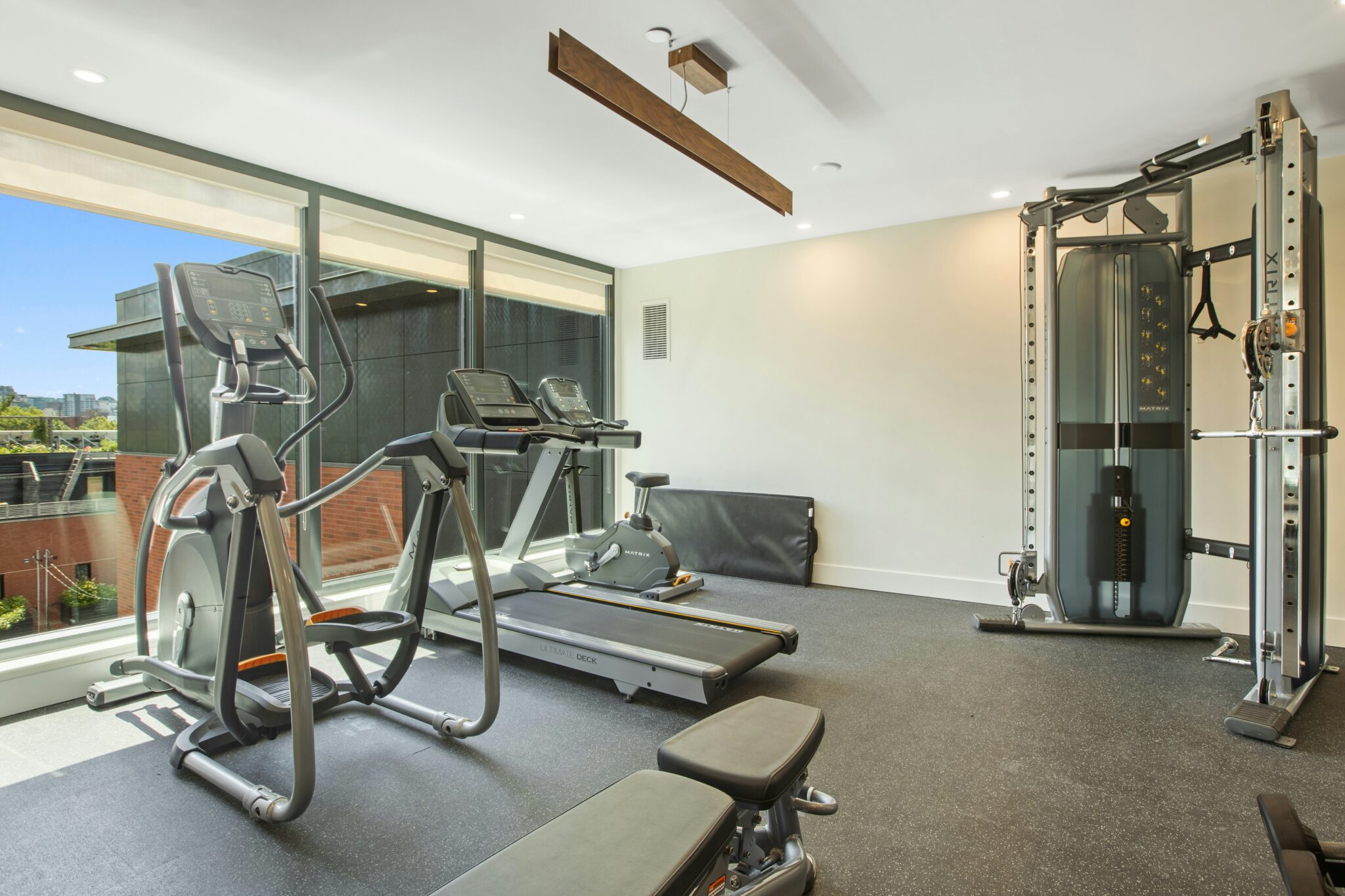

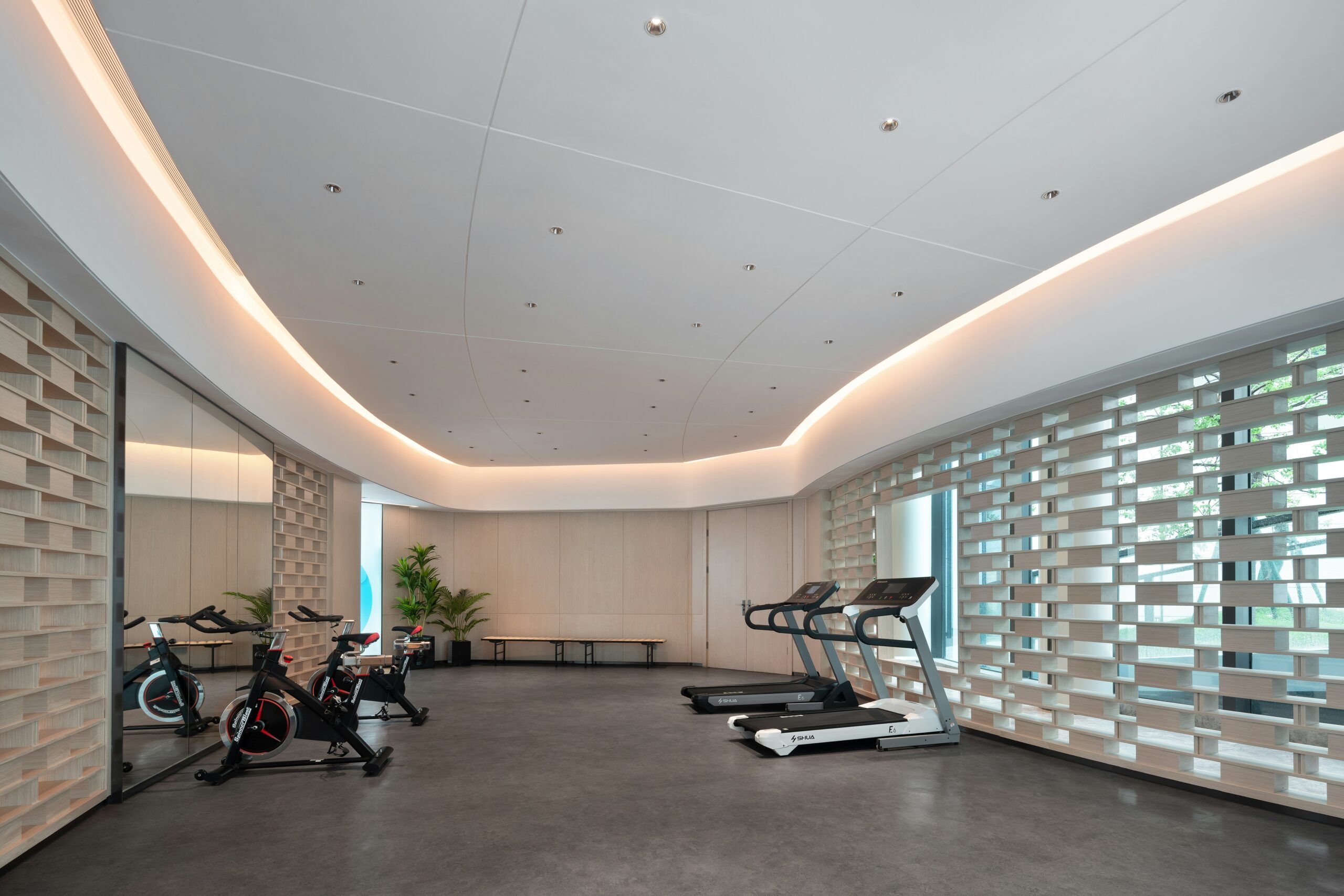
Two treadmills, an upright bike, a functional trainer and a rack of dumbbells in a room off the elevator lobby. That is the shape of most corporate fitness equipment orders, and it repeats across office parks with a consistency that club work never has.
- Who actually signs for corporate fitness equipment
- Green signals: the account worth staffing
- Amber signals: the account that needs terms before it needs a quote
- Red signals: the account that costs more than it pays
- The lease term sets the replacement cycle
- A qualifying table for corporate fitness equipment inquiries
- What the category data says about institutional demand
- Unstaffed rooms change the specification
- Service is where the margin lives
- Qualifying an inquiry in five steps
- Questions suppliers ask about corporate fitness equipment
- Is the segment worth a dedicated salesperson?
- How does it compare to institutional bid work?
- What machine mix sells most often?
- Who handles a fault report at two in the afternoon?
- The document behind the order
The room is small, the traffic is modest, and the machines are usually specified by somebody whose job title has nothing to do with fitness. Understanding who that person is, and which document governs them, is most of the work in this segment.
Who actually signs for corporate fitness equipment
Rarely a fitness professional. The buyer is typically a facilities manager, a property management company acting for a landlord, or a human resources lead running a wellness budget. Each reads a quote differently and each answers to a different clock.
Facilities cares about service access and electrical capacity. Property management cares about what the amenity does for tenant retention. Human resources cares about participation it can report. A quote for corporate fitness equipment written for one of those readers lands badly with the other two.
Green signals: the account worth staffing
The strongest corporate fitness equipment accounts share a pattern. A long lease term remaining, a landlord or property manager who owns the amenity outright, a room with adequate electrical capacity already in place, and a documented replacement history showing the last refresh was actually funded.
Add one more: a named person who can authorize service entry after hours. An account with all five markers behaves like a small multi-site club and deserves the same attention.
Amber signals: the account that needs terms before it needs a quote
Amber accounts are viable with structure. A short remaining lease, a split responsibility between landlord and tenant, or a first-time buyer with no maintenance line in the operating budget can all be worked, provided the commercial terms carry the risk rather than the relationship.
Here the sale is the service agreement as much as the equipment. Quote the machines, then quote the years around them, and let the buyer choose deliberately rather than discover the ongoing cost in month seven.
Red signals: the account that costs more than it pays
Red accounts for corporate fitness equipment look like opportunities and behave like liabilities. A month-to-month tenancy funding capital equipment. A room with no dedicated circuits and no appetite for an electrician. An unstaffed space where nobody will own a floor check.
The last one matters most, because an unstaffed room still generates incidents. Operators running those spaces already know that an unsupervised amenity room needs fewer machines than it fits, and a supplier who loads it to capacity inherits the consequence.
The lease term sets the replacement cycle
Lease timing is the single most useful thing to learn about corporate fitness equipment. Capital spending on an amenity tracks the lease, not the calendar. A landlord two years from a renewal negotiation will fund a refresh to help retain a tenant; the same landlord four years out will approve a repair instead.
That makes lease timing a forecasting tool. Ask when the anchor tenant renews and you have a better read on the next corporate fitness equipment order than any budget conversation will give you.
A qualifying table for corporate fitness equipment inquiries
Run a new inquiry through the eight signals below before quoting. Most accounts land amber, which is useful information rather than a reason to walk away.
| Signal | Green | Amber | Red |
|---|---|---|---|
| Lease term remaining | Five years or more | Two to five years | Month to month |
| Who owns the amenity | Landlord, clearly | Shared with tenant | Undetermined |
| Electrical capacity | Dedicated circuits in place | Panel has spare capacity | No spare capacity, no budget |
| Room size against headcount | Sized below capacity | At capacity | Loaded past clear floor space |
| Service access | Named after-hours contact | Business hours only | Escorted access, case by case |
| Maintenance budget | Standing annual line | Approved per incident | None identified |
| Replacement history | Last refresh funded on schedule | One cycle deferred | Original equipment still in place |
| Decision maker | One named authority | Two approvers | Committee with no sponsor |
What the category data says about institutional demand
The segment sits inside a larger trend worth citing accurately. SFIA’s 2026 Manufacturers’ Sales by Category Report, published March 31, 2026, put 2025 sporting goods wholesale sales at $130 billion, a 3.7 percent year-over-year increase and 34.7 percent growth since 2020.
Within fitness, the report described institutional equipment growing across gyms and commercial facilities while consumer and home segments declined, which SFIA characterized as a shift in where and how Americans are staying active. Workplace rooms belong to the institutional side of that split, and corporate fitness equipment demand follows the return of people to buildings rather than any product cycle.
Human resources buyers often arrive with published guidance in hand. CDC’s Active People, Healthy Nation employer guidance advises employers to provide access to facilities, locations, and programs that help employees be physically active, naming on-site gyms and walking paths, along with on-site bike storage and showers.
That language is useful to a supplier, because it frames the room as infrastructure rather than a perk. Infrastructure survives a budget review more often than a perk does.
Unstaffed rooms change the specification
With nobody on the floor, the equipment has to be forgiving. Selectorized machines with clear placards outperform plate-loaded stations. Fixed dumbbells beat adjustable sets. Machines with enclosed weight paths reduce the range of ways a first-time user can get something wrong.
Ratings matter more here too, because nobody is watching who uses what. Capture the rating on every machine at intake and keep it with the asset record, since the room has no staff to answer for it later.
Service is where the margin lives
Machine margin in this segment is thin, because property managers benchmark equipment against catalog pricing. Service is different. Access is awkward, rooms are scattered across a metropolitan area, and nobody on site can diagnose a fault, so a contract that bundles scheduled visits with a stated response time is genuinely valuable to the buyer.
The economics resemble the hotel segment more than the club segment, and suppliers who route both through one technician see it immediately in how a small room’s machine count behaves against the floor plan it was drawn into.
Qualifying an inquiry in five steps
- Ask about the lease first. Establish how long the tenancy or management agreement runs before discussing machines, because that term governs every later decision.
- Identify the paying party. Confirm in writing whether landlord, tenant or a shared arrangement funds both the purchase and the ongoing maintenance.
- Walk the electrical. Photograph the panel and count available circuits before quoting cardio, rather than discovering the constraint during install.
- Size below capacity. Specify a machine count the room can hold with clear access around each station, and put the reasoning in the proposal.
- Quote the service years. Present the maintenance agreement in the same document as the equipment, so the total cost of the room is visible at the decision point.
Questions suppliers ask about corporate fitness equipment
Is the segment worth a dedicated salesperson?
In a dense office market, often yes, because one property management company can control dozens of rooms and a single relationship replicates. In a dispersed market the travel usually eats the margin, and the work belongs with whoever already covers hotels and amenity accounts.
How does it compare to institutional bid work?
It is faster and less formal. Public sector work runs through specifications and procurement rules, while corporate fitness equipment is usually bought on a quote and a conversation. The traps in a written specification do not generally apply here, though a large property group can behave much like a public buyer.
What machine mix sells most often?
Two to three cardio pieces, one functional trainer or selectorized multi-station, a fixed dumbbell set with a bench, and mats. The pattern is stable because it fits a converted office suite, a modest budget and a room that has to look complete without a staffed desk.
Who handles a fault report at two in the afternoon?
Nobody on site, which is the defining service condition of the segment. Build the contract around remote triage and a scheduled visit rather than an on-call promise, and state plainly which faults take a machine out of service until a technician arrives.
The document behind the order
Club work is driven by membership and competition. Corporate fitness equipment is driven by a lease, a retention argument and a facilities manager with other priorities. Learn the renewal dates in the buildings you serve and the next order stops being a surprise. It becomes a date you already knew about, with a specification you wrote months before anyone asked for a quote.