
Cold plunge chiller service is the quietest liability a fitness equipment service business has taken on in the last five years. Recovery rooms filled up with plunge tubs, cryo chambers and chilled-water units, and the service contracts followed. Very few of those contracts were written by anyone who checked the federal rule that governs a sealed refrigerant circuit.
- The nameplate decides what cold plunge chiller service you can legally perform
- Who counts as a technician under the rule
- The venting prohibition is the clause that bites
- You may not be able to buy the refrigerant at all
- A seven-step path to compliant cold plunge chiller service
- What the certification decision costs
- Records to keep and the warning signs
- Questions service firms ask
- Does a plug-in plunge tub need a certified technician
- Can an uncertified installer clean coils and change water pumps
- Is topping off a low charge a service or a repair
- What to do before the next recovery room quote
A treadmill technician can learn a new drive system over a weekend. A refrigerant circuit is different, because the restriction is not skill, it is certification, and the Environmental Protection Agency wrote it as a prohibition rather than a recommendation.
This matters commercially as well as legally. A service firm that cannot legally open the circuit cannot hold the full contract, which means a subcontractor sits between it and the client on the one call most likely to shut the room down.
The nameplate decides what cold plunge chiller service you can legally perform
Start with how the rule classifies the box. Under 40 CFR 82.152, an appliance is “any device which contains and uses a class I or class II substance or substitute as a refrigerant,” and the definition expressly covers household and commercial devices including chillers. Each independent circuit in a multi-circuit system counts as a separate appliance.
The definition that decides your certification path is small appliance. The rule defines it as a unit “fully manufactured, charged, and hermetically sealed in a factory with five (5) pounds or less of refrigerant.”
Read both halves of that. Five pounds or less is necessary, and so is being charged and hermetically sealed at the factory. A unit that was field-charged, or that uses a line set run between a tub and a remote condensing unit, is not a small appliance even when the charge is small.
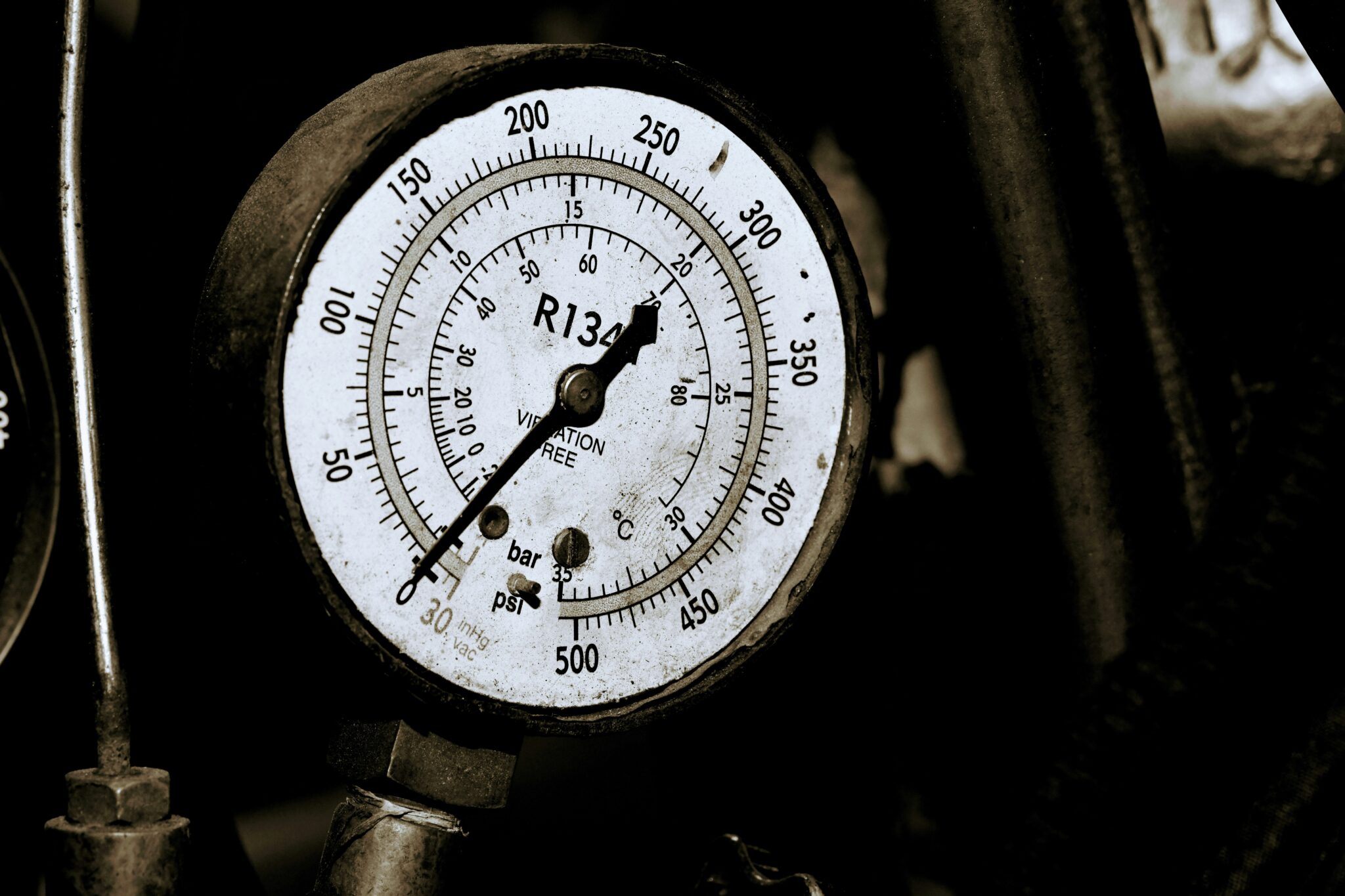
Pressure class does the rest of the work. The same section puts a high-pressure appliance at a refrigerant with a liquid phase saturation pressure “between 170 psia and 355 psia at 104 °F,” naming R-22 and R-410A, and a medium-pressure appliance at “between 45 psia and 170 psia at 104 °F,” naming R-12 and R-134a. Low-pressure sits below 45 psia.
Who counts as a technician under the rule
The word technician is defined by consequence, not by job title. In 82.152 it reaches any person whose activities on an appliance could “be reasonably expected to violate the integrity of the refrigerant circuit,” and the definition includes installers, contractor employees, in-house service staff, and the owner or operator of the appliance.
That last clause is the one gym operators miss. An in-house maintenance lead who opens a service port is a technician under the rule, whatever the payroll system calls the role.
40 CFR 82.161 sets out the certification types. Type I covers small appliances. Type II covers medium-, high- and very high-pressure appliances, excluding small appliances and motor vehicle air conditioning. Type III covers low-pressure appliances. Universal covers everything in Types I through III.
The section exempts apprentices where a certified technician supervises them closely and continually, and it exempts persons who only dispose of small appliances. Until January 1, 2018, the section applied only to appliances containing class I or class II refrigerants; from that date it also reaches non-exempt substitute refrigerants, which includes HFC refrigerants such as R-134a and R-410A.
| Unit as built | Likely classification | Certification generally needed |
|---|---|---|
| Plug-in plunge tub, factory-charged and sealed, 5 lb or less | Small appliance | Type I |
| Tub with a remote condensing unit on a field-brazed line set | Not a small appliance; pressure class decides | Type II for medium or high pressure |
| Chilled-water unit serving several tubs, R-410A | High-pressure appliance | Type II |
| Cryo or chilled-water plant with a low-pressure refrigerant | Low-pressure appliance | Type III |
| A mixed recovery room fleet | Several classes at once | Universal, or a documented split between technicians |
Treat the table as a reading of the definitions, not as a determination for a specific unit. The nameplate refrigerant and the way the unit was charged decide the answer, and the manufacturer’s service manual should state both.
The venting prohibition is the clause that bites
The core prohibition in 40 CFR 82.154 is simple to state and easy to break by accident. A person maintaining, servicing, repairing or disposing of an appliance may not knowingly vent or otherwise release refrigerant into the environment. Certain substitutes are excepted, carbon dioxide, nitrogen, water and ammonia among them in specified uses.
Releases tied to good-faith recycling or recovery count as de minimis only where the specified practices are followed. Knowingly releasing recovered class I or class II refrigerant, or a non-exempt substitute, is itself a violation of the venting prohibition.
The section also requires the use of recovery or recycling equipment certified for that type of refrigerant and appliance under 82.158. A shop vacuum and a good intention are not a recovery machine.
In practice the exposure in cold plunge chiller service is rarely a dramatic release. It is a technician cracking a line to diagnose a low-charge complaint, or a disposal crew cutting a condenser loose for scrap without recovering the charge first. Both are the same prohibition.
You may not be able to buy the refrigerant at all
The sales restriction catches service firms that assumed they could simply order a cylinder. Under 82.154(c)(1), class I and class II substances and, since January 1, 2018, non-exempt substitutes used as refrigerants may generally be sold only to buyers who are certified as Type I, Type II, Type III or Universal technicians.
There are defined exceptions, including a sale to a buyer who employs a certified technician and can show the seller proof, and sales to appliance manufacturers. Sellers are generally required to keep invoices for three years under 82.154(c)(3).
For a dealer running a parts operation, that recordkeeping cuts both ways. Refrigerant is not a line item you can stock the way you stock belts and bearings in your parts inventory, and the supplier will ask for the certification before the first cylinder ships.
A seven-step path to compliant cold plunge chiller service
- Inventory the circuits. List every recovery unit by model, nameplate refrigerant, charge weight, and whether it was factory-sealed or field-charged. Each independent circuit is its own entry.
- Classify each one. Use the small appliance test first, then pressure class. Write the conclusion next to the unit, because the next technician will not re-derive it.
- Match certifications to the fleet. If the list spans classes, one Universal technician is usually cheaper than two partial ones.
- Buy certified recovery equipment. Confirm it is certified for the refrigerant types and appliance types on your list, and keep the certification paperwork with the machine.
- Get the supplier relationship set up in advance. Give your distributor the certification documents before a unit goes down, not during the outage.
- Write the scope line in the contract. State plainly which work your firm performs and which refrigerant work routes to a certified partner, so nobody improvises on site.
- Train the uncertified crew on the boundary. The useful rule for an installer is that nothing which opens the sealed circuit is theirs. Cleaning a condenser coil and replacing a water pump generally are.
What the certification decision costs
The figures below are illustrative assumptions for a worked comparison, not industry data. Substitute your own rates.
Assume twelve recovery units across four clients, two service calls per unit per year on the refrigerant side, and a subcontracted refrigeration visit billed to you at 285 dollars with a 45-minute coordination cost at 40 dollars loaded. Assume certifying two of your own technicians costs 400 dollars in exams and materials plus 3,200 dollars for a recovery machine and gauges, with 16 hours of unbilled study time at 40 dollars.
Subcontracting 24 visits runs about 7,560 dollars in the first year. Building the capability runs roughly 4,240 dollars in year one and far less after that, but that figure leaves out your own technicians’ time and materials on the 24 visits, so add those before comparing. Neither figure counts any margin you earn on the work you previously handed away.
The comparison is the same one that governs every in-house service threshold decision. What changes here is that the gate is a certification, so the capability cannot be bought on the morning the tub goes warm.
Records to keep and the warning signs
- A recovery unit on a service contract with no nameplate data recorded anywhere in your system.
- Certification cards for technicians who have left, and none for the two who now run the route.
- A disposal invoice for a chiller with no evidence the charge was recovered first, which is a problem your decommissioning records should have caught.
- Refrigerant cylinders in the van with no purchase invoice tying them to a certified buyer.
- An install crew that has quietly been topping off charges because the response time was faster than calling the refrigeration partner.
- A client contract that promises full coverage of the recovery room when your scope stops at the water side.
Questions service firms ask
Does a plug-in plunge tub need a certified technician
It depends on how it was built. If the unit was fully manufactured, charged and hermetically sealed at the factory with five pounds or less of refrigerant, it meets the small appliance definition and Type I applies to servicing it. If it was field-charged or uses a remote condenser on a line set, it is not a small appliance and the pressure class decides.
Can an uncertified installer clean coils and change water pumps
Generally yes, because the rule reaches activities that could reasonably be expected to violate the integrity of the refrigerant circuit. Water-side and air-side work that never opens the circuit sits outside that. Draw the boundary in writing and train to it rather than leaving it to judgment on a service call.
Is topping off a low charge a service or a repair
Either way it is regulated work on the refrigerant circuit, and a chronic low charge points at a leak rather than a consumable. The EPA’s Section 608 technician certification pages are the starting point, and 40 CFR Part 82, Subpart F is the governing text. For HFC equipment holding 15 pounds or more of refrigerant, the leak repair requirements in 40 CFR Part 84, Subpart C have generally applied since January 1, 2026. FEX is not a law firm and this is not legal advice.
What to do before the next recovery room quote
Walk the recovery rooms you already service and write down the nameplate on every unit. Then decide, as a business question rather than a compliance scramble, whether you are going to hold the refrigerant work or route it. Operators adding to a recovery equipment floor will keep asking who covers it, and the firm with a certified technician and a recovery machine is the one that answers without a pause.