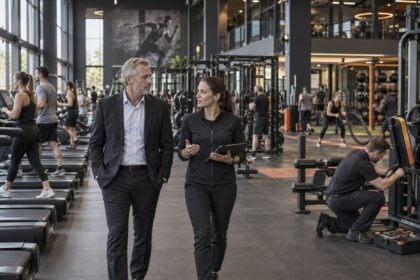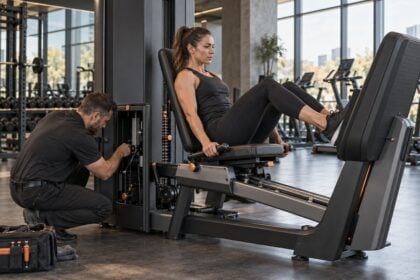
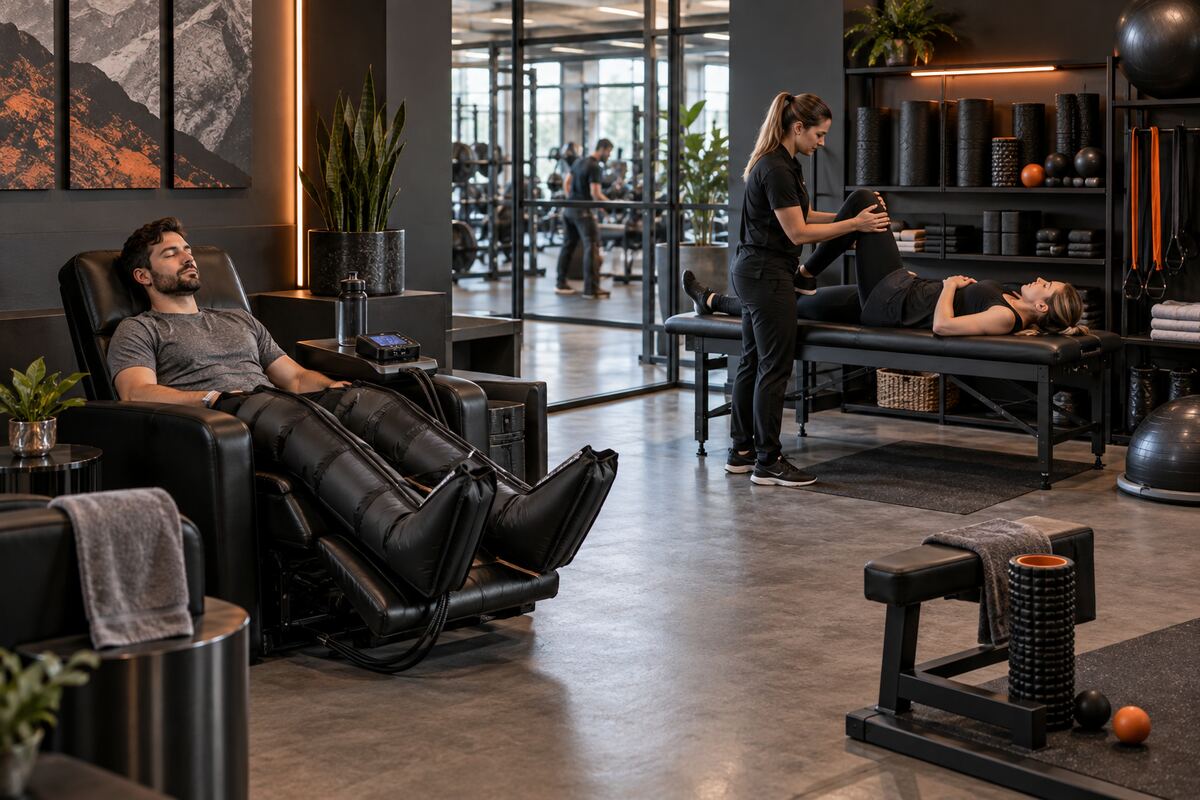

The case for recovery equipment for gyms is almost always made with photographs, and photographs are the one form of evidence a floor plan cannot use. A well-lit corner with two compression units and a sauna reads as premium on a tour and in a brochure. Whether it reads as premium at eleven on a Tuesday, when the same square meters could hold four cardio positions, is a question that rarely gets asked in the same meeting.
- Recovery Equipment for Gyms Competes With Everything Already on the Floor
- Branch One: Is the Space Genuinely Spare?
- Branch Two: What Does a 60-Day Utilization Log Actually Say?
- Branch Three: Can the Category Run Without Supervision?
- Branch Four: What Is the Hygiene Load Per Session?
- Branch Five: Does Throughput Per Square Meter Clear the Floor Average?
- Screening, Staffing and the Costs Outside the Quote
- Which Recovery Equipment for Gyms Tends to Earn Its Footprint
- Threshold Table: Keep, Pilot or Reclaim
- Sixty Days of Logs Before Any Room Moves
- Questions Operators Ask Before Committing Floor Space
- Does recovery equipment for gyms help retention?
- Should recovery be included in membership or charged separately?
- How much space should a recovery zone take?
- What is the most common mistake with recovery zones?
- Deciding on Numbers Rather Than Photographs
This is not an argument against recovery. Some categories are well used, easy to supervise and cheap to run per square meter; others are amenity theater with a maintenance bill. The difference is measurable, and the honest way to settle it is a decision tree with numbers attached rather than a debate about what members say they want.
Recovery Equipment for Gyms Competes With Everything Already on the Floor
Every square meter given to recovery is taken from something with a known utilization rate. That is the comparison to run, and it is uncomfortable precisely because the incumbent use is measurable and the proposed one is not yet.
Two clarifications first. This publication takes no position on the physiological effects of any recovery modality; the questions here are operational only. The branches also run in order, because failing an early one makes the later ones irrelevant — there is no point modeling throughput for recovery equipment for gyms you cannot supervise.
Branch One: Is the Space Genuinely Spare?
If the area under consideration currently holds equipment at or above your floor’s average utilization, stop. Recovery equipment for gyms placed into contested space does not add an amenity; it moves a queue somewhere less visible and converts a measured use into an unmeasured one.
If the space is genuinely underused — a corner, an alcove, a former studio programming has left behind — continue. The strongest installations occupy awkward geometry that trains badly anyway, and that alone can justify a category that would fail on prime floor. Reading the underuse correctly is the same skill as reading demand from the gym floor.
Branch Two: What Does a 60-Day Utilization Log Actually Say?
Where recovery equipment for gyms already exists on your floor, log it properly before extending it. Count sessions per station per day, the hours they fall in, and how many are repeat users rather than one-time curiosity. Sixty days is long enough to see past novelty, the effect that flatters almost every launch.
A workable rule: if a station averages fewer than four sessions a day across the log, it is decorative at its current footprint. Between four and eight, it is viable if the supervision cost is near zero. Above eight, it is a genuine amenity and the question becomes whether to add a second unit rather than whether to keep the first.
Where the category does not yet exist, rent or buy one unit and run the same log before committing to a room. Pilots are cheap; rooms are not.
Branch Three: Can the Category Run Without Supervision?
Supervision decides whether recovery is a cost line or an amenity. A percussion device on a rack needs a wipe-down policy and nothing more. Contrast bathing, a sauna, or anything involving heat, water or a member lying still in a machine changes the staffing model, the induction and often the insurance conversation.
If a category cannot run safely on your normal floor cover at your quietest staffed hour, it needs dedicated staffing or booked access with a check-in. Both are legitimate, and both belong in the business case at full cost. Recovery equipment for gyms that only works when a manager happens to be on shift fails by month four.
Branch Four: What Is the Hygiene Load Per Session?
Hygiene load is the cleaning time a session generates, and it varies enormously across recovery equipment for gyms. Sleeves, boots and upholstery in direct skin contact carry a per-session requirement a treadmill handle does not. Wet areas carry a scheduled regime regardless of how many people use them.
Cost it in minutes per session and multiply by the utilization figure from Branch Two, because that product is the real operating cost. General facility operating practice, including cleaning regimes and member-facing policy, is covered usefully by the Health & Fitness Association’s facility best practices, and it is worth checking a proposed category against them before signing.
Branch Five: Does Throughput Per Square Meter Clear the Floor Average?
This branch settles most arguments. Take the footprint including access and circulation, divide daily sessions by it, and compare against the same figure for the equipment the space would otherwise hold. Session length matters: twenty minutes in four square meters is a very different proposition from forty-five in twelve.
If throughput per square meter is below half the floor average, the category needs to be justified on membership positioning rather than use — which is a legitimate argument, but a different one, and it should be made explicitly. That reasoning belongs alongside the rest of a credible equipment ROI case rather than instead of it.
Screening, Staffing and the Costs Outside the Quote
Some categories carry contraindications the manufacturer documents and expects you to communicate. The operator’s obligations are practical: follow the instructions for use, put a screening or self-declaration step in front of categories where the documentation calls for one, keep the paperwork, and train staff on what to do if a member feels unwell. Take advice from your insurer before installation rather than after an incident.
Staffing then compounds the cost of recovery equipment for gyms. Booked access needs someone to manage the diary; supervised categories need cover at the hours members actually want them, which is rarely the quiet hours when cover is cheap. Connected recovery devices add a further consideration, since anything joining the facility network falls within the scope of the NIST cybersecurity guidance for connected devices.
Which Recovery Equipment for Gyms Tends to Earn Its Footprint
Patterns recur across operators, and they follow footprint and supervision rather than sophistication. Small, self-service, easily cleaned items generally survive the arithmetic. Large, supervised or wet categories need genuine demand at the hours you can staff.
The unglamorous middle — stretching space, foam rollers, mobility kit on a marked mat area — outperforms the photogenic end on nearly every measure here. It is cheap, it is used, it needs no supervision, and it absorbs geometry other equipment cannot. Members treat it as part of the training floor, which is why it rarely appears in the recovery business case at all.
Threshold Table: Keep, Pilot or Reclaim
Fill this in from your own logs. The last column is the decision, and it should be taken on the numbers rather than on how the corner looks.
| Category type | Footprint | Supervision | Hygiene load | Keep threshold |
|---|---|---|---|---|
| Mobility and stretching area | Flexible, absorbs odd shapes | None | Low, shared with floor | Any consistent daily use |
| Handheld percussion on a rack | Very small | None | Wipe per use | 3+ sessions per day |
| Compression sleeves or boots | Small, needs seating | Light induction | Per-session clean of contact surfaces | 6+ sessions per day |
| Massage or roller units | Medium, fixed | Light | Per-session wipe-down | 6+ sessions per day |
| Sauna or heat room | Large, fixed services | Policy plus checks | Scheduled regime regardless of use | Positioning case plus 10+ per day |
| Cold or contrast bathing | Large, plumbing and drainage | Staffed or booked | High, water management | Staffed hours only; booked access |
| Assessment or scanning station | Small but needs privacy | Staff-led | Low | Only if it drives a paid service |
| Recliners or relaxation seating | Large per position | None | Per-session clean | Rarely clears floor average |
Sixty Days of Logs Before Any Room Moves
- Log what you already have for sixty days. Sessions per station per day, hour by hour, with repeat users flagged. No decision about adding recovery should be taken before this exists.
- Calculate throughput per square meter for the incumbent use. That single number is the benchmark every recovery proposal has to clear, and most business cases never state it.
- Price the supervision and cleaning honestly. Minutes per session multiplied by real usage, at the hours members want, using the wage rate you actually pay rather than an average.
- Pilot one unit before committing a room. Rent or buy a single station, place it in the awkward corner, and run the same log. A pilot that fails costs a month; a room that fails costs a lease term.
- Set a reclaim date. Agree in advance what utilization figure, measured at what date, means the space goes back to training equipment — and write it into the decision so nobody has to reopen the argument later.
Questions Operators Ask Before Committing Floor Space
Does recovery equipment for gyms help retention?
Results are mixed, and the honest answer is that it depends on whether the space is used rather than whether it exists. An area with strong repeat usage is a genuine reason to stay; one with high tour footfall and low weekday use is a marketing asset carrying an operating cost. Your own logs settle it faster than any general claim.
Should recovery be included in membership or charged separately?
Charging separately produces usable demand data and limits casual occupancy, which matters most for supervised or large-footprint categories. Including it in membership raises perceived value but hides utilization unless you still require booking. Many operators include the low-supervision items and charge for anything staffed or booked.
How much space should a recovery zone take?
Start from the throughput comparison rather than a percentage of the floor. If a proposed zone cannot approach half the sessions per square meter of the equipment it replaces, size it down until it can, or place it in space that trains badly. Awkward geometry is the natural home for recovery equipment for gyms.
What is the most common mistake with recovery zones?
Building the room before running the pilot. The second is failing to set a reclaim threshold, which leaves an underused zone in place for years because nobody has the authority to reverse the decision. Both are avoided by writing the numbers down before the fit-out.
Deciding on Numbers Rather Than Photographs
Recovery equipment for gyms is neither a fad nor a guaranteed win. It is a floor-space decision like any other, answering to the same discipline: measure the incumbent use, pilot before committing, price supervision and cleaning at full cost, and agree in advance what result reclaims the space. Operators who do that end up with a smaller offer that is genuinely used — a better outcome than a photogenic one that is not, and the same pattern visible in which expansion signals deserve capital and why members bypass equipment that works perfectly well.