
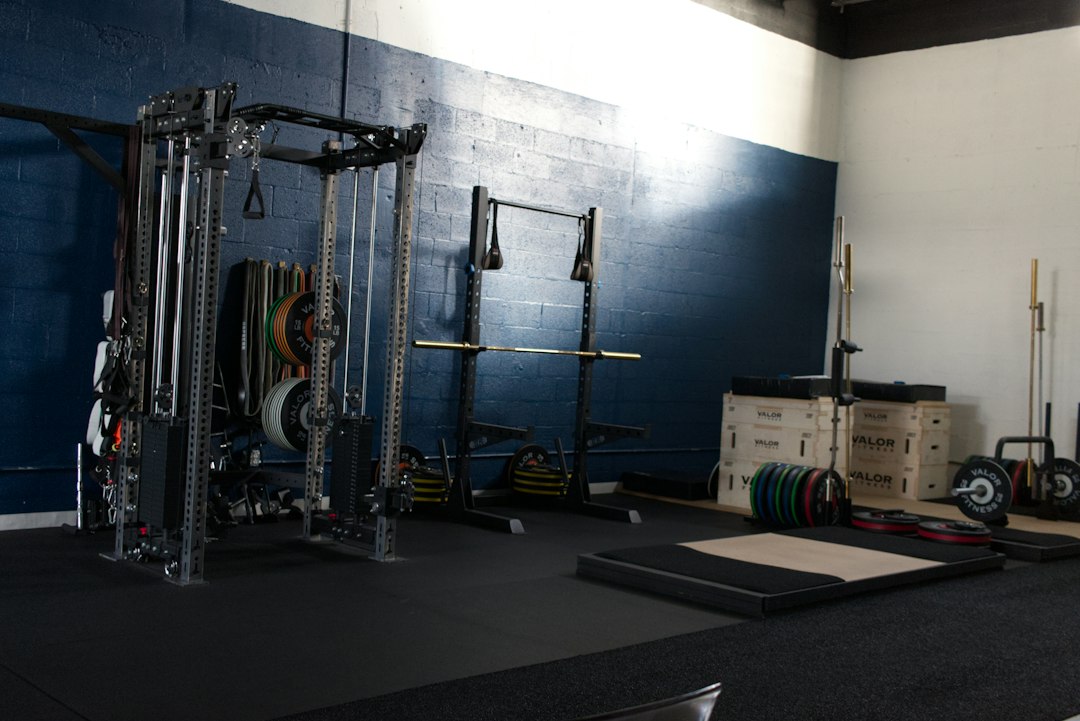

Nothing on a quote will tell a buyer that cable machine pulley ratios have already decided what the member on that station will actually lift.
- Cable machine pulley ratios decide what the member actually lifts
- The claim that stack weight is working weight
- The claim that a lighter effective load means a lighter machine
- The claim that the ratio only matters to the person training
- The claim that cable wear tracks hours on the floor
- The claim that any replacement cable will do
- A load and travel table for cable machine pulley ratios
- Confirming the ratio before the purchase order leaves
- What the standards do and do not settle
- Questions buyers ask about cable machine pulley ratios
- Is a 2:1 machine worse value than a 1:1 machine
- How do you spot the ratio on a used machine with no documentation
- Should the stack be relabeled to show effective weight
- Which cables should a distributor stock
- The line that belongs on every strength quote
The stack is stamped with a number. The handle delivers a different one. Between them sits a system of sheaves that divides force and multiplies travel, and the division is not always disclosed on the spec sheet or printed on the plate.
What follows is a set of claims that circulate on gym floors and in purchase orders, each one paired with the evidence that settles it. Some of the claims are half true, which is what makes them durable.
Cable machine pulley ratios decide what the member actually lifts
A single pulley that changes the direction of a cable does not change the force. Add a movable sheave and the load splits across two cable segments, so the hand feels half the stack and travels twice as far to move it.
That is the whole mechanism. A 200-pound stack on a two-to-one station is a 100-pound exercise, and a four-to-one station turns the same stack into a 50-pound exercise with four inches of handle travel for every inch the plates rise.
The claim that stack weight is working weight
This is the most common and the most expensive misreading. A buyer comparing two functional trainers on stack rating alone is comparing two numbers that mean different things, because cable machine pulley ratios sit between the rating and the result.
The evidence is on the machine itself. Watch the top plate rise one inch and measure how far the handle moved. One inch means one-to-one. Two inches means the rating on the shroud is double the load at the grip.
Some manufacturers resolve this by marking the stack in effective pounds, some print actual plate weight, and a few print both on opposite faces of the same shroud. None of those choices are wrong. Not knowing which one is in front of you is.
The claim that a lighter effective load means a lighter machine
The frame does not care what the handle feels. At two-to-one the cable, the sheaves and the top anchor still carry the full stack load plus the dynamic spike when a member drops the weight.
That is why cable machine pulley ratios belong in the service conversation rather than only the sales conversation. A station that feels gentle to the user can be the hardest-working assembly on a strength floor.

The claim that the ratio only matters to the person training
It sets the smallest usable jump on the machine, which is a programming constraint and a retention one. Ten-pound plates at four-to-one give a two-and-a-half-pound increment at the handle, which is genuinely useful for rehabilitation and rotator work.
The same ten-pound plates at one-to-one give a ten-pound jump, which is a large step for a lateral raise and a trivial one for a row. Trainers notice this within a week. Buyers usually notice after the purchase order has cleared.
The claim that cable wear tracks hours on the floor
It tracks bend cycles and sheave diameter more closely than it tracks hours. Higher cable machine pulley ratios put more sheaves in the load path, and every one of them is another place the cable flexes under load on every repetition.
A four-to-one station running the same member traffic as a one-to-one station puts substantially more flex cycles through its cable. Inspect by path length and sheave count rather than by install date, and the replacement schedule stops looking arbitrary.
The claim that any replacement cable will do
Cable diameter, construction, end fitting and swage all belong to the ratio the machine was designed around. A substitution that fits the clevis can still change the bend radius at the smallest sheave.
The selector pin is where this becomes a safety question rather than a maintenance one. In a 2006 CPSC recall of about 5,600 FreeMotion Cable Cross and Dual Cable Cross machines, the agency described a selector pin that could slip out of its slot if the edges of the pin were worn, allowing the weights to drop suddenly, with nine reports of contusions to the head and shoulders. Worn pins are a consumable, and the same discipline applies to selector hardware on adjustable dumbbells.
A load and travel table for cable machine pulley ratios
All of this is arithmetic, which makes it checkable on any floor with a tape measure. The final column is the reason physical therapists and studio owners care about the ratio more than most club buyers do.
| Stack rating | Pulley ratio | Load at the handle | Handle travel per inch of stack rise | Smallest jump from 10 lb plates |
|---|---|---|---|---|
| 200 lb | 1:1 | 200 lb | 1 inch | 10 lb |
| 200 lb | 2:1 | 100 lb | 2 inches | 5 lb |
| 200 lb | 3:1 | 67 lb | 3 inches | 3.3 lb |
| 200 lb | 4:1 | 50 lb | 4 inches | 2.5 lb |
| 300 lb | 2:1 | 150 lb | 2 inches | 5 lb |
| 150 lb | 2:1 | 75 lb | 2 inches | 5 lb |
| 250 lb | 4:1 | 63 lb | 4 inches | 2.5 lb |
| 100 lb | 1:1 | 100 lb | 1 inch | 10 lb |
Confirming the ratio before the purchase order leaves
None of these steps require the manufacturer’s cooperation, which is the point. Cable machine pulley ratios are measurable on any demo unit in under ten minutes.
- Measure one plate of travel. Mark the cable at the guide, pull until the top plate lifts exactly one inch, and measure the handle displacement. The displacement is the ratio.
- Ask which number is printed. Get it in writing whether the shroud shows plate weight or effective load, and put that answer in the specification rather than in an email thread.
- Count the sheaves in the load path. Walk the cable from anchor to handle and count every direction change under load. That count drives the inspection interval more than the install date does.
- Price the cable as a consumable. Get the part number, the lead time and the labor hours for a full cable replacement before signing, not at the first failure.
- Compare increments, not stacks. Put the smallest achievable jump at the handle next to the programs you actually run, especially if the floor serves rehabilitation or older members.
What the standards do and do not settle
ASTM F2276-23, the standard specification for fitness equipment, sits underneath this category, and a revision is open as work item WK88563 under subcommittee F08.30. Standards work of that kind addresses construction, loading and labeling requirements rather than telling a buyer which mechanical advantage suits their floor.
The practical reading is that a conforming machine can be built at any ratio. Conformity is a floor rather than a specification, so cable machine pulley ratios remain a purchasing decision nobody else will make for you.
Questions buyers ask about cable machine pulley ratios
Is a 2:1 machine worse value than a 1:1 machine
No, they are different tools. Two-to-one buys smoother loading, finer increments and a longer working range in the same footprint, and costs you top-end load. If the floor already has plate-loaded stations for heavy work, the trade is usually worth making.
How do you spot the ratio on a used machine with no documentation
Measure it. Lift the stack one inch by hand and watch the handle, or count the sheaves the cable passes over between the anchor and the grip. Both take minutes and neither needs a serial number, which matters when buying pre-owned strength stations.
Should the stack be relabeled to show effective weight
Only with the manufacturer’s guidance. Relabeling a shroud can conflict with the equipment’s own signage and with warranty terms, and an inconsistent floor is worse than a confusing one. A laminated conversion card at the station solves the member’s problem without touching the machine.
Which cables should a distributor stock
Stock by sheave count and path length rather than by model, since higher cable machine pulley ratios fail first and strand a floor. That is the same logic behind stocking the parts that stop machines rather than the parts that sell.
The line that belongs on every strength quote
One sentence prevents most of this. State the ratio, state whether the stack is marked in plate weight or effective load, and state the smallest achievable increment at the handle. Three facts, all known to the manufacturer, none of them proprietary. A distributor who volunteers cable machine pulley ratios looks like the technical partner on the bid, and one who omits them will eventually explain, at no charge, why the new machine feels lighter than the old one.