
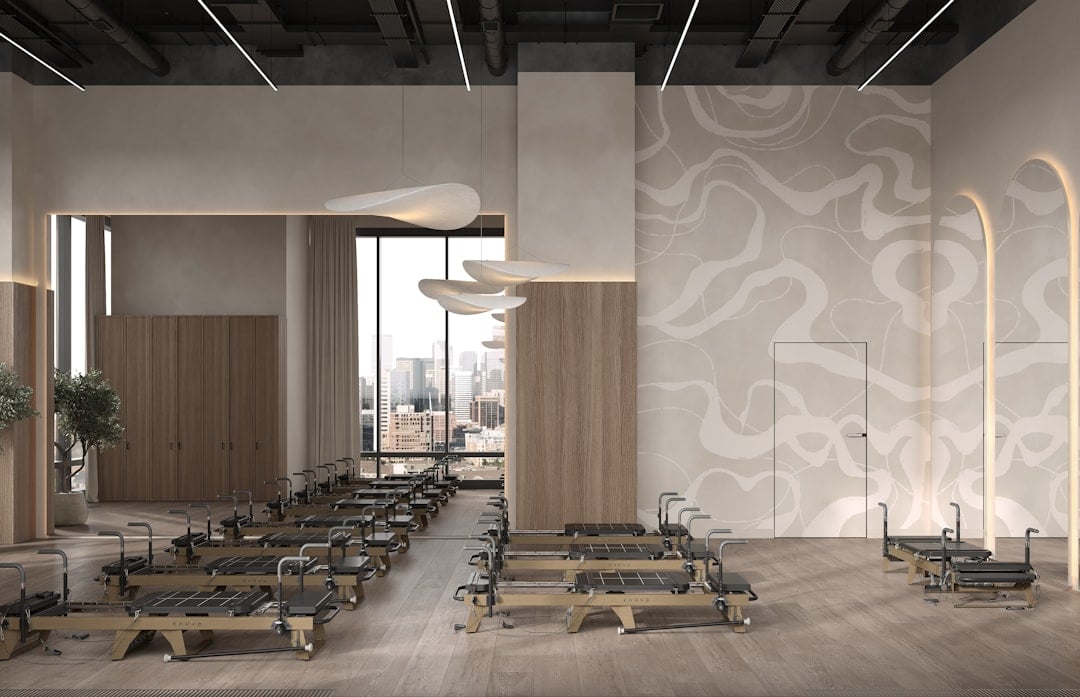

Studios buy commercial pilates reformers by looking at the frame, and frames are almost never the part that ends a machine’s working life. Ropes, rails, springs and locking hardware get there first, usually in that order.
- A reformer is a tolerance stack, not a frame
- Commercial pilates reformers sit under a standard buyers rarely read
- The four wear paths that decide service life
- A green, amber and red scorecard for a floor inspection
- Load ratings and the age clause both belong in the file
- Documentation is a purchasing lever, not paperwork
- Shared rooms punish reformers harder than dedicated studios
- What a reformer quote routinely leaves out
- Buying commercial pilates reformers used or refurbished
- Six checks to run before signing a reformer order
- Reformer questions studio owners ask
- How often should reformer ropes be replaced in a busy studio
- Are commercial pilates reformers covered by a fitness equipment standard
- Is it worth buying commercial pilates reformers for a general-purpose gym floor
- What signals that a reformer should leave the schedule immediately
- Buy the wear parts, not the photograph
The gap between commercial pilates reformers that survive eight teaching hours a day and ones that start squeaking in month five is rarely visible in a quote. It sits in materials, in load ratings and in the documentation a manufacturer is willing to hand over.
A reformer is a tolerance stack, not a frame
Every reformer is a carriage riding on rails under variable spring tension, pulled by ropes through pulleys, stopped by an adjustable footbar and a headrest that moves. Each of those is a tolerance that either holds or drifts.
When the drift starts, clients feel it before the maintenance log does. A carriage that tracks a fraction off center loads one rail edge, the wheel bearings wear asymmetrically, and the noise that follows is the symptom rather than the fault.
Commercial pilates reformers sit under a standard buyers rarely read
ASTM F2276, the Standard Specification for Fitness Equipment, is the document that covers this category in the United States, currently in its 2023 edition. It is written for indoor equipment and, per its own scope, for users age 13 and above.
What makes it useful to a studio owner is the list of things it addresses. The specification covers stability and support, edges, corners and tube ends, rotating and reciprocating points, squeeze, shear and crush points, adjustment and locking mechanisms, handgrips and foot supports, and load-bearing ropes, belts, chains and drive systems.
Read that list against commercial pilates reformers and it maps almost item for item. The rope-and-pulley system, the spring anchors, the footbar lock and the carriage wheels are all named categories in a published standard. Asking a supplier which edition their machines were built to is a fair and answerable question.

The four wear paths that decide service life
Ropes and pulleys carry every repetition and are the shortest-lived load-bearing part on the machine. Springs lose stated resistance gradually and silently, which is worse than failing outright because programming drifts with them.
Rails and wheels are the expensive path: once a rail is scored, replacing wheels alone buys a few months. Locking hardware on the footbar and gearbar is the safety path, and shared-room resets abuse it most.
A green, amber and red scorecard for a floor inspection
Walk the studio with this table and mark each of your commercial pilates reformers. It is built around observable conditions rather than intervals.
| Component | Green | Amber | Red — remove from schedule |
|---|---|---|---|
| Ropes and rope ends | Even diameter, no glazing, symmetric length | Visible fuzzing or one side stretched | Core visible, or knot slipping under load |
| Pulleys and risers | Silent rotation, no lateral play | Ticking under tension | Wobble at the axle or cracked housing |
| Springs and anchors | Coils uniform, hooks square to the plate | One spring noticeably softer than its pair | Opened hook, elongated coil, deformed anchor |
| Carriage wheels | Rolls silently through full travel | Rumble at one end of the rail only | Flat spots, or carriage lifts at travel limit |
| Rails and rail edges | Uniform finish, no witness marks | Polished band forming on one edge | Scoring you can feel with a fingernail |
| Footbar and gearbar locks | Positive detent, no free play loaded | Detent engages only on a second try | Any movement once locked and loaded |
| Upholstery and shoulder rests | Sealed, firm, square to the carriage | Seam opening, foam softening | Exposed foam or a rest that rotates |
| Frame and welds | No rock on a level floor | Rock corrected only by shimming | Visible weld cracking at any joint |
Two amber marks on one machine is an order trigger, not a watch item. The parts interact: a soft spring plus a rumbling wheel produces a complaint neither explains alone.
Load ratings and the age clause both belong in the file
ASTM F2276 addresses labeling and warnings for users, third parties and service personnel, including weight restrictions. A compliant machine carries a stated user weight limit, and a studio should know it before a client asks.
The same specification sets its scope at users age 13 and above. Studios running youth programming should treat that as a real constraint, not small print.
Documentation is a purchasing lever, not paperwork
The standard also addresses assembly instructions, parts lists, and operational and maintenance guidance. A supplier who cannot produce an itemized parts list has, in practice, told you what your spare parts availability will look like in year four.
Ask for the parts list before the discount conversation. It is the single document that separates a manufacturer from a rebrander, and the same principle governs every category covered in our reporting on the cheaper parts that decide service life.
Shared rooms punish reformers harder than dedicated studios
A dedicated room for commercial pilates reformers gets one setup and one teardown a day. A room that runs classes between mat work and small-group training gets machines pushed, stacked and re-spaced several times a day, and each movement loads the frame in a direction it was not designed for.
If the room is shared, the reset procedure is a specification input. The failure pattern is the same one described in our piece on multi-use floors and the resets between programs.
What a reformer quote routinely leaves out
Freight class and liftgate for a long, heavy, awkward crate. Assembly labor, which for reformers is real and is frequently assumed to be the studio’s problem. Spring sets beyond the shipped configuration, and rope replacement kits. Removal of the machines being replaced.
None of these are hidden; they are simply not in the price a studio compares across three suppliers. Build the comparison on delivered and installed cost or the comparison is not a comparison.
Buying commercial pilates reformers used or refurbished
The used market for commercial pilates reformers is genuinely good, because frames outlast studios. The risk is not the frame, it is everything the previous owner did not replace.
Price a refurbished machine as the purchase plus a full consumables reset: ropes, springs, wheels and upholstery. If that total lands near new, buy new and take the warranty. Where it lands well under, refurbished is the better capital decision, particularly for a second room whose demand is unproven.
Six checks to run before signing a reformer order
- Ask which ASTM F2276 edition applies. A supplier who answers immediately is telling you about their engineering file; one who redirects to marketing is telling you something too.
- Request the itemized parts list and lead times. Ropes, springs, wheels and locking hardware, each with a part number and a stated availability window.
- Get delivered and installed cost in writing. Freight class, liftgate, inside delivery, assembly labor and disposal of the outgoing machines, itemized rather than bundled.
- Run the scorecard on a demo unit under a real class load. Not a showroom unit standing still, which will pass every check.
- Confirm the stated user weight limit and the age scope. Put both in the studio’s own operating file rather than leaving them on a decal.
- Fix the reset procedure before delivery. Decide who moves machines, how and to where, while the room is still empty.
Reformer questions studio owners ask
How often should reformer ropes be replaced in a busy studio
By condition, not by calendar. Rope life depends on class volume, spring load and pulley alignment, so two commercial pilates reformers in the same room can diverge sharply. Inspect ropes weekly against the green, amber and red criteria above, and replace in matched pairs rather than singly so resistance stays symmetric across the carriage.
Are commercial pilates reformers covered by a fitness equipment standard
ASTM F2276, the Standard Specification for Fitness Equipment, covers the component categories a reformer is built from, including load-bearing ropes and belts, adjustment and locking mechanisms, and stability and support. It is a specification for indoor fitness equipment generally rather than a reformer-specific document, so ask a supplier how their machine is tested against it.
Is it worth buying commercial pilates reformers for a general-purpose gym floor
Only with a room and a reset plan. Reformers on an open training floor get moved constantly, and the movement, not the teaching, is what degrades them. A gym adding the format should budget the partition or the storage system alongside the machines.
What signals that a reformer should leave the schedule immediately
Any red condition on the scorecard, particularly a lock with free play under load, a spring hook that has opened, or a carriage that lifts at the travel limit. These are not noise complaints; they are the states in which a client can be injured, and the machine should come off the booking system that day.
Buy the wear parts, not the photograph
Demand for studio formats keeps rising against a broad participation base — SFIA’s 2026 Topline Participation Report, released in March, put 250 million Americans in at least one sport, fitness or leisure activity during 2025. That demand rewards studios whose commercial pilates reformers stay silent and predictable. Every check above is really one question asked several ways: which parts wear, how fast, and can this supplier still sell them to you in four years, a discipline our work on replacement timing and early maintenance signals examines across other categories.
Sources: ASTM F2276 Standard Specification for Fitness Equipment and the SFIA 2026 Topline Participation Report announcement.