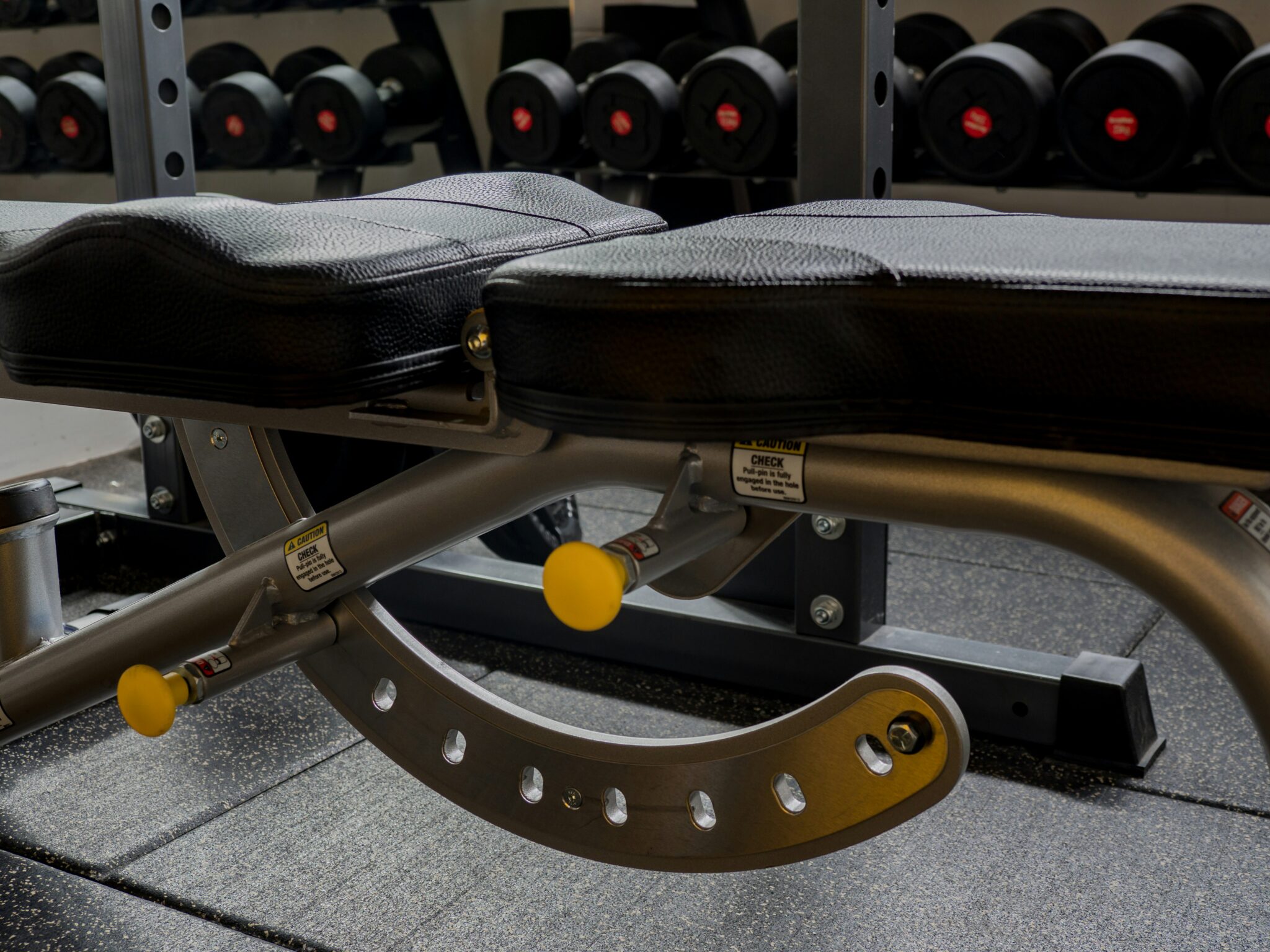

Gym equipment upholstery is the only part of a machine that every single member touches, and it is the part almost no maintenance schedule assigns to anyone.
- Gym equipment upholstery fails in four ways, and only one is cosmetic
- Green: surface marks that belong on a cleaning schedule
- Amber: seams, compression set and loose fasteners
- Red: exposed foam, cracked substrate and movement under load
- The cleaning chemical is usually the accelerant
- Reupholster, replace the pad, or replace the machine
- Gym equipment upholstery sits inside the general standard
- A three-tier grading table for a walking inspection
- Five steps to put pad condition on a schedule
- Questions operators ask about gym equipment upholstery
- How often should pads be replaced on a commercial floor
- Is reupholstering cheaper than buying a replacement pad
- Can a torn pad keep a machine on the floor until the part arrives
- What should I check on pads when buying used equipment
- The pad is the cheapest honest signal on the floor
Belts get hours logged. Cables get inspected. Pads get noticed when a piece of foam is visible from the front desk, which is several months after the failure began.
The gap matters because a pad is not trim. It is the interface that keeps a user in position under load, and its condition is evidence about the frame, the welds and the fasteners beneath it.
What follows grades that evidence in three tiers: green, amber and red, with the action window attached to each.
Gym equipment upholstery fails in four ways, and only one is cosmetic
Surface abrasion is wear on the vinyl or polyurethane skin. It looks bad and changes nothing structurally, which is why it absorbs attention that belongs elsewhere.
The other three are different animals. Seam separation opens the foam to sweat and cleaner; compression set flattens the foam until the user sits on the board beneath it; and substrate failure means the plywood or composite backing has softened or cracked.
Only the first is about appearance. The remaining three change how load transfers into the frame, and they progress on their own timetable whether or not anybody records them.
Green: surface marks that belong on a cleaning schedule
Scuffing, color fade, chalk staining and light surface crazing sit here. The skin is intact, the seams are closed, and the foam returns to shape when pressure is released.
Green gym equipment upholstery is cosmetic and should be logged rather than scheduled. A floor that replaces pads at this tier is spending capital to fix an appearance problem a cleaning protocol would solve.
Amber: seams, compression set and loose fasteners
Gym equipment upholstery enters amber when the skin is breached or the foam stops recovering. Press the center of the pad with a thumb and count how long it takes to rise; a pad that stays dented has lost its foam structure.
Open seams are the more urgent half of this tier. Once sweat reaches foam, the pad becomes a reservoir that no cleaning routine can reach, and the substrate starts absorbing moisture from the inside.
Loose mounting hardware belongs here too. A pad that shifts under a user is a fastener problem first and a frame problem soon after.
Red: exposed foam, cracked substrate and movement under load
Red is a same-day removal from service. Exposed foam, a cracked backing board, a pad that rocks on its mount, or any visible gap between pad and frame under a loaded user.
Seat and pad assemblies carry real structural duty, which is easy to forget until one fails. The U.S. Consumer Product Safety Commission announced recall 26-067 on November 6, 2025, covering roughly 833,000 bikes whose seat post assembly could break during use; the commission’s notice records three incidents and two injuries from falls.
The cleaning chemical is usually the accelerant
Disinfectants need their stated dwell time to work, and that dwell time is exactly what degrades a vinyl skin and the adhesive under it. Operators are not choosing between clean and intact; they are choosing a chemistry that tolerates both.
Quaternary and alcohol-based products age surfaces at different rates, and the manufacturer’s compatibility list is the document that settles it. The full dwell-time tradeoff is worth reading before the next order of wipes.
Reupholster, replace the pad, or replace the machine
Three different gym equipment upholstery jobs get described with the same word. Reupholstery re-skins the existing foam and board; pad replacement swaps the whole assembly; machine replacement is a capital decision.
The deciding question is what the substrate looks like. A sound board with a torn skin is a re-skin. A soft or cracked board is a pad swap, because new vinyl over failed backing fails again within a season.
Stocking matters here. A pad in the parts room is a twenty-minute job, and the same pad on back order is a machine out of service for weeks, which is the difference between a stocked part and an ordered one.
Gym equipment upholstery sits inside the general standard
Fitness equipment is covered by ASTM F2276, the general specification for the category, currently under revision as work item WK88563 by committee F08 and subcommittee F08.30. The work item record names the standard and the group responsible for it.
That matters for procurement rather than for maintenance. A pad supplied by a third party changes the assembly the manufacturer certified, and a club that sources gym equipment upholstery outside the original equipment channel should document what it fitted and when.
A three-tier grading table for a walking inspection
The table converts what a technician sees into a tier, an action and an owner, so gym equipment upholstery decisions stop depending on who happens to notice.
| Observed signal | Tier | What it means structurally | Action window | Owner |
|---|---|---|---|---|
| Scuffing, fading, chalk marks | Green | Skin intact, foam sound | Log only, review quarterly | Cleaning staff |
| Light surface crazing | Green | Early skin fatigue, no breach | Watch at the next inspection | Cleaning staff |
| Seam separation under an inch | Amber | Sweat now reaching foam | Repair within thirty days | Service technician |
| Foam stays dented after pressure | Amber | Compression set, support lost | Replace within the quarter | Service technician |
| Pad shifts on its mount | Amber | Fastener or insert working loose | Tighten and re-inspect that week | Service technician |
| Exposed foam or torn skin | Red | Contamination path open | Out of service same day | Facility manager |
| Cracked or soft backing board | Red | Load path compromised | Out of service, full assembly swap | Facility manager |
Five steps to put pad condition on a schedule
Each step moves gym equipment upholstery from a complaint-driven task to a recorded one.
- Walk the floor with a thumb, not a clipboard. Press each pad at the center and the edge, and record recovery time rather than appearance.
- Photograph every amber item on the day it is graded. A dated image is what turns a judgment call into a maintenance record and a warranty claim.
- Match the cleaner to the surface, in writing. Get the compatibility list from each manufacturer and give housekeeping one approved product per surface type.
- Stock pads for the five busiest stations. Choose by session count, not by machine cost, and keep the part numbers on the shelf label.
- Set a red rule nobody can override. Exposed foam or a cracked board means the machine leaves the floor that day, with no discretion at shift level.
Questions operators ask about gym equipment upholstery
How often should pads be replaced on a commercial floor
There is no fixed interval, because wear tracks session count and cleaning chemistry rather than calendar age. A high-traffic bench in a busy free-weight room can reach amber within a year, while the same pad on a rarely used machine stays green for five. Grade by condition, not by date.
Is reupholstering cheaper than buying a replacement pad
Only when the backing board is sound. Re-skinning reuses the substrate, so if that board has softened or cracked, the new cover fails on the same timetable as the old one. Check the board first, then decide, because the inspection costs nothing and the rework costs twice.
Can a torn pad keep a machine on the floor until the part arrives
Not if foam is exposed. An open pad holds sweat and cleaner in material that cannot be disinfected, and the surface a member lies on becomes the least sanitary part of the room. Pull the station, tag it, and put the order in the same day.
What should I check on pads when buying used equipment
Press every pad and look at every seam before bidding, since gym equipment upholstery is the cheapest thing to fix and the clearest signal of how a fleet was maintained. Machines arriving from a liquidation lot often need every pad replaced, and that cost belongs in the bid.
The pad is the cheapest honest signal on the floor
Nothing else on a machine tells the truth this cheaply. A pad reports traffic, cleaning practice, fastener condition and substrate health at once, and it does so months before a console code or a member complaint arrives. Grading pads in three tiers costs one walk a month and converts the most visible surface in the building into a maintenance instrument rather than an embarrassment.