
For: Facility owners, project managers and procurement leads choosing a gym equipment distributor for a fit-out or fleet order.
The decision: Which supplier can actually deliver, install, commission and service the order, as opposed to which one quotes the brands you want at the best price.
60-second answer: Treat the choice like appointing a subcontractor. Ask each shortlisted supplier for four working documents (site survey, delivery method, per-unit commissioning checklist and a local parts list for your models), the names of the people who will do the work, and service response and completion commitments stated separately. Tie the final payment to signed commissioning. How quickly the documents arrive is itself evidence.
What fails is the work around the brands
The equipment lines on a quote are the easiest part to research and the least likely to fail. What fails is the work wrapped around them: a freight booking that was never made, a crew that has not installed this equipment before, a parts list that turns out to mean “direct from the factory.” A supplier can truthfully say it handles freight, installation and service while the capacity behind that sentence is one crew and a mobile number. The questions below pair each claim with the record that should already exist if it is real.
Comparing scope across bids is covered in the commercial quote checklist; start there so the prices you compare cover the same work, including a written list of exclusions.
Ask for the working documents
Some documents should not need inventing for you. A supplier with real process uses them on every job and can send them the same week:
- Site survey report covering access, openings, lifts and floor conditions; see the delivery site survey.
- Delivery method statement naming the carrier, vehicle, booking process and who receives the freight.
- Per-unit commissioning checklist following the manufacturer’s installation instructions, signed machine by machine.
- Local parts list for your specific models, with where each part is held and the transit time for anything not stocked.
A firm assembling these for the first time because you asked is telling you it does not use them internally.
Named people and real capacity
Ask who will physically be in the building: a named crew lead, whether employed or subcontracted, and how many installations of this equipment type that crew has completed. Subcontracting is not disqualifying; undisclosed subcontracting is. When the crew is a third party, ask who briefs them, who inspects their work and who pays for a return visit if a unit is assembled wrong.
Then ask about the calendar. How many crews exist, what else is booked in your delivery month, and which job yields if another client’s opening slips into your week. For service, ask how many technicians cover your area, where the nearest is based and what happens in holiday weeks. FEX does not suggest a technician-to-site ratio; the supplier’s own coverage and backlog are the evidence.
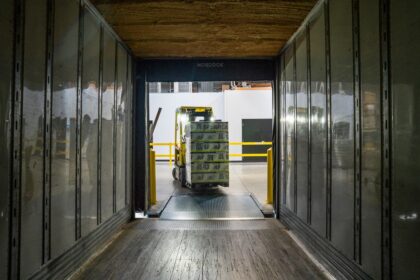
Freight booking and receiving.
A promised delivery date is not a booked one. Ask when the carrier will be booked, by whom, and whether you will receive the reference. Then ask who counts pieces against the bill of lading on arrival, who photographs crate condition, and how a short or damaged item is noted on the delivery receipt and escalated the same day. Damage that goes unrecorded at delivery is harder to recover later, because damage found afterward falls under the carrier’s concealed-damage rules: Old Dominion Freight Line, for example, requires concealed damage to be reported within five business days of delivery and the packaging kept until the claim is concluded. The freight damage checklist covers the claim process.
Define “installed” and “serviced” in writing
“Installed” is not a defined term unless the contract defines it. A serious commissioning checklist covers levelling and any anchoring the manufacturer specifies, fastener torque where specified, belt tracking, console power-up and firmware state, emergency stop and safety key function, and any part left in a temporary condition. A floor-level sign-off often means nobody checked the last unit. The installation closeout guide sets out the full handover file.
For service, ask for two commitments stated separately: response, meaning when someone acknowledges or arrives, and completion, meaning when the machine returns to service. Only the second matters to the member in front of it. Ask what share of visits are closed without a second trip; the answer depends on whether the technician carries parts for your models. Read the warranty and any service contract as separate documents with separate obligations.
Evidence table for the shortlist
| Question | Evidence to request | What a weak answer sounds like |
|---|---|---|
| Who installs this? | Named crew lead, employment status, installs of this equipment completed | “Our install partner takes care of that.” |
| What is excluded? | A written exclusions page attached to the quote | “Anything unusual we would price separately.” |
| When is the truck booked? | Carrier booking reference and delivery window | “As soon as the order releases.” |
| Who receives the freight? | Named receiver, inspection steps, photographs on arrival | “The driver will sort it out with your team.” |
| What counts as installed? | Per-unit commissioning checklist, signed machine by machine | “We walk the floor together at the end.” |
| How fast is service? | Response and completion commitments stated separately | “We are usually out within a day or two.” |
| Where are parts held? | Location, parts stocked for your models, transit time | “Parts come direct from the manufacturer.” |
| Who pays for rework? | Named party in the contract, return-visit clause | “That would not happen on our jobs.” |
Payment, changes and references.
Structure payment so exposure falls with progress, for example deposit, delivery and signed commissioning, and see order deposit terms for milestone and refund language. Agree how on-site changes are authorized and fix the hourly rate, minimum call-out and after-hours terms in the contract while alternatives still exist. For references, ask what went wrong and how it was fixed rather than whether the client was satisfied, and ask for one client whose relationship is several years old; the vendor reference guide has the question set.
What to do this week
- Send every shortlisted supplier the same request for the four working documents and an exclusions page; note how long each takes.
- Ask for the named crew lead and the delivery-month install calendar.
- Ask for service response and completion commitments in writing, separately.
- Redraft the payment schedule so the final payment follows signed commissioning.
Continue with FEX
- Installation readiness before confirming delivery
- Coordinate the trades on installation day
- Review a service provider before renewal
FEX editorial guidance: the evidence table, document list and payment approach are FEX analysis. They are not manufacturer specifications, contractual entitlements or industry benchmarks.
Source notes
- Old Dominion Freight Line: Cargo Claims FAQs (accessed October 2026) — Five-business-day window for reporting concealed damage and retention of packaging until a claim is concluded.
Editorial update, October 8, 2026: Removed a standards-body link that did not support the claim beside it, merged technician-coverage and parts-depot questions from the delivery survey guide, and shortened sections already covered by the quote-leveling and vendor-reference guides. Added a carrier’s published concealed-damage rule to support the point about recording damage at delivery.