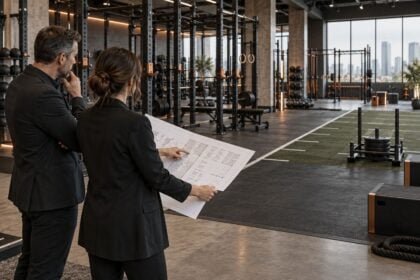


Operators planning regional fitness equipment growth usually carry a working format with them: a floor plan, an equipment mix, a staffing ratio and a price point that already succeeded somewhere. The format is the asset. It is also the thing most likely to break.
- Two markets, one format
- Building stock is the first constraint on regional fitness equipment growth
- Membership density and how far people will travel
- Labor availability and the wage floor
- Commute patterns and when the floor is actually busy
- Competitor saturation and the position that is left
- Service technician coverage and the cost of distance
- The same framework, two very different answers
- Where regional fitness equipment growth actually comes from
- Before you sign the lease
- Questions operators ask before entering a new market
- How much should the equipment mix change between markets?
- Is an empty market a good sign or a warning?
- Can a format be adapted rather than rebuilt?
- Which variable is most often underestimated?
- What the second market teaches about the first
What breaks it is rarely demand. Sites are chosen on population and income, and both are easy to look up. The variables that decide whether a format survives a move are physical and local: what the buildings are like, how far people will travel, what staff cost, when the floor fills, who is already there, and how far away the nearest technician sits. Two composite markets, run through the same framework, show how differently those questions can answer.
Two markets, one format
Take a single-format operator with a strength-led floor, a modest cardio bank, one studio and an eighteen-hour staffed day. The first market is a dense inner district of older converted buildings, where members walk or take transit from within roughly a mile. The second is a low-density corridor of newer light-industrial shells, where members drive in from a wide catchment.
Both look attractive on a demographic screen, which is where most regional fitness equipment growth decisions are made. Neither is more promising than the other in the abstract. The framework below is what separates them, and it is applied identically to each.
Building stock is the first constraint on regional fitness equipment growth
Ceiling height decides the format before any equipment is chosen. Older converted stock frequently offers attractive frontage and awkward vertical space once ductwork, sprinklers and lighting are installed beneath the slab.
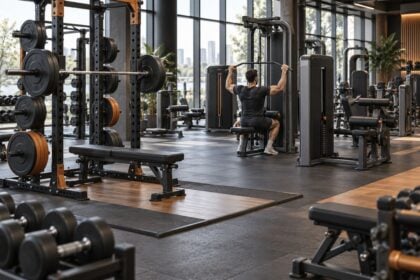
In the dense district, that usually means no rigs, restricted overhead pressing, limited rope work and a strength floor rebuilt around lower profiles. Column spacing complicates rack rows, and floor loading on an upper level can rule out heavy plate storage entirely. In the suburban corridor the opposite applies: clear height is generous, the slab is at grade, but the shell arrives without partitions, and studio walls, HVAC and acoustic treatment become capital lines nobody budgeted.

Membership density and how far people will travel
Catchment behaves differently on foot and by car. A walkable catchment is small, deep and highly sensitive to a competitor opening two streets away. A driving catchment is wide, shallow and sensitive to nothing except a change in the commute.
The consequence for regional fitness equipment growth is direct. A walk-in membership visits more often for shorter sessions, which concentrates pressure on cardio and on a handful of popular strength stations. A drive-in membership visits less often and stays longer, spreading load across the floor and raising demand for changing space, parking and a functional zone that supports a full session. Reading that pattern correctly is the practical version of interpreting demand from the floor itself.
Labor availability and the wage floor
Staffing costs move further than equipment costs between markets, and they stall regional fitness equipment growth more often than rent does. A high urban wage floor makes an eighteen-hour staffed day expensive, which pushes operators toward self-service formats, access control and equipment that needs little supervision.
The suburban corridor often carries a lower wage floor and a thinner specialist pool. Front-desk hours are affordable; qualified coaches for a class timetable may not be available at any price within a reasonable travel distance. That single fact can invalidate a format built around programmed group training, regardless of how well the equipment performs.
Commute patterns and when the floor is actually busy
Peak shape determines how many of each machine you need, and peak shape is a local variable. A district with a large daytime working population produces early-morning and post-work peaks with a genuine lunchtime bulge, and members who will not wait.
A corridor serving a dispersed residential catchment produces a flatter curve, a stronger weekend, and members with more tolerance for a short wait because they have already committed to a drive. The same equipment count feels generous in one pattern and inadequate in the other, which is why capacity planning has to follow whichever constraint you actually hit next rather than a fixed ratio carried from the last site.
Competitor saturation and the position that is left
Saturation is not simply a count of gyms. It is a question of which positions are already occupied and how well.
A dense district may hold budget chains, boutique studios and a premium club within a short walk, leaving a narrow gap that is often mid-market and hard to defend. A sparse corridor may hold one aging facility and no boutique presence at all, which sounds like open ground but may also indicate that the local market has never been asked to pay a boutique price. Absence of competition is ambiguous evidence, and regional fitness equipment growth built on an empty map often discovers why the map was empty.
Service technician coverage and the cost of distance
Equipment uptime is a geographic variable that rarely appears in a market entry model. Technician density follows the density of installed equipment, which means dense districts are well covered and outlying corridors frequently are not.
The practical effect is that identical machines have different effective availability in the two markets. Where coverage is thin, the answer is usually a deliberate over-specification: fewer distinct models, more duplication of the popular stations, and a larger on-site spares holding. Thin coverage is one of the quieter brakes on regional fitness equipment growth, and it belongs in the entry model beside rent, as one of the signals that justify committing capital.
The same framework, two very different answers
Run both markets through the seven variables and the format does not simply need adjusting. In one case it needs rebuilding around a vertical constraint and a labor cost; in the other around a service constraint and an unbuilt shell.
Neither market is worse. Both can support regional fitness equipment growth; they simply demand different capital, staffing and equipment mixes, and the mistake is assuming a working format transfers intact. Operating fundamentals are consistent across markets even when the format is not, which is the useful part of the Health & Fitness Association operating practices for fitness facilities.
| Variable | Dense converted district | Low-density corridor | What it changes |
|---|---|---|---|
| Clear ceiling height | Restricted below services | Generous, shell condition | Rigs, overhead work, rack rows |
| Floor loading | Limited on upper levels | Slab at grade | Plate storage and heavy stations |
| Catchment | Small, deep, walkable | Wide, shallow, driven | Visit frequency and session length |
| Wage floor | High | Lower | Staffed hours and supervision model |
| Specialist labor pool | Deep | Thin | Whether a class timetable is viable |
| Peak shape | Sharp, with a midday bulge | Flatter, weekend-weighted | Machine counts per category |
| Competitor positions | Mostly occupied | Largely absent | Price point and defensibility |
| Technician coverage | Dense | Sparse | Duplication and on-site spares |
Where regional fitness equipment growth actually comes from
Growth comes from the variables that are hardest to change after signing. A lease fixes ceiling height, floor loading, parking and commute position for a decade, and none of those can be corrected by buying better equipment later.
Everything else is adjustable. Equipment mix, staffing model, class timetable and price can all be revised within a year of trading. Sustained regional fitness equipment growth comes from picking sites where the fixed variables suit the format and then flexing the adjustable ones, rather than the reverse. That ordering is also what makes capital deployment legible to whoever is funding it.
The floor surface is one more fixed constraint that varies by building stock. Level changes, ramps and patched sections left behind by a previous use all fall under the general-industry expectations OSHA sets for walking and working surfaces, and an older converted building can absorb a remediation budget meeting them that a newer shell would not.
Before you sign the lease
- Measure the vertical, not the square footage. Clear height below services at the rack line, column spacing, and floor loading on every level you intend to use. These are the numbers a lease locks in permanently.
- Walk the catchment at peak. Visit at the hours you expect to be busy and observe how people arrive. Foot traffic and parking behavior tell you more about visit frequency than any demographic table.
- Price the staffing model locally. Get real local rates for front desk and for qualified coaches, then test whether your format still works if the specialist role cannot be filled at all.
- Map the competitor positions, not the count. List who occupies budget, mid-market and boutique within the realistic catchment, and name the position you intend to hold and why it is defensible.
- Confirm technician coverage before specifying. Ask how many technicians cover the ZIP code and how far away the nearest is. Where coverage is thin, reduce model variety and increase duplication before the order is placed.
Questions operators ask before entering a new market
How much should the equipment mix change between markets?
Less than the layout and much less than the staffing model. Category proportions usually shift with peak shape and session length rather than the equipment itself changing. The bigger adjustments are the number of duplicate popular stations and how much floor is given to circulation.
Is an empty market a good sign or a warning?
Both, and the distinction matters. Ask whether anyone has tried and closed, and whether the absence reflects unmet demand or a price ceiling. A corridor with no boutique presence may simply be a corridor where boutique pricing has never been sustained.
Can a format be adapted rather than rebuilt?
Often, provided the fixed variables allow it. Adapting to a lower ceiling by dropping rigs is workable. Adapting to a labor market with no qualified coaches while keeping a class-led format is not, because the constraint sits outside anything the operator controls.
Which variable is most often underestimated?
Technician coverage, because it never appears in a site appraisal and only becomes visible when a machine has been down for three weeks. It quietly caps regional fitness equipment growth in outlying territories. It is also the cheapest to correct in advance, through model consolidation and a spares holding agreed before the first order.
What the second market teaches about the first
Running an existing format through this framework usually explains the original site as much as the new one. Success in a first market is a combination of a format and a set of local conditions, and the two are easy to confuse. Separating them is the real work behind regional fitness equipment growth, and it happens before the lease, not after the equipment arrives.