
For: Buyers ordering commercial stair climbers, and dealers preparing ownership-cost proposals for any single-unit or small-quantity equipment order.
The decision: What the machine will cost to own over the period you plan to keep it, and which inputs must be verified before the order rather than discovered after.
60-second answer: Choose a planning horizon, then add installed cost, site work, expected parts and labor, energy, software, downtime exposure and end-of-life cost, minus expected recovery value. Verify each input in writing: drive-train service requirements from the manual, electrical requirements against the panel, floor and ceiling suitability, a trained technician in your market and removal access. Stair climbers make a good worked example because their drive train, height and weight put more of the cost outside the quote than most cardio categories.
Why small orders skip the ownership review
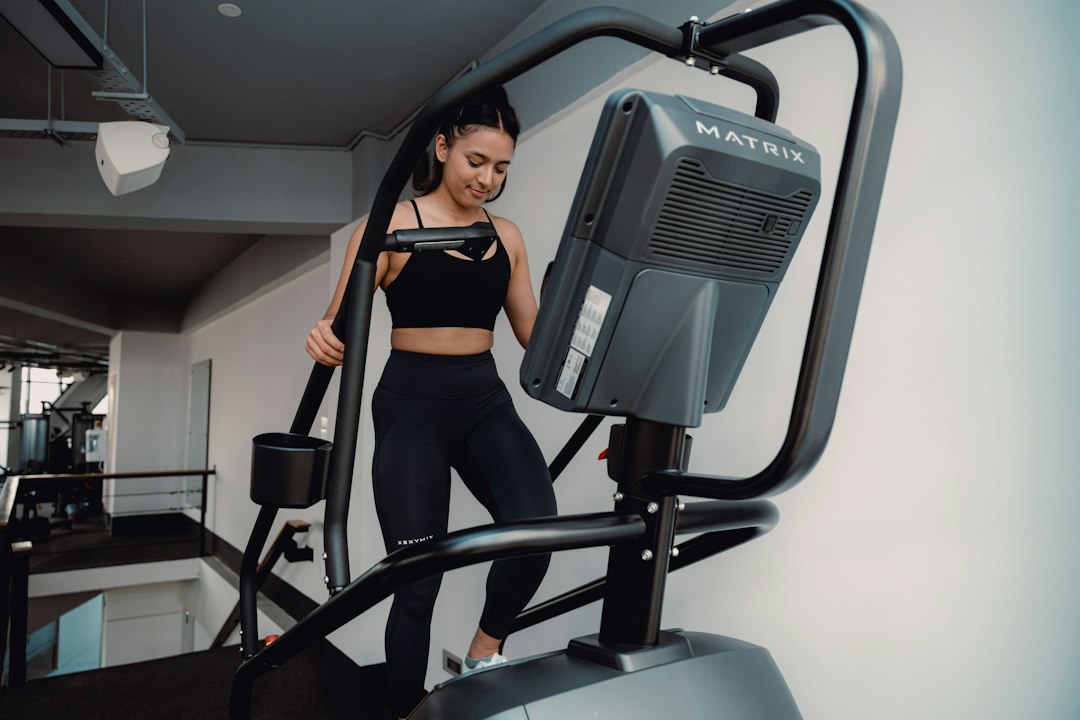
A twelve-treadmill order usually attracts an electrical check, a layout review and a service conversation. One or two stair climbers often attract only a purchase order. The ownership cost does not shrink with the order size; it is simply read later, one invoice at a time. A stepmill carries a user’s full weight on a moving, chain-driven staircase, is tall and heavy on a small footprint, and needs technicians trained on its drive train, so more of its cost sits outside the quote than for many cardio machines. That makes it a useful worked example of a total-cost framework any buyer or dealer can reuse.
For a pre-signature checklist of cardio quote gaps, see cardio costs outside the quote. This article sets out the full calculation.
The framework
Pick one planning horizon, usually the period you expect to keep the unit before replacement. Then:
- Total cost of ownership = installed cost (equipment, freight, installation) + site work (circuits, floor, access) + expected parts and labor over the horizon + energy + any software or subscription fees + expected downtime cost + end-of-life removal and disposal − expected recovery value at the end.
- Use the manufacturer’s maintenance schedule and parts list, priced per duty hour, multiplied by the hours your facility actually runs.
- Use your own method for downtime cost, from documented downtime cost, not an assumed revenue figure.
- Record each assumption and who supplied it. Re-run the calculation if one input changes materially.
Inputs to verify before the order
| Input | Verify before the order | Where it lands if you do not |
|---|---|---|
| Drive train service | Chain, sprocket and brake service requirements from the manual, stated in duty hours where available | Unscheduled service calls |
| Electrical | Manufacturer’s electrical requirements compared with the panel schedule and the circuit that will serve the unit | Circuit work quoted after delivery |
| Floor | Structural confirmation for upper floors or mezzanines | Relocation to a worse position |
| Ceiling height | Clearance above the top step with a user standing, per the manufacturer’s requirement | A unit that cannot be commissioned where planned |
| Service access | Working space on the sides the manual requires, drawn on the layout | The unit has to be moved for every visit |
| Technician coverage | A named technician trained on this drive train in your market | Longer waits on a category you may own only one or two of |
| Parts | Wear-item list with lead times | Parts ordered reactively at expedited freight |
| Removal | Removal path measured against the room as it will be | Building work at replacement time |
ASTM F2571, the standard test methods for evaluating design and performance characteristics of fitness equipment, includes chain and gear drive design, entrapment zones and guarding, electrical guarding and maximum surface temperature among its parameters. Ask whether the quoted model has been evaluated to it; submitted documentation is more useful evidence than a warranty term alone.
One unit or two
With a single unit, the whole category disappears from the floor whenever it is out of service, and regular users may not substitute another machine. A second unit adds capital and service cost and reduces that exposure. The right answer depends on how heavily the category is used, how quickly your technician coverage can respond and what an outage costs you; run both quantities through the framework rather than assuming either.
Using the framework as a dealer
For dealers, a completed ownership calculation is a stronger proposal than a unit price, and it surfaces the site work, service plan and parts stock you can quote alongside the equipment. It also makes recurring service revenue visible to the buyer as part of the decision rather than a surprise after it. Self-powered models remove some electrical cost but not the drive train, parts, access or removal lines.
What to do this week
- Measure ceiling height above the planned top-step position and the removal path.
- Send the electrician the manufacturer’s electrical requirements and the panel schedule.
- Ask the manufacturer for the wear-item list, service requirements and lead times.
- Name the trained technician who would cover the unit.
- Fill in the framework for one unit and for two, on the same horizon.
Continue with FEX
- Floor load capacity in upper-level rooms
- Lifecycle planning by category
- Build a cash-flow case without inventing retention gains
FEX editorial guidance: the total-cost framework and input list are FEX analysis. They are not manufacturer specifications or industry benchmarks.
Source notes
- ASTM F2571-15(2020) — Test methods for fitness equipment design and performance characteristics, including chain and gear drives and electrical guarding.
Editorial update, October 8, 2026: Rebuilt the cost ledger as a reusable total-cost framework with a planning horizon. Removed a market sales statistic that did not bear on ownership cost, replaced a firm recommendation to buy two units with a comparison method, and corrected the description of ASTM F2571’s parameters.