
For: Owners and managers of refurbishment and equipment remanufacturing shop operations, and dealers adding a rebuild bay.
The decision: Which incoming used units to accept, at what price, and whether the shop’s constraint is technician time or bay space.
60-second answer: Price an incoming unit by what it will consume, not by what it might resell for. Estimate two numbers separately: technician hours on the bench, and bay days from bench start to release, including waits for parts, finish work and testing. Check recall status, the serial plate and parts availability before money changes hands. If bays are full of units waiting for parts, another technician will not raise output; fixing the parts position will.
Technician hours and bay days are different capacity
A rebuild operation has two capacities, and they run out separately. Technician hours are the hands-on time available after travel, sourcing calls, freight coordination and administration. Bay days are the time a unit physically occupies a working position, from bench start to release.
A unit can need a modest number of technician hours and still hold a bay for weeks while a console board or upholstery set is on order, a frame waits for refinishing, or a test run is pending. When that happens, bays fill with work in progress, finished machines wait behind unfinished ones, and the shop looks busy while output stalls.
- Bay occupancy for a period = total bay days used ÷ (number of bays × working days).
- Technician utilization = hands-on bench hours ÷ technician hours available.
High occupancy with modest utilization points to waiting: parts, finish work or testing. The remedy is parts stocking, sequencing and scheduling, not hiring. High utilization with idle bays points to labor: then a hire or subcontracted help is the lever. A second bay used only to store unfinished units adds space, not throughput. If the same technicians also run field service calls, count that time out first; urgent service work usually wins, and the bench absorbs what is left.
Records to pull from your own shop
- For each unit completed this year: purchase price and date, bench start and release dates, technician hours booked, and parts cost.
- Days each unit waited for parts, and which parts.
- Units still in the bays, with the reason each is waiting.
- The salvaged-parts shelf: what is held, for which models, and when it was last counted.
- Sale price, any warranty claims after sale, and returns.
From those records, calculate average bay days and technician hours by equipment family. That is your own baseline; there is no industry figure that substitutes for it.
The intake check before money changes hands
Frames rarely decide a rebuild. Wear parts, consoles and documentation do. A mechanically sound cardio unit with a console board the manufacturer no longer supplies may be a parts donor, not a sellable machine; check parts support status before pricing it. The same trap catches buyers of auction and liquidation lots.
| Intake check | Supports buying for rebuild | Supports buying as parts only, or declining |
|---|---|---|
| Serial plate | Present and legible | Missing or illegible: recall status and parts lookup cannot be confirmed |
| Recall status | Checked against CPSC and manufacturer notices; outside affected ranges, or remedy documented | Inside an affected range with no remedy record |
| Frame and welds | No cracks or distortion at load-bearing joints | Any crack or distortion at a load-bearing joint |
| Console and electronics | Boots; replacement boards confirmed available | Board discontinued with no confirmed substitute |
| Wear parts | Parts identified and available, or on your shelf | Many parts needed with no confirmed source |
| Estimated technician hours | Within what your price and margin can carry | Above it |
| Estimated bay days | Parts in hand or with confirmed dates | Long or unknown waits that would block a bay |
| Finish | Surface issues only | Corrosion through the coating needing full refinishing you have not priced |
The acceptable limits for hours and bay days are your own operating choices, set from your baseline and margin target. Write them down so purchase decisions do not drift with enthusiasm for a particular machine.
Recall status is an intake question.
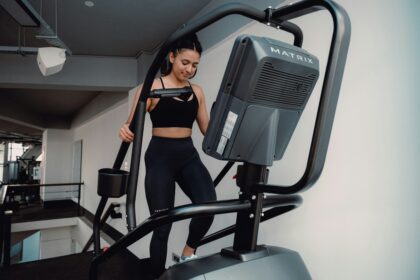
Used machines carry their recall history with them. CPSC’s exercise equipment recall listings include, for example, recall 18-764 of August 30, 2018, covering about 3,500 StairMaster 8G Gauntlet stepmills, models 9-5250 and 9-5270, sold from October 2017 through June 2018. CPSC described the hazard as steps that “can accelerate rapidly without input from the user, posing a fall hazard,” and told consumers to immediately stop using the machines and contact Core Health & Fitness for a free repair. A shop that checks serial ranges and remedy records at intake avoids finding the notice after the machine is on a customer’s floor. The recall response workflow covers what to do when a unit is affected.
Price from capacity, then check against the market
- Capacity cost = technician hours × your loaded labor rate + bay days × your bay cost per day + parts + finish work + inbound freight + testing.
- Maximum purchase price = expected sale price − capacity cost − selling and delivery cost − warranty provision − the margin you require.
Use a bay cost per day that reflects rent, equipment and the opportunity cost of a blocked position. If the maximum purchase price comes out negative, the unit is a parts donor at best. Free machines can be the most expensive inventory in the trade when they hold a bay for weeks.
Salvage, specialization and warranty
Every strip-down produces three piles: parts that go back on this machine, parts for the shelf, and scrap. A counted, labeled shelf shortens future bay days because the next rebuild waits less for inbound parts. Salvaged parts nobody can find are scrap with extra steps. Specializing in equipment families that share tooling and parts usually shortens bay days further; adding cardio adds electronics, firmware and a second parts shelf.
State the warranty on a rebuilt unit by component and duration, in terms you have priced, and define each refurbishment grade in writing before the first sale. Buyers will hold the shop to what the invoice says. The refurbished-equipment grading guide covers how buyers read those grades.
What to do this week
- List every unit in the bays and the reason it is waiting; total the bay days held by units waiting for parts.
- Calculate bay occupancy and technician utilization for last quarter.
- Set written intake limits for technician hours and bay days by equipment family.
- Make serial-plate photography and a recall check part of unloading, not selling.
- Count the salvage shelf and record it by model.
Continue with FEX
- Build a profitable equipment service route
- Equipment trade-ins: net recovery and timing
- Upholstery: repair, recover or replace
FEX editorial guidance: the capacity formulas, intake sheet and pricing method are FEX analysis. They are not manufacturer specifications, contractual entitlements or industry benchmarks. This guide is not based on an interview with a named business.
Source notes
- CPSC recall 18-764: StairMaster 8G Gauntlet Stepmill — Models, units, sale dates, hazard and remedy.
- CPSC recalls — Check used units against current and past recalls at intake.
Editorial update, October 8, 2026: This article previously presented an unnamed shop’s first-year results, including a resale multiple and a doubling of monthly output, with no interview or record behind them. Those outcomes were removed. Fixed intake cut-offs for wear-part counts and bay hours, a staging-space ratio and a recommended warranty length were also removed. The guide now separates technician hours from bay occupancy and prices intake from each shop’s own records. October 9, 2026: added CPSC’s stop-use instruction to the StairMaster recall example.