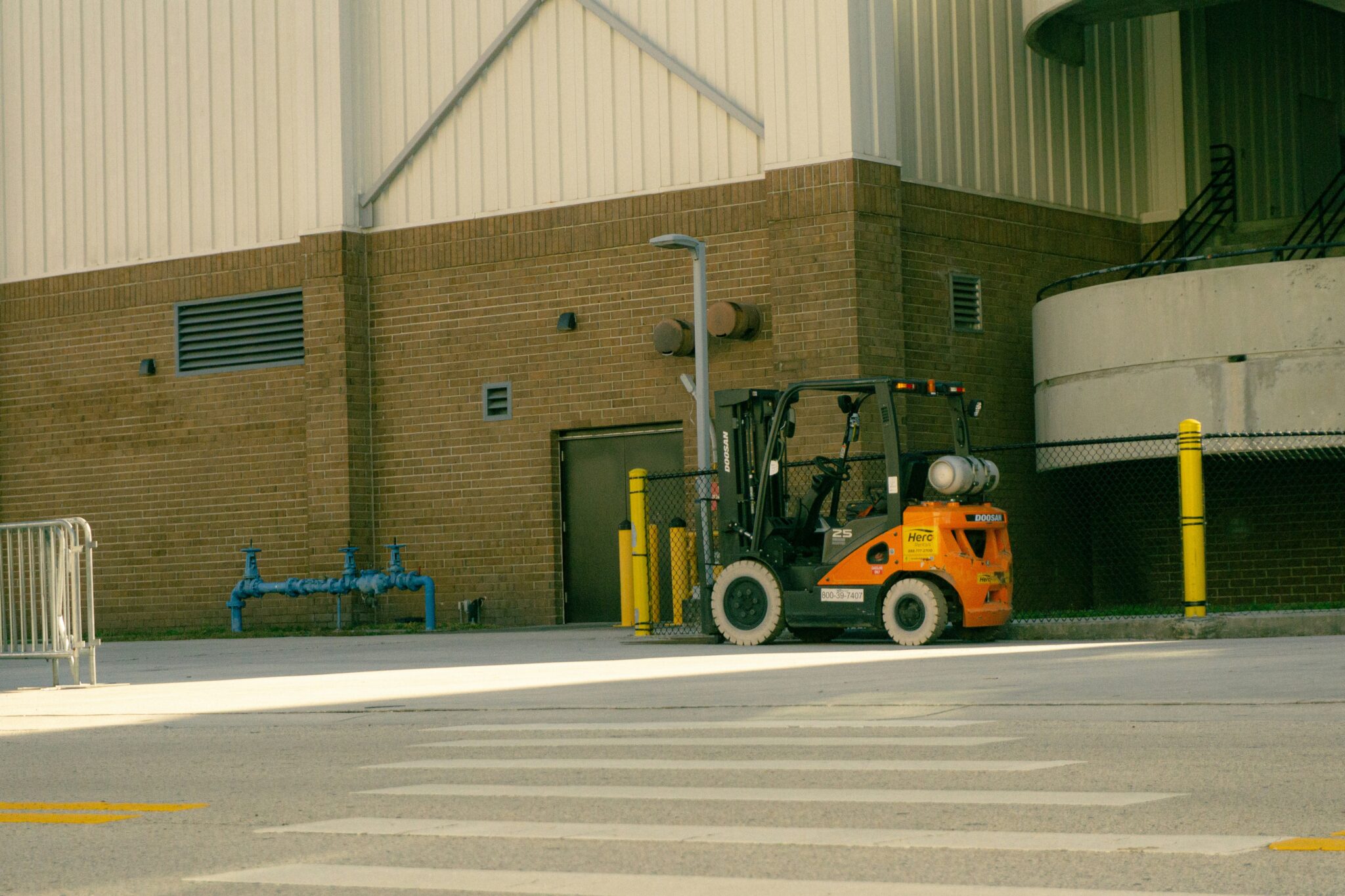

Sales tax economic nexus is the rule that decides whether an equipment dealer must register and collect tax in a state where it owns no building, rents no warehouse and employs nobody full time. It did not replace the older presence-based rules. It was layered on top of them, and for a distributor that ships racks, cardio and rubber flooring into four or five neighboring states, the overlap is where unplanned assessments come from.
The Supreme Court decided South Dakota v. Wayfair, Inc. on June 21, 2018. The Court concluded that the physical presence rule of Quill “is unsound and incorrect” and that the Quill and Bellas Hess decisions “should be, and now are, overruled.”
The South Dakota statute before the Court applied only to sellers that, on an annual basis, “deliver more than $100,000 of goods or services into the State or engage in 200 or more separate transactions for the delivery of goods or services into the State,” according to the Supreme Court preliminary print of the opinion.
Those two numbers became the template other states copied, which is why so many dealers still carry a mental model of one national threshold. There is no national threshold. Each state writes its own figure, its own measuring window and its own start date, and some still count transactions as well as dollars.
What sales tax economic nexus actually measures
Economic nexus is a volume test. A state asks how much a seller delivered into it, over a defined period, and sets a line above which registration and collection become mandatory. The elements that vary between states are the dollar figure, whether transaction counts matter, whether the window is a calendar year or a rolling twelve months, and how quickly collection has to begin once the line is crossed.
Texas sets its line at total Texas revenue. The Texas Comptroller guidance for remote sellers states that sellers “with total Texas revenue of less than $500,000 in the preceding twelve calendar months” are not required to obtain a permit or collect use tax. A seller that passes the figure must begin collecting no later than “the first day of the fourth month after the month that a remote seller exceeds” the threshold.
California measures differently. Under Revenue and Taxation Code section 6203, the test is whether “total combined sales of tangible personal property for delivery in this state” exceed $500,000, counted across the retailer and related persons, “in the preceding or current calendar year.” The California Department of Tax and Fee Administration collection guidance describes the amendment as operative April 1, 2019. Beginning April 25, 2019, a retailer that meets the threshold is engaged in business in every district in the state and must collect district use tax there, whether or not it has a physical presence in those districts.
| Element | South Dakota statute reviewed in Wayfair | Texas remote seller rule | California RTC 6203 |
|---|---|---|---|
| Dollar figure | More than $100,000 delivered into the state | $500,000 total Texas revenue | More than $500,000 of tangible personal property for delivery in state |
| Transaction count | 200 or more separate transactions | Not stated in the safe harbor | Not stated in the threshold |
| Measuring window | Annual basis | Preceding twelve calendar months | Preceding or current calendar year |
| Whose sales count | The seller | The remote seller | The retailer and related persons combined |
| When collection starts | Not specified in the quoted provision | First day of the fourth month after the month the threshold is exceeded | Operative April 1, 2019, with district tax from April 25, 2019 |
Read across that table and the practical point appears. A dealer could be well under the line in one state and over it in the next on the same order book, and the date collection has to start is not the date the threshold was crossed.

Sales tax economic nexus may not be the first thing a dealer trips
The volume test gets the attention because it is the newest. In an equipment business the older presence test can be the one that bites first, because selling commercial equipment is not a parcel-shipping business.
Somebody drives a truck. Somebody bolts a rack to a slab. Somebody comes back in March to replace a cable.
Texas publication 94-108, Engaged in Business, dated 12/2020, lists activities that make a seller engaged in business in Texas. Three of them describe an ordinary equipment delivery week.
A seller is engaged in business if “You perform services using company employees, authorized service agents or subcontractors in Texas.” Also if “You deliver items using owned, leased or company vehicles in Texas.” Also if “You have an employee or representative in Texas to sell, deliver or take orders for taxable items.” The list closes with a catch-all: “You conduct business in any other manner in Texas.”
Note what the first of those covers. It reaches subcontractors, not only payroll employees. A dealer that hires a local two-person crew to set equipment is still performing services using subcontractors in that state.
Handing the work to an independent installer moves the labor off the payroll. It does not obviously move the activity out of the state.
The order that creates the exposure is often small
A single studio build-out in a neighboring state can be a modest invoice and still put personnel on the ground. The revenue test and the presence test are independent, so a dealer can be comfortably below a $500,000 figure and still be described by a list like the one in 94-108. Where a dealer tracks only the dollar figure, because that is the number the accounting system can report, a sales tax economic nexus review that stops at revenue misses the half of the question that walks through the door.
A worked example, with the assumptions stated
The figures below are illustrative assumptions chosen to show the arithmetic. They are not survey data and not a prediction about any real dealer.
Assume a dealer based outside Texas books $380,000 of Texas revenue over the preceding twelve calendar months, spread across eleven invoices. On the volume test alone, that sits below the $500,000 figure the Comptroller states for remote sellers.
Now assume two of those eleven jobs were delivered in a dealer-owned box truck and installed by a crew the dealer engaged for the week. The quoted language in 94-108 covers both delivery in company vehicles and services performed using subcontractors, so the safe harbor written for remote sellers does not describe what this seller did. Whether a given set of facts crosses that line is a state-specific determination, and dealers generally confirm it with a tax adviser before relying on a threshold.
The cost of being wrong is not only the tax. It is the tax the dealer never collected from the customer, now owed out of margin, plus interest and any penalty, across every open period. On a $380,000 base, if the whole base were taxable, at an assumed combined rate of 8.25 percent, uncollected tax alone would be $31,350 before interest. That is an assumed rate used for illustration, not a quoted rate for any jurisdiction.
Seven checks to run before the next out-of-state job
- Pull twelve months of revenue by ship-to state. Not bill-to. The threshold tests delivery, and a chain customer headquartered in one state takes delivery in several.
- Add the related-party question. California counts sales by the retailer and by related persons together. If the business runs a separate service entity or a leasing affiliate, find out whether those sales are in the same bucket.
- List every state where a person worked this year. Delivery drivers, install crews, warranty technicians, trade show staff and hired subcontractors. Date, state, what they did.
- Check the clock, not just the line. Texas allows until the first day of the fourth month after the month the threshold is exceeded. A state that crossed in February does not wait for the fiscal year.
- Separate the registration question from the taxability question. Registering tells the state you are there. What is actually taxable on the invoice is a different analysis, and service labor is treated differently in different states. Our breakdown of how repair invoices decide who owes sales tax in Texas, Florida and California walks that part through.
- Price the compliance into the job. Registration, filing and the reporting software are real costs of serving a state. They belong in the install rate the same way freight and lift equipment do, which is the discipline behind pricing delivery and installation from a complete job-cost sheet.
- Get an exemption certificate before the truck leaves. Resale and manufacturing exemptions are routine in this channel, and a missing certificate turns an exempt sale into an assessed one on audit. Build the request into the pre-delivery steps alongside the rest of the installation readiness plan used before confirming delivery.
Records and warning signs
Three records do much of the work in a review: the ship-to revenue report by state for a rolling twelve months, a personnel log showing who crossed a state line and why, and the exemption certificate file matched to invoice numbers. A dealer who can produce those three in an afternoon is in a different position from one who cannot.
- Revenue is reported by bill-to address and nobody can produce a ship-to version.
- Install labor is invoiced by a subcontractor in a state where the dealer holds no permit.
- A customer asks why tax was not charged and the answer is that it never has been.
- A state sends a nexus questionnaire. A questionnaire can precede an audit, and the answers are not casual correspondence.
- Growth into a new region happened through a rep or a buying group, and nobody mapped where the deliveries actually landed.
Does using a freight carrier avoid the problem?
Using a common carrier changes the delivery item in a list like the one in 94-108, because the goods are no longer moved in company vehicles. It does not address installation or service performed in the state, and it does not affect the revenue test at all. It narrows one trigger.
Does registering in a state create exposure for earlier years?
Registration generally puts a start date on the account rather than erasing what came before, and several states run voluntary disclosure programs that address prior periods on defined terms. The terms differ by state and the eligibility rules are strict, so this is a question for a tax adviser before anyone files a form.
The practical close is unglamorous. Sales tax economic nexus is a reporting exercise before it is a legal one: a dealer cannot answer the question without a ship-to revenue report and a record of where its people worked. Both are already in the business somewhere. Pulling them once a quarter costs an afternoon and is the cheapest insurance in the back office.