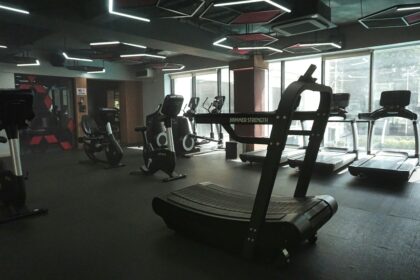

Gym equipment electrical rules are the part of an OSHA inspection that a clean, well-maintained floor can still fail. The standard does not read on treadmill brands or console features. It reads on how the machine is connected: what it is plugged into, what the cord does between the receptacle and the frame, and whether the installation matches the instructions that came with the listing.
- What the gym equipment electrical rules actually cover
- Power strips, extension cords and the gym equipment electrical rules
- Where the exposure shows up in dollars
- Seven checks before an inspector walks the floor
- What is on the floor, and what the rule says
- The records to keep and the metrics to watch
- Common mistakes
- Questions dealers and clubs ask
- Does a power strip ever belong on a gym floor?
- Who is cited when a dealer’s crew chose the connection?
- Is a licensed electrician required for this work?
- What to do this week
Three businesses are exposed at once. The club is the employer OSHA regulates, so a citation on its own floor generally lands there. The dealer whose crew delivered and positioned the equipment is often the party that chose the power strip, and the service company that returns for a repair inherits whatever the last crew left behind.
What the gym equipment electrical rules actually cover
OSHA’s general industry electrical standards sit in 29 CFR part 1910, subpart S. They are employee-protection rules, so they reach the club, the dealer and the service company as employers, in the areas where their own employees work. They are not a building code, and they do not replace the local electrical inspection a landlord or general contractor arranged.
Two provisions carry most of the weight. The installation rule at 1910.303(b)(2) states that “Listed or labeled equipment shall be installed and used in accordance with any instructions included in the listing or labeling.” The examination rule at 1910.303(b)(1) requires that electric equipment “be free from recognized hazards that are likely to cause death or serious physical harm to employees,” and lists the factors used to judge it, among them “Heating effects under all conditions of use.”
The practical effect of 1910.303(b)(2) is that the manufacturer’s installation sheet becomes enforceable. Where a treadmill’s documentation calls for a dedicated branch circuit of a stated rating, connecting four machines to one shared receptacle is not a judgment call about load. It is a departure from the listing instructions, which is what the standard prohibits.
Power strips, extension cords and the gym equipment electrical rules
Flexible cords are a recurring problem on gym floors. The list of prohibited uses at 1910.305(g)(1)(iv) is short and specific. Unless specifically permitted otherwise in 1910.305(g)(1)(ii), flexible cords and cables may not be used “As a substitute for the fixed wiring of a structure,” “Where run through holes in walls, ceilings, or floors,” “Where run through doorways, windows, or similar openings,” “Where attached to building surfaces,” “Where concealed behind building walls, ceilings, or floors,” or “Where installed in raceways, except as otherwise permitted in this subpart.”
Read that list against a typical cardio bank. A cord stapled along a baseboard is attached to a building surface. A cord dropped behind a mirrored wall to reach a receptacle on the far side is concealed.
A cord crossing a doorway into a stretching room is run through an opening. Each of those is its own prohibited use under the gym equipment electrical rules, and none of them turns on whether anyone has been hurt.
OSHA addressed power strips directly in a letter of interpretation dated November 18, 2002, signed by Richard E. Fairfax, then Director of the Directorate of Enforcement Programs. The letter describes relocatable power taps as devices “designed for use with a number of low-powered loads, such as computers, peripherals, or audio/video components,” and says they “are not designed for high power loads such as space heaters, refrigerators and microwave ovens.”
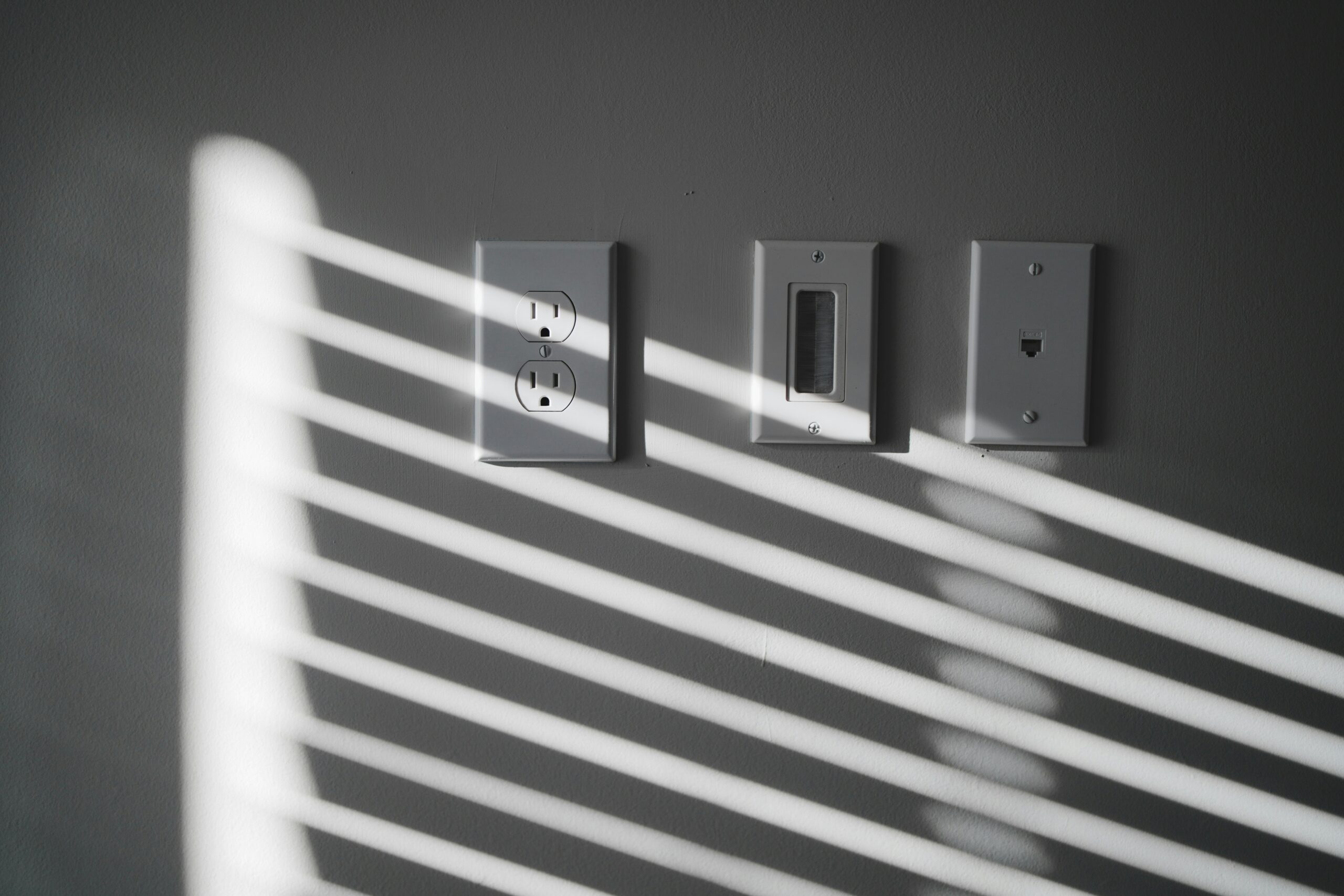
The same letter reports that the UL Directory requires listed units to be “directly connected to a permanently installed branch circuit receptacle” and says they “are not to be series-connected to other RPTs or connected to extension cords.” That sentence is the one that costs money on a gym floor. Daisy-chaining a second strip to reach the far end of a row of bikes, or feeding a strip from an extension cord because the receptacle is eight feet away, sits outside the use the listing describes, which brings 1910.303(b)(2) back into play.
The 2002 letter also points to the outlet device rule, then numbered 1910.304(b)(2) and now at 1910.304(b)(4): “Outlet devices shall have an ampere rating not less than the load to be served.” Two further interpretations fill in the edges. A letter dated July 2, 2015, signed by Thomas Galassi, then Director of the Directorate of Enforcement Programs, confirms that “unless specifically permitted otherwise in section §1910.305(g)(1)(ii), the use of flexible cords and cables is prohibited as a substitute for the fixed wiring of a structure.”
A letter dated May 5, 2006, also signed by Fairfax, notes that the temporary wiring provisions allow these cords to run through doorways or other pinch points in a temporary installation, provided they are protected from damage. It adds that the allowance “does not, however, except them from the other four prohibitions.” That count of four reflects the subset the letter was addressing rather than the six uses listed in the current rule. A cardio row that has been in the same place for three years is not a temporary installation on any reading of that provision.
Cord condition is a separate rule again. Under 1910.305(g)(2)(ii), “Flexible cords may be used only in continuous lengths without splice or tap,” with a repair allowance for hard-service and junior hard-service cord No. 14 and larger. Under 1910.305(g)(2)(iii), cords “shall be connected to devices and fittings so that strain relief is provided.”
A taped repair on a treadmill cord fails the first requirement. A cord pulling at the frame entry fails the second. Neither one needs an inspector to find it, which is the argument for putting both on a service checklist.
Where the exposure shows up in dollars
OSHA published its current civil penalty amounts in a memorandum dated May 21, 2026. The maximum for a serious violation is “$16,550 per violation.” The same figure applies to an other-than-serious violation. Willful and repeat violations each top out at “$165,514 per violation,” with a willful minimum of “$11,823 per violation.”
Nothing in that schedule is specific to fitness equipment. A citation written under the gym equipment electrical rules is priced on the same scale as any other general industry item.
Failure to abate is the item that compounds. The memorandum sets it at “$16,550 per day unabated beyond the abatement date (generally limited to 30 days maximum).” At that daily maximum and that general limit, one unabated item reaches $496,500. Electrical findings are often not the only ones on a floor an inspector has decided to walk slowly.
A worked example, on stated assumptions
The figures that follow are assumptions for illustration, not industry data. Assume a club runs 12 treadmills in two rows. Assume each nameplate calls for a dedicated 20-ampere, 120-volt branch circuit, and that the rows currently share four receptacles through power strips, two of them daisy-chained. Read your own nameplates before applying any of this.
Bringing those rows into line means eight additional dedicated circuits. Assume an installed cost of $650 per circuit, which gives $5,200, plus an assumed $900 for a licensed electrician’s load calculation and an updated panel schedule. Total assumed remediation is $6,100. Against the sourced maximum of $16,550 for a single serious violation, the arithmetic favors the circuits before anyone counts a treadmill out of service after a nuisance trip.
Seven checks before an inspector walks the floor
- Pull the installation sheet for every cardio and strength model on the floor and record the branch circuit rating it specifies. That sheet is what 1910.303(b)(2) measures the installation against.
- Walk every row and write down what each machine is plugged into: a wall receptacle, a floor box, a power strip, or another strip.
- Remove every series connection. A strip fed by another strip, or by an extension cord, sits outside the use OSHA’s 2002 letter describes.
- Trace each cord end to end and mark any that is stapled, clipped, run through a doorway, passed through a wall, or hidden behind a mirror or partition.
- Inspect cords for splices, taped repairs and strain at the frame entry, and take out of service anything that fails. The cord-and-plug exclusion in OSHA’s lockout rule decides how a technician then controls the energy.
- Have a licensed electrician confirm that each shared circuit’s rating is not less than the load it serves, and keep the written result.
- Photograph the corrected rows and file the photographs with their dates, the electrician’s report and the installation sheets.
Steps four and seven tend to pay for themselves twice, because the same walk catches equipment parked where it should not be. The 28-inch clear width OSHA sets for an exit access is measured on the same floor by the same inspector.
What is on the floor, and what the rule says
| What is on the floor | How the standard treats it | Where it is written |
|---|---|---|
| Machine on a wall receptacle matching its nameplate circuit | Consistent with the listing instructions | 1910.303(b)(2) |
| Two power strips connected in series | Outside the listed use for the device | OSHA interpretation, November 18, 2002 |
| Power strip fed from an extension cord | Outside the listed use for the device | OSHA interpretation, November 18, 2002 |
| Cord stapled or clipped to a baseboard | Prohibited use | 1910.305(g)(1)(iv)(D) |
| Cord run through a doorway in a permanent setup | Prohibited use | 1910.305(g)(1)(iv)(C) |
| Cord passed behind a wall or partition | Prohibited use | 1910.305(g)(1)(iv)(E) |
| Taped splice in a machine cord | Not a continuous length | 1910.305(g)(2)(ii) |
| Cord pulling at the frame entry | No strain relief provided | 1910.305(g)(2)(iii) |
The records to keep and the metrics to watch
Four records do most of the work in a dispute. Keep the installation sheet for every model, with the circuit rating highlighted. Keep the electrician’s written load confirmation for every shared circuit. Keep a dated floor diagram showing what is plugged into what, and keep the photographs from each quarterly walk.
Two numbers are worth tracking monthly. Nuisance trips per cardio row can point at a shared circuit before they point at a machine. The count of machines not on a receptacle matching their nameplate should move toward zero and stay there.
Warning signs are easy to spot once the list exists. Watch for a breaker that trips on one row at peak hours, a strip that is warm to the touch, and scorch marks at a plug face. Staff who unplug one machine to run another are telling you the circuit count is wrong.
A cord run that appeared without a work order is the fourth sign, and it is the kind of change that should show up in a model-specific service and handover record.
Common mistakes
- Treating a surge protector as a different product from a power strip. OSHA’s 2002 letter addresses relocatable power taps by function, not by marketing name.
- Assuming a temporary label makes a long-standing cord run temporary. The 2006 interpretation keeps the other prohibitions in force either way.
- Letting a delivery crew solve a receptacle shortage on the day. The fix belongs in the site survey and the quote, not in the installer’s van.
- Filing the installation sheet with the warranty paperwork and never reading the circuit specification on it.
Questions dealers and clubs ask
Does a power strip ever belong on a gym floor?
OSHA’s 2002 letter describes relocatable power taps as devices for a number of low-powered loads, and names computers, peripherals and audio or video components as examples. A console charging shelf or an audio rack can fit that description. A machine whose nameplate calls for its own branch circuit generally does not, and the device still has to be connected directly to a permanently installed branch circuit receptacle.
Who is cited when a dealer’s crew chose the connection?
OSHA’s general industry standards run to employers with respect to their own employees, so the club that operates the floor is generally the cited party there. A dealer or service company can be cited for the exposure of its own employees while they are working on site. Allocation between the businesses is then a contract question, which is why install scopes are worth reading closely; dealers should also keep their own injury recordkeeping obligations in view.
Is a licensed electrician required for this work?
Adding or altering a branch circuit is electrical work, and state and local licensing rules decide who may perform it. OSHA’s standards set the condition the installation must meet rather than naming who installs it. Confirm the licensing requirement with your own electrician, and with counsel where a lease is involved.
What to do this week
The gym equipment electrical rules change rarely, so a floor that is right once mostly stays right. Pick the busiest cardio row and run the seven checks on it alone. A single row is quick to walk, it produces a dated record, and it is where an unauthorized series connection would show up. Then put the same walk on the quarterly calendar, and move the circuit specification out of the warranty folder and into the site survey template, where it changes what gets quoted.