
Commercial stair climbers are the only cardio category most operators buy on a single number, because the machines are ordered in ones and twos rather than in rows, and a purchase of two units never triggers the review a twelve-treadmill order would.
- The quote line and what it leaves out
- Cost line one: the drive train
- Cost line two: electrical draw and circuit assignment
- Cost line three: floor loading and ceiling height
- Cost line four: service labor and access
- Cost line five: parts and downtime at duty
- Cost line six: removal and disposal
- The ownership ledger for commercial stair climbers
- Where commercial stair climbers pay for themselves
- Sequencing a stepmill order
- Questions buyers ask before ordering a stepmill
- Are commercial stair climbers worth it for a club with limited floor space
- How often does a step chain need attention
- Should we buy one unit or two
- Do self-powered models reduce the ownership cost
- The machine that gets bought in twos
That is the structural problem. A stepmill is the most mechanically loaded machine on a cardio deck, carrying a member’s full body weight on a moving chain-driven staircase for thirty minutes at a time, and almost none of what that implies appears on the quote.
What follows walks the ledger line by line, in the order the money actually arrives.
The quote line and what it leaves out
A quote for commercial stair climbers typically covers the machine, a console, freight and a standard install. It does not cover circuit work, floor reinforcement, the lift required to get it upright in a low-ceilinged room, or the parts consumption that starts in month one.
None of that is a vendor failing. It is the normal boundary of an equipment quote, and the same pattern our earlier work found in the cardio costs that skip the quote and land anyway. Commercial stair climbers simply carry more of it per unit than any other cardio type.
Cost line one: the drive train
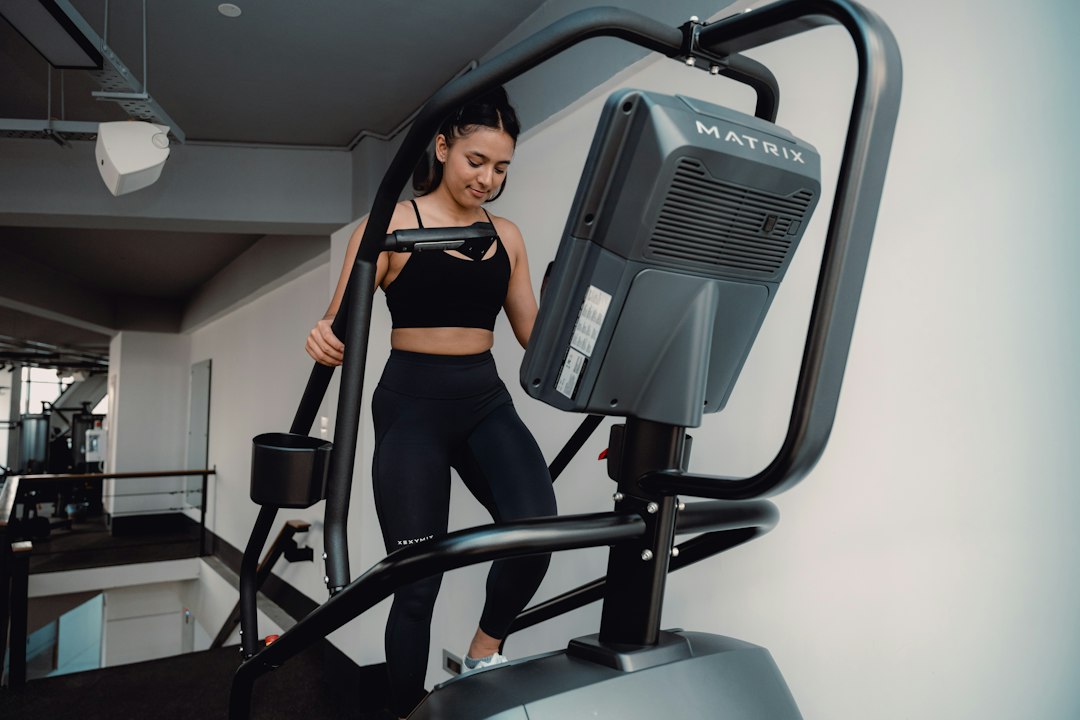
Everything distinctive about commercial stair climbers sits in the drive train. A step chain, a tensioner, sprockets and a braking system absorb the member’s descending weight continuously, which is a fundamentally different duty than a treadmill belt sliding over a deck.
ASTM F2571-15(2020), the standard test methods for evaluating design and performance characteristics of fitness equipment, evaluates parameters including chain and gear drives, entrapment hazards, electrical safety and surface temperature. Those four are the stepmill’s list almost exactly, and a submittal that references the standard is a better buying signal than a warranty term.
Cost line two: electrical draw and circuit assignment
Self-powered models exist, but most commercial stair climbers on a club floor are plugged in, and they are not treadmills. The nameplate and the panel schedule have to be compared before the delivery date is confirmed, not after.
Two units added to an existing cardio row is exactly the order size that gets assumed onto a shared circuit. The failure mode there is documented in our account of what happens when twelve treadmills meet a panel schedule that says otherwise, and it does not become cheaper because the order was small.
Cost line three: floor loading and ceiling height
A stepmill puts a tall, heavy, dynamically loaded mass on a small footprint. On slab that is unremarkable. On a second floor or a mezzanine it is a structural question, and the answer belongs to an engineer rather than a salesperson.
Height is the quieter constraint. The machine is tall, the member stands on top of it, and the clearance required above the highest step is not the clearance a room was designed for. Operators working above grade should read the load question the way we set it out in the piece on what the drawings say about pounds per square foot before signing.
Cost line four: service labor and access
Stepmill service is not console service. Chain tensioning, sprocket inspection and brake adjustment require a technician who has been trained on that drive train, and the population of those technicians in any given market is smaller than for treadmills.
Access compounds it. A machine placed against a wall or boxed between two others has to be moved before it can be worked on, and moving it is a two-person job. Commercial stair climbers placed for sightlines rather than for service turn every routine visit into a labor line.
Cost line five: parts and downtime at duty
The wear items on commercial stair climbers are predictable: step chains, rollers, bearings, brake components and step treads. Predictable is useful, because it means the consumption rate can be estimated from duty hours rather than discovered.
Downtime is the line operators price worst. A single stepmill out of service in a club that owns two removes half the category, and the members who use it do not substitute a treadmill. Our framework for pricing the days a machine sits dead applies with more force here than on any high-count category.
Cost line six: removal and disposal
The machine that arrived on a pallet jack leaves as a two-person removal with a lift gate, and it will not fit through the door it came in if the room has been rebuilt around it. Disposal costs are small and reliably forgotten at budget time.
The ownership ledger for commercial stair climbers
The verification column is the working part of this table. Each line is something a buyer can confirm in writing before the order rather than discover during install.
| Cost line | Verify before the order | Where it lands if you do not |
|---|---|---|
| Drive train | Chain and brake service interval, stated in hours | Unscheduled tensioning calls in year one |
| Electrical | Nameplate draw against the actual panel schedule | Circuit work quoted after delivery |
| Floor load | Engineer sign-off for anything above grade | Relocation to a worse position on the floor |
| Ceiling height | Clearance above the top step, with a member standing | A machine that cannot be commissioned |
| Service access | Clear working space on both sides, in the layout drawing | Two-person moves on every routine visit |
| Technician coverage | A named technician trained on this drive train in your market | Multi-day waits on a single-unit category |
| Parts | Wear item list with intervals priced per duty hour | Parts ordered reactively at premium freight |
| Disposal | Removal path measured against the current room | Demolition costs at replacement |
Where commercial stair climbers pay for themselves
The category holds floor space because it does something no other cardio machine does at the same intensity, and because the members who use it are loyal to it specifically. That loyalty is the return, and it does not show up in a payback calculation built on usage minutes alone.
The market context supports the institutional case. The Sports and Fitness Industry Association’s 2026 Manufacturers’ Sales by Category Report, published March 31, 2026, put total industry wholesale sales near $130 billion for 2025, up 3.7 percent, and noted broad-based growth in institutional fitness equipment while portions of the consumer and home segment declined. Equipment bought for staffed, supervised floors is the part of the category holding up.
Sequencing a stepmill order
- Measure the room before you price the machine. Height above the top step, door width on the removal path, and floor construction, in that order.
- Put the nameplate next to the panel schedule. Two units is exactly the order size that gets assumed onto an existing circuit.
- Name the technician, not the vendor. Ask who in your market is trained on this drive train, and how many other accounts they cover.
- Price parts per duty hour. Ask for the wear list and intervals, then multiply by the hours your floor actually runs.
- Buy service access, not sightlines. Leave working space on both sides of commercial stair climbers in the layout drawing, before a designer closes the gap.
Questions buyers ask before ordering a stepmill
Are commercial stair climbers worth it for a club with limited floor space
Often yes, because the footprint is small relative to the demand they carry. The constraint is rarely floor area. It is ceiling height, the panel, and whether a technician trained on the drive train works in your market, so check those three before the space question.
How often does a step chain need attention
Ask the manufacturer for an interval stated in duty hours rather than months, then apply your own floor hours to it. A club running fourteen hours a day reaches any hour-based interval far faster than a corporate facility running six, and the calendar figure in a brochure assumes the latter.
Should we buy one unit or two
Two, if the budget allows. A single unit means the category disappears entirely whenever it is down, and members who use a stepmill do not substitute another machine. A second unit is cheaper than the retention risk of having the category go dark for a week.
Do self-powered models reduce the ownership cost
They remove the circuit question and part of the electrical line, which is real. They do not reduce the drive train, parts, service access or disposal lines, which together make up most of the ledger, so treat the saving as one line rather than a different cost profile.
The machine that gets bought in twos
Order size is what makes this category dangerous. A dozen treadmills attract engineering review, a panel check and a service conversation. Two commercial stair climbers attract a purchase order. The ledger is the same either way, and the only difference is whether it gets read before the machines arrive or discovered afterward, one line at a time.