
For: Dealers selling mobile personal training equipment, mobile trainers building a load-out, and service managers stocking technician vans.
The decision: What a vehicle can safely carry, which equipment and parts belong in it, and how to load it so the gear, the vehicle and the person lifting it all last.
60-second answer: Start from the vehicle’s tire and loading placard, which states the maximum combined weight of occupants and cargo. Subtract the driver, passengers and anything permanently installed; what remains is the equipment allowance. Choose gear that tolerates repeated loading, secure dense items low and forward, and treat each session’s loading and unloading as a manual-handling task. For dealers, quote a spares kit with the equipment.
Start from the placard, not the catalog
For passenger cars and light vehicles with a gross vehicle weight rating of 10,000 pounds or less, federal motor vehicle safety standard 571.110 requires a tire and loading information placard stating that “the combined weight of occupants and cargo should never exceed” a stated figure. That figure is the ceiling for everything in the vehicle: driver, passengers, racking, tools, parts and training equipment together.
- Equipment allowance = placard figure − driver and passengers − permanently installed shelving, racks or tools.
- Weigh what you actually carry, not what you think you carry; dense steel adds up quickly.
- Recheck when the vehicle, the racking or the regular load changes.
A mobile trainer buys against a door opening, a payload and a back that has to last; a studio buys against a floor plan. Those constraints rule out much of what a catalog offers.
Equipment that survives the road
Gear in a vehicle is dropped on tailgates, slid across bed liners, heated in summer and left damp overnight. The usual failure is the handling between sessions, not the training load. Hinges, selector pins, pads and coatings are where transport damage concentrates.
| Item | Transport tolerance (FEX view) | First failure point | Retire or repair when |
|---|---|---|---|
| Cast kettlebells | High | Coating chips at the horn and base | Handle burrs or bare metal rusts |
| Adjustable dumbbells | Low | Selector pin and locking mechanism | Locking engages inconsistently |
| Folding bench | Medium | Hinge pin and pad seam | Any play at the hinge |
| Suspension trainer | High | Webbing stitching and buckle | Stitching frays or the buckle slips |
| Sled and harness | Medium | Runners and strap hardware | Runner wears through or hardware deforms |
| Resistance bands | High | Material fatigue at the anchor | Any cracking, nicks or tackiness |
| Medicine and slam balls | Medium | Seam | Seam lifts |
For dealers, quote mobile personal training equipment with a spares kit: pins, pads, feet, collars and fasteners. Check the warranty terms for any exclusion of damage from transport or relocation before assuming a cracked pad is a claim.
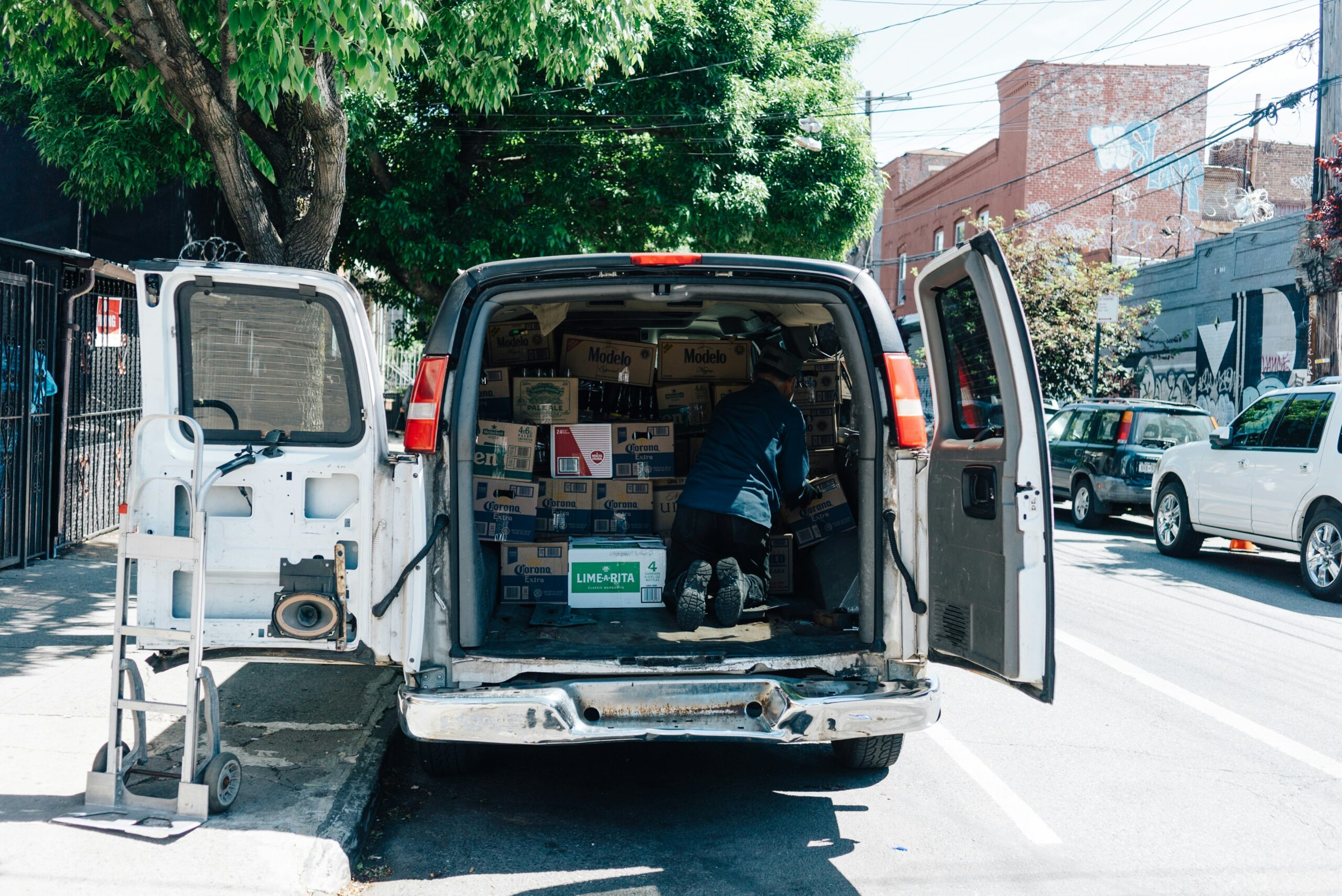
Loading is a manual-handling job
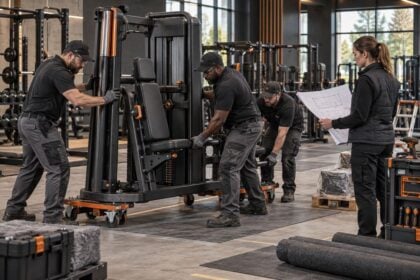
Every session is bracketed by two lifting tasks. NIOSH’s revised lifting equation estimates a recommended weight limit, the load most workers can lift through a shift without high risk of musculoskeletal disorders, from the object’s weight, horizontal and vertical hand position, travel distance, twisting, frequency, duration and grip quality. NIOSH advises keeping the resulting lifting index at or below 1.0. Reaching into a vehicle bed puts the hands far from the body, which raises the risk. Practical controls: keep heavy items near the door and at waist height, use bins with good handles, and use a dolly or ramp for the heaviest pieces.
Service vans: the same arithmetic for parts stock
Field-service vans face the same ceiling. A technician’s van loaded with every possible part may be over its placard figure and slower to work from. Stock the van from failure history and first-time-fix needs for the installed base on that route, keep heavy parts low and secured, and review the load when the route or customer mix changes. The economics of route design are in building a profitable service route, and stocking logic in critical parts stocking.
Where a mobile model stops scaling
One load-out serves one trainer. A second trainer needs a second set, because sharing one inventory across two schedules means someone arrives without a bench. At that point it is worth comparing a second vehicle load-out with a small fixed room; see a first studio fit-out. Property coverage for equipment in transit or at client sites may differ from coverage at a fixed premises; see equipment insurance by stage.
What to do this week
- Read the placard and calculate the equipment allowance for each vehicle.
- Weigh the regular load and compare it with the allowance.
- Rearrange so heavy items sit low, forward and near the door, and secure them.
- For dealers: build a spares kit to quote with mobile training packages.
- For service managers: rebuild each van’s stock list from route failure history.
Continue with FEX
FEX editorial guidance: the load-out table and planning steps are FEX analysis. The vehicle placard and the equipment manufacturer’s instructions control.
Source notes
- 49 CFR 571.110 — Tire and loading information placard; vehicles of 10,000 lb GVWR or less.
- NIOSH Revised Lifting Equation — Recommended weight limit, variables and lifting index.
Editorial update, October 8, 2026: Replaced a recreational-vehicle cargo-labeling rule, which does not govern vans generally, with the federal tire and loading placard requirement for light vehicles. Removed an unsupported comparison of van payload with a kettlebell set, qualified warranty-exclusion statements, and added service-van stocking. This guide is not based on an interview with a named business.