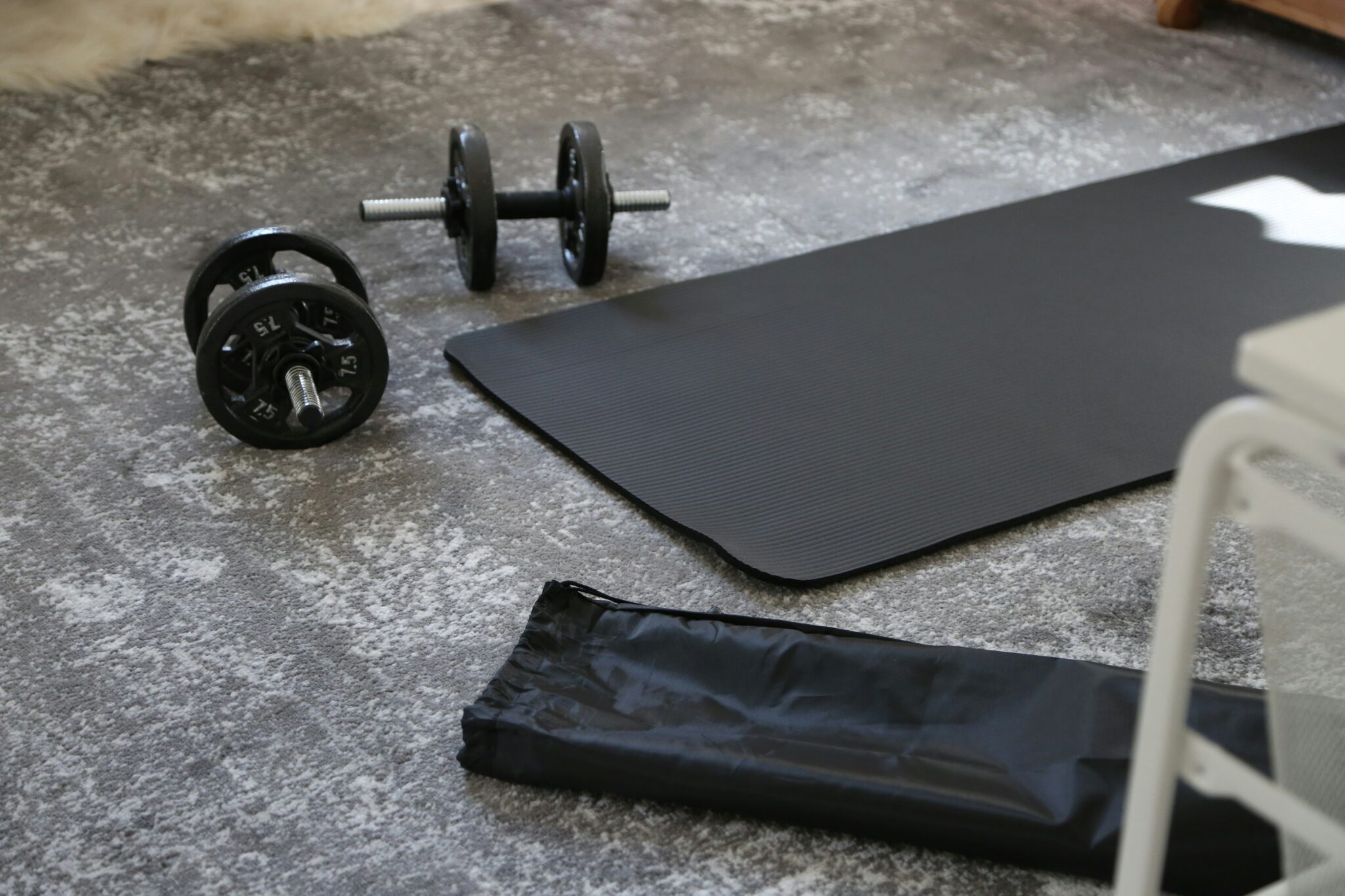

The first order for personal training studio equipment is decided long before anybody opens a catalog, by a lease clause and a session plan that were written weeks earlier.
- Week sixteen: the lease writes half the equipment list
- Personal training studio equipment starts as a session plan, not a catalog
- Week twelve: the floor plan sets a ceiling on revenue
- Week ten: new, refurbished and auction stock in one cart
- Week eight: freight and access become the founder’s problem
- Week six: the deposit schedule meets the opening date
- Week four: install day belongs to somebody by name
- Opening week: the first ninety days rewrite the list
- A personal training studio equipment budget in three tiers
- Six moves that keep the first order from eating the working capital
- Questions founders ask about personal training studio equipment
- How much space does a one-trainer studio actually need
- Is used equipment safe for a studio that charges premium rates
- Should I lease or buy the first fit-out
- What gets bought too early in a first studio
- The lease and the session plan do the buying
Trainers going independent tend to buy the floor they trained on. That floor was designed for a membership model with a hundred times the traffic and a service department behind it.
A studio serves booked appointments. Every machine has to justify its footprint against the sessions actually sold, not against the sessions a founder hopes to sell in year three.
What follows is the timeline that decides the order, week by week, from the day the lease is signed to the ninetieth day of trading.
Week sixteen: the lease writes half the equipment list
Ceiling height, floor loading, door width and power all sit in the lease or the building drawings. Each one removes personal training studio equipment options from the list before a single quote is requested.
A rig needs headroom above the pull-up bar. A sled lane needs a straight run nobody has to walk across. A second-floor suite needs a floor rating that a landlord will state in writing.
Personal training studio equipment starts as a session plan, not a catalog
Write out one full week of the sessions the studio intends to sell, hour by hour, at the capacity that pays the rent. The list of stations that week requires is the equipment list.
Anything not appearing in that week is speculative. Demand for the format is not the constraint: SFIA’s 2026 Topline Participation Report, published March 12, 2026, counted 250 million Americans participating in sports and fitness, and the association’s summary notes that only 32 percent meet federal activity guidelines. Founders who build personal training studio equipment lists from a session plan buy fewer machines and use all of them, which is the only version of this that survives a slow January.
Week twelve: the floor plan sets a ceiling on revenue
Capacity is the number of clients who can train at once without crossing paths. It is set by circulation space, not by machine count.
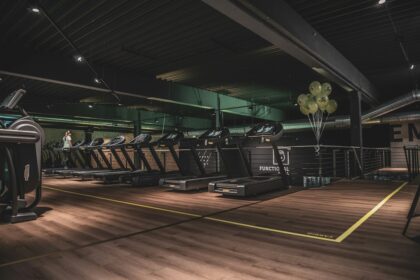
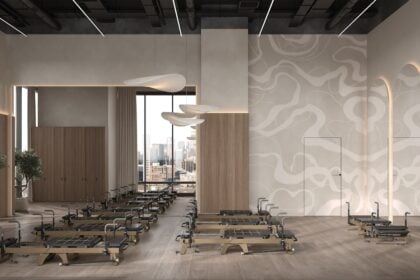
Two trainers running semi-private sessions need clear lanes between stations. A floor packed to the walls looks busy on a plan and books one session an hour in practice. A reformer studio faces the same arithmetic with different hardware.
Week ten: new, refurbished and auction stock in one cart
A first fit-out rarely comes from one source. Racks and benches tolerate age well; consoles, belts and electronics do not.
Buy frames used and moving parts new, and inspect anything sourced from a closing club’s liquidation lot before bidding rather than after. Mixed-source personal training studio equipment is normal at this stage, provided each purchase is graded honestly.
Week eight: freight and access become the founder’s problem
Nobody carries a rack up a stairwell as a favor. Freight quotes for personal training studio equipment assume a dock, a pallet jack and someone to receive the shipment.
A ground-floor suite with a glass door and a shared parking lot is a liftgate delivery, an inside-delivery surcharge, and a two-person crew. Ask for those line items on the quote, in writing, before the deposit clears.
Week six: the deposit schedule meets the opening date
Deposits fund production slots. A deposit paid late moves the ship date, and the ship date moves the opening, which is the one deadline a founder has already told clients about.
Financing is the pressure valve here. Lease structures preserve the cash a new studio needs for rent, insurance and the first payroll, and personal training studio equipment is among the few line items a lender will readily fund.
Week four: install day belongs to somebody by name
Assembly, anchoring, calibration and rubbish removal are four separate jobs. A quote that says installation included should say which of the four it covers.
Anchoring in particular has to match the building. An install plan built around cure times keeps a rig from being bolted into flooring that is not ready to hold it.
Opening week: the first ninety days rewrite the list
Booking data arrives within a month. It shows which stations run continuously, which are used once a week, and which were bought for a client type that never walked in.
That evidence is worth more than any pre-opening opinion. The wider operator market is running warm: the 2026 HFA Global Report, released September 14, 2026, put median operator revenue growth for 2025 at 10.7 percent and median EBITDA margin at 22.1 percent across 244 surveyed operators. The studio that sells one station and adds another in month four is running its floor on measurement rather than on preference.
A personal training studio equipment budget in three tiers
The table below grades a first fit-out by what each category earns, where used stock is safe, and how much floor it takes.
| Category | What earns its footprint | New, used or defer | Floor space | Ninety-day check |
|---|---|---|---|---|
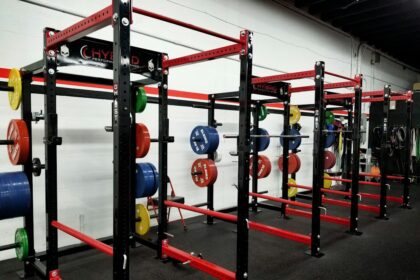
| Half rack and bar | Squat, press and pull in one station | Used frame, new bar | Rack plus a full lifting platform | Sessions per week using the rack |
| Adjustable dumbbells | Replaces a full rack in a small room | New, for the selector mechanism | One corner and a stand | Selector wear at the pin |
| Functional trainer | Widest exercise range per square foot | Used frame with new cables | Wall run plus user clearance | Cable and pulley condition |
| Benches | Supports every upper-body session | Used, if the pads are sound | Stored vertically between uses | Pad seams and frame welds |
| One cardio unit | Warm-ups and conditioning intervals | New or recent refurbished | Single footprint near power | Hours logged on the console |
| Turf lane and sled | Conditioning work without machines | New turf, used sled | A straight, uncrossed run | Turf seam lift at the start line |
| Storage and accessories | Keeps the floor clear between sessions | Defer until week two of trading | Vertical wall space | Items left out at closing time |
Six moves that keep the first order from eating the working capital
Each step protects the cash a studio needs after the personal training studio equipment has landed.
- Price the room before the rack. Confirm ceiling height, floor rating, door width and available circuits in writing, and remove anything the building cannot hold.
- Build the list from one week of sessions. Every station must appear in that week at paying capacity or it waits for evidence.
- Split the order by wear type. Frames and benches can be used; cables, belts, consoles and selector mechanisms should be new or recently rebuilt.
- Get access charges quoted, not assumed. Liftgate, inside delivery, stair carry and debris removal belong on the quote before the deposit.
- Keep one category unfunded on purpose. Accessories and storage can be bought in month two out of revenue rather than out of opening capital.
- Book the ninety-day review now. Put a date in the calendar to compare booking data against the floor and act on what it shows.
Questions founders ask about personal training studio equipment
How much space does a one-trainer studio actually need
Less than most founders lease, if the session plan is honest. Capacity is set by clear circulation between stations rather than by square footage, and a tight, well-spaced room books more sessions than a larger one packed to the walls. Measure the lanes, then the total.
Is used equipment safe for a studio that charges premium rates
Frames, benches and sleds age gracefully and clients rarely notice a refinished frame. Cables, belts, consoles and locking mechanisms are the parts that fail visibly, and those should be new or recently rebuilt. Grade every used item by its moving parts, not by its paint.
Should I lease or buy the first fit-out
That depends on which resource is scarcer in year one, cash or borrowing capacity. Leasing preserves working capital for rent, insurance and payroll at the cost of total spend; buying outright is cheaper overall and slower to recover from if bookings start below plan.
What gets bought too early in a first studio
Accessories, specialty attachments and a second cardio unit. All three feel essential during planning and sit unused for months, and personal training studio equipment bought against a hoped-for client mix is the most common source of dead floor space in year one.
The lease and the session plan do the buying
By the time quotes arrive, the real decisions are behind the founder. The building sets what can be installed and the session plan sets what will be used, and the order is mostly a matter of writing that down. Studios that open tight and add stations from booking evidence keep their working capital, and their floor ends up matching the business they actually built.