
For: Owners of independent and small multi-site gyms, and dealers guiding them through a purchase.
The decision: Which independent gym equipment to buy, and what to verify before the purchase order so the purchase still earns its floor space years later.
60-second answer: Write down who the gym serves and what each station must do before looking at catalogs. Draw finalists to scale on the real plan with working clearances and the accessible clear floor space required for at least one of each type. Compare a multi-year ownership estimate, not quotes. Get service coverage and parts availability in writing. Test finalists with real members. Write the delivery and acceptance plan before you sign.
Why an independent carries more exposure
A national operator can absorb one poorly chosen machine across many clubs. On a single floor, that station uses space that had one alternative use, and an unsupported product line can turn a routine wear part into weeks without a machine members relied on. The same purchase carries different risk for different buyers. Start from the operating model: who the gym serves, what coaches must deliver, which hours carry the load and how the floor may need to change.
Six checks before the purchase order
- Member needs, not categories. For each proposed station, write what it enables, roughly how often it will be used and whether another piece could do the job more flexibly.
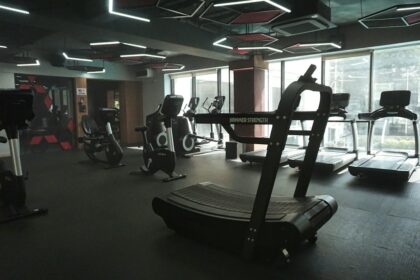
- The floor drawn to scale. Use operating footprints, not catalog dimensions: entry, adjustment, loading, stepping clear, sightlines, cleaning access and a continuous accessible route. The U.S. Access Board’s guide to the ADA standards says at least one of each type of exercise machine or equipment must have clear floor space of at least 30 by 48 inches served by an accessible route, so the variety of the order affects how many positions you need. See accessible layouts.
- Ownership cost, not purchase price. Add freight, access charges, installation, flooring and electrical work, software fees, maintenance, wear parts and eventual removal. See cardio quote gaps and the total-cost framework.
- Service and parts in writing. Who services locally and how many technicians cover the area; which parts are stocked and which are built to order; how emergencies are prioritized; and what out-of-warranty work costs. A warranty and a service contract are separate documents.
- Connected features with an owner. For each feature, name who will use the data and what decision it will change. Otherwise it is a recurring cost.
- Tested by members. Watch a small, representative group of members and staff use finalists without coaching. Hesitation in a demonstration tends to become avoidance on a busy floor.
Finalist scorecard
| Factor | What to verify before signing | Suggested weight |
|---|---|---|
| Member need | The movement or member group the station serves | High |
| Versatility | Programs it supports without reconfiguration | High |
| Space | Footprint plus working clearance, drawn to scale | High |
| Accessibility | Clear floor space and accessible route where required | High |
| Expected use | Observed demand at peak | High |
| Ownership cost | Invoice, freight, installation, parts, maintenance, removal | High |
| Local service | Named technicians and coverage | High |
| Parts availability | Stocked versus built to order, with lead times | Medium |
| Warranty terms | Parts, labor, wear items and exclusions in writing | Medium |
| Technology burden | Subscriptions, network needs, named data owner | Medium |
| Exit | Resale or trade-in and removal at end of life | Lower |
The weights are a starting point for you to adjust. The scorecard will not make the decision; it shows where enthusiasm or a persuasive presentation is outvoting the business.
Write the delivery and acceptance plan before signing
The purchase is not finished when the truck arrives. Confirm access dimensions, dock or curbside responsibility, protection, assembly scope, debris removal, anchoring, electrical commissioning and staff orientation in advance. Then write the acceptance checklist: damage recorded, every function and adjustment verified, serial numbers captured, and a named owner and date for anything unresolved. See the delivery site survey and installation closeout.
A four-week sequence
- Week 1, observe: log queues, swaps to second-choice stations and abandoned sets across several peak hours.
- Week 2, draw: put scaled footprints, clearances, sightlines, cleaning access and the accessible route on the real plan.
- Week 3, interrogate service: ask every shortlisted supplier the service and parts questions and get written answers; see reading supplier behavior before the quote.
- Week 4, score and decide: run the scorecard, build the ownership estimate and write the acceptance plan before signing.
Budgeting and replacement.
Plan a recurring maintenance and replacement allowance so a failure does not force an unplanned purchase; a published reference point is discussed in lifecycle planning by category. For when to replace rather than repair, compare future cost, parts support and downtime as set out in repair or replace. Refurbished equipment can work when the seller documents what was replaced and the platform is still supported; see refurbished grading.
What to do this week
- Write the operating model in four lines: members, coaching, peak hours, likely changes.
- Observe and log peak-hour demand for the stations you plan to buy.
- Draw finalists to scale with clearances and accessible positions.
- Send service and parts questions to every shortlisted supplier.
Continue with FEX
- Choose a distributor on delivery and service capacity
- Build a cash-flow case without inventing retention gains
FEX editorial guidance: the process and scorecard are FEX analysis. Accessibility requirements depend on the facility and jurisdiction; confirm them with a qualified professional.
Source notes
- U.S. Access Board: Guide to the ADA Standards, Chapter 10 — Exercise machines and equipment: at least one of each type with 30 by 48 inch clear floor space on an accessible route.
Editorial update, October 8, 2026: Replaced a repair-or-replace rule based on annualized cost with the future-cost comparison used across FEX, framed scorecard weights as adjustable, and stated the ADA clear floor space requirement precisely. This guide is not based on an interview with a named business.