
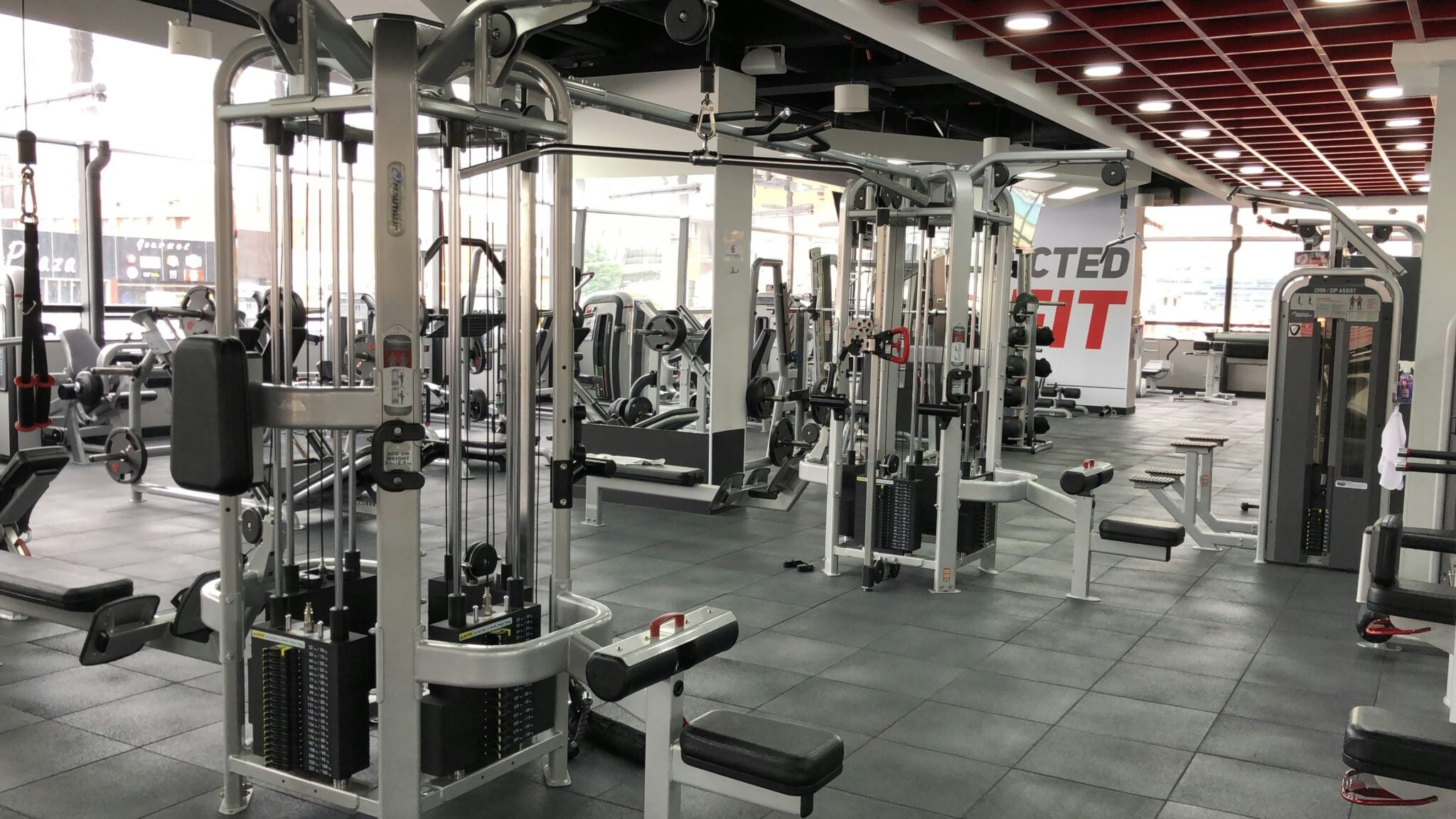

Pull the shroud off a cable stack after four years of club traffic and you can see what an equipment warranty reserve was built to pay for: a frayed cable, a scored pulley sheave, a selector pin worn oval.
- The parts that decide the number
- What an equipment warranty reserve actually funds
- Magnuson-Moss stops short of your purchase order
- Reading the reserve from outside the company
- Seven questions and the evidence that answers them
- Where an equipment warranty reserve leaks into service
- What a thin reserve does to a dealer’s parts desk
- Five moves before you sign the supply agreement
- The reserve inside your own service contract
- Questions buyers ask about equipment warranty reserves
- Can I see a reserve if the supplier is private?
- Does a longer warranty mean a bigger reserve?
- What voids coverage most often on club equipment?
- Should a distributor hold a reserve of its own?
- What the reserve is telling you
The welded frame is fine. It almost always is. What fails is the short list of parts that move under load, and the money to replace them was either set aside before the machine shipped or it was not.
The parts that decide the number
An equipment warranty reserve is not a marketing position. It is an estimate with money behind it: a supplier books revenue on a rack today and, in the same close, books a liability for the repairs it expects to owe on that rack later. The estimate is built from observed failure rates, parts cost, labor cost and the freight to get a part onto a floor.
That makes it one of the few numbers in this trade that records what a manufacturer privately believes about its own build quality. A company confident in a bearing sets aside less. A company that has already replaced that bearing twice sets aside more, or gets caught later.
What an equipment warranty reserve actually funds
Buyers read a warranty as a document. Suppliers read it as a cash forecast. The same line on a spec sheet, ten-year frame and three-year parts and one-year labor, describes three separate pools of money sitting on three different failure curves.
Labor empties first, because a technician’s drive time does not care what broke. Parts follow. Frame coverage rarely costs a factory anything, which is why the reserve behind a ten-year frame claim is smaller than it looks, and why that number is the least useful one to argue about.
Magnuson-Moss stops short of your purchase order
Operators sometimes assume federal warranty law sits behind a commercial order. It does not. The Federal Trade Commission’s Businessperson’s Guide to Federal Warranty Law states that the Magnuson-Moss Warranty Act governs written warranties on consumer products and does not apply to products sold for resale or for commercial purposes.
The interpretations at 16 CFR Part 700 sharpen the point. Section 700.1(a) provides that the percentage of sales, or the use to which a product is put by any individual buyer, is not determinative; the test is whether that type of product is normally used for personal, family or household purposes. A selectorized line built only for clubs sits outside the Act, so the paper you negotiate is the paper you get, and the equipment warranty reserve behind it is the only real backstop.

Reading the reserve from outside the company
Most suppliers in this trade are privately held and will never show you a reserve line. You can still triangulate it. Ask how many field service events a model generated in its first eighteen months, who paid for them, and whether the answer arrives from a system or from memory.
A supplier that can export parts consumption by model and serial range is managing an equipment warranty reserve with real data. One that answers with a story about how rarely anything breaks is telling you the estimate lives in somebody’s head. Put that answer in your annual supplier scorecard and watch whether it moves year over year.
Seven questions and the evidence that answers them
Seven questions get you close to an equipment warranty reserve without ever seeing the ledger. Each has a weak answer that sounds reassuring and a strong answer that can be checked. Ask them in one sitting, alongside the solvency checks you already run.
| Question to ask | Weak answer | Strong answer |
|---|---|---|
| What does the labor term cover? | Standard labor is included. | A named rate, a travel radius, and who pays beyond it. |
| Which parts are excluded? | Normal wear items. | A written wear list with the expected service interval for each part. |
| Who stocks the spares? | We ship fast. | A named stocking location and a fill rate pulled from their system. |
| How many claims did this model generate in year one? | Hardly any that we recall. | A report exported by model and serial range. |
| What happens when the model is discontinued? | We support everything. | A stated parts availability period at a capped price. |
| Who performs the work? | A local partner. | Named contractor, training records, and an escalation contact. |
| What voids coverage? | Misuse. | Specific conditions: chemicals, relocation, loads above the rating. |
Where an equipment warranty reserve leaks into service
Reserves are consumed by events nobody priced at the quote stage. Goodwill repairs on machines just outside term. Damage from a relocation the factory never approved. Upholstery attacked by a disinfectant left to dwell too long. Loads above the rated limit on a bench nobody labeled.
Each of those is a denial waiting to happen, and each is why a claim fails on paperwork rather than on the part itself. A supplier with a disciplined equipment warranty reserve is strict at those edges, because the edges are where the estimate breaks.
What a thin reserve does to a dealer’s parts desk
When a factory underfunds its estimate, the shortfall does not disappear. It moves to the dealer, who ships a part out of sellable stock to keep a club running while a claim sits open. That inventory was bought to sell, so the equipment warranty reserve of a supplier that came up short becomes a working capital problem three states away.
Distributors who track this see it first in which parts leave the shelf without an invoice. Six months of that pattern reads on build quality better than any brochure.
Five moves before you sign the supply agreement
- Separate the three terms. Get frame, parts and labor written as distinct periods with distinct exclusions, not as one headline number on a cover page.
- Name the wear list. Require a written list of parts classed as normal wear, with the service interval the factory expects for each one.
- Fix the labor geometry. Put the rate, the travel radius and the after-hours multiplier in the agreement, and state who pays past the radius.
- Buy a parts window. Ask for a stated number of years of parts availability after the model is discontinued, in writing, at a capped price.
- Set the claim clock. Agree the response, decision and credit timeline, so an open claim cannot sit for months while your own stock covers the gap.
The reserve inside your own service contract
Operators hold their own equipment warranty reserve, whether or not they call it that. A club on a fixed-fee service agreement has handed its failure risk to a vendor who priced that risk from an estimate of their own. A club that self-insures should be funding the same line, even if it only exists in a spreadsheet.
Two numbers make the line honest: how many machines are past term, and what the three most common repairs cost on each equipment family.
Questions buyers ask about equipment warranty reserves
Can I see a reserve if the supplier is private?
Almost never as a number. What you can get is the evidence underneath it: parts consumption by model, field service event counts, fill rates from a named stocking location, and the wear-parts list. A supplier who produces those four on request is working from something more disciplined than optimism.
Does a longer warranty mean a bigger reserve?
Not reliably. Frame coverage stretches to ten years partly because welded steel rarely fails, so promising it costs little. The terms that consume real money are labor and moving parts. A supplier who trimmed labor to twelve months and stretched the frame term has moved risk onto you, not absorbed it.
What voids coverage most often on club equipment?
In practice: relocation without factory approval, cleaning chemicals outside the approved list, use above the rated load, and repairs by an untrained technician. None of those are exotic. All four are recorded, or left unrecorded, by a floor log and a service ticket that you control rather than the factory.
Should a distributor hold a reserve of its own?
Yes, if it sells a private label or performs warranty labor. A reserve on the distributor’s books covers the gap between what a factory pays and what a customer expects, and that gap is where most channel disputes end up. Size it from your own claim history rather than the factory’s brochure.
What the reserve is telling you
A reserve is a forecast of failure written by the people who built the machine. Read it and you learn which parts they expect to replace, how far they will drive to do it, and how long the model stays supported. Ask for the evidence underneath the number, get the answers in writing, and the conversation shifts from brochure language to something you can audit a year later.