
A new studio’s lease is usually signed before anyone has priced the pilates studio equipment that has to fit inside it. The order that follows is the largest check most founders write in year one, and it gets written under time pressure, from a floor plan nobody has walked with a tape measure.
- The lease is signed before the equipment list exists
- Month one: pilates studio equipment starts with a capacity count
- Month two: the spacing math nobody does twice
- Month three: what actually goes on the first purchase order
- Month four: springs, straps and the consumables nobody budgeted
- Month six: the apparatus beyond the reformer
- A first-order matrix for a two-room studio
- Month nine: the second-year replacement schedule starts now
- Six moves before the first pilates studio equipment order is signed
- Month eighteen: what the second order corrects
- Questions studio owners ask about pilates studio equipment
- How many reformers should a first studio buy
- Is used apparatus a reasonable way to open
- What should stay out of the opening budget entirely
- The order you can still afford in year two
The lease is signed before the equipment list exists
Founders tend to work the deal in one order: find the space, negotiate the rent, then ask what fits. That sequence is backwards for an apparatus business. Reformer footprint and circulation space decide how many bodies the room holds, and the number of bodies decides whether the rent works at all.
The correction is cheap if it happens early. Walking an empty suite with a tape measure and a taped outline of one reformer answers more questions in an hour than a week of catalog comparison does.
Month one: pilates studio equipment starts with a capacity count
Start from the class you intend to sell. A studio built for groups of eight needs a different room than one selling duets and privates, and the pilates studio equipment list follows that decision rather than leading it.
The category is tracked closely enough to plan against. SFIA publishes single-sport fitness reports covering 24 fitness activities, with yoga, Pilates and barre each treated separately and priced at $99 for members and $295 for non-members, according to the association’s announcement of the series. Reading the category on its own is what stops a founder sizing a room for a trend instead of for their own booking sheet.
Month two: the spacing math nobody does twice
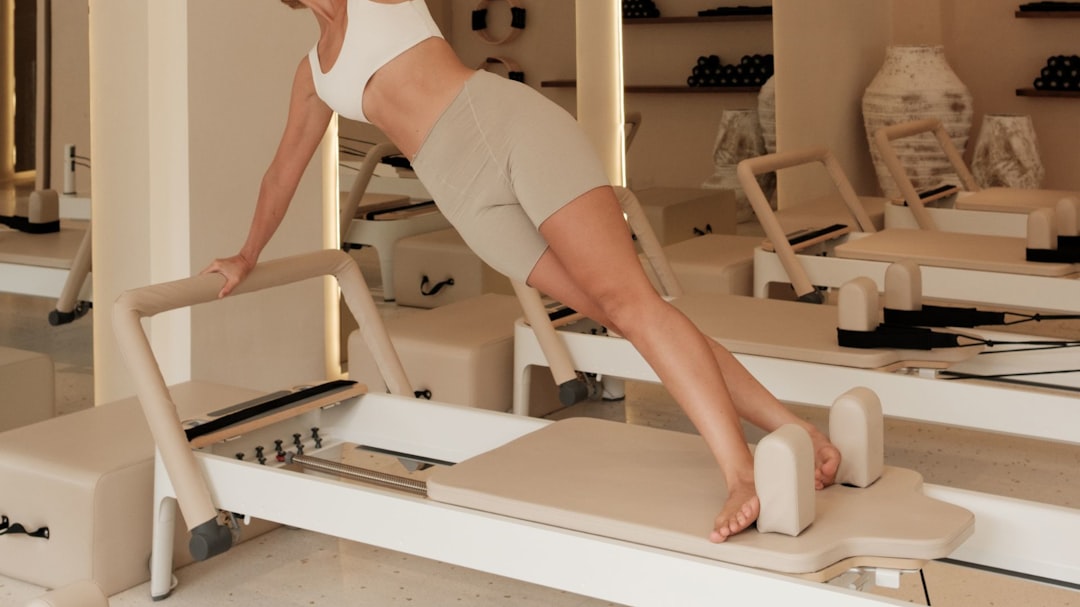
Spacing is the decision that cannot be revisited once the floor goes down. Plan the instructor’s circulation path first, then the gap between machines, then the door swing and the storage wall. A room that works on paper and fails in practice usually failed at the circulation path, long before any pilates studio equipment was delivered.
Accessibility belongs in the same pass. The ADA Accessibility Standards published by the US Access Board give exercise machines and equipment a section of their own, 1004, in the standards the Board maintains. A founder who has read how one clear floor space can serve two machines lays the room out differently, and does it before the subfloor is glued down.
Month three: what actually goes on the first purchase order
The first pilates studio equipment order is where optimism costs money. Founders buy the apparatus they want to teach on rather than the apparatus the schedule will fill, and the difference sits idle against a lease payment for two years.
A disciplined first pass buys reformers to the capacity count, one spare of every consumable, and nothing else until the schedule proves demand. Every other piece of pilates studio equipment should have a named class on the timetable before it has a purchase order number.
Month four: springs, straps and the consumables nobody budgeted
Springs, ropes, straps and loops are the running cost of the business and almost never appear in the opening budget. They wear on a schedule set by class volume, not by calendar age, and a studio running twelve classes a day burns through them faster than its supplier’s default reorder cycle assumes.
Treat consumables as a standing line from month one. The studios that get caught are the ones that budgeted pilates studio equipment as a capital event and consumables as an afterthought.
Month six: the apparatus beyond the reformer
Towers, chairs, barrels and the trapeze table each earn their space differently. A chair serves privates and rehabilitation work in a small footprint; a ladder barrel is a specialist piece that fills few hours unless an instructor builds programming around it.
The honest test is hours booked per square foot. Run it quarterly and the second wave of pilates studio equipment buys itself out of the timetable rather than out of a catalog.
A first-order matrix for a two-room studio
The table below is the shape a first pilates studio equipment order should take once the capacity count is settled. It is written to be argued with by an instructor before it is sent to a supplier.
| Item | Opening-day case | Defer if | Second-order trigger |
|---|---|---|---|
| Reformers | Sets class capacity and revenue ceiling | Never | Waitlist on two class times |
| Spare spring set | Keeps a machine in service same day | Never | Second failure in one quarter |
| Reformer boxes and straps | Required for standard repertoire | Never | Wear on any strap set |
| Towers or half-trapeze | Extends repertoire in the same footprint | Schedule is group-only | Privates exceed a quarter of hours |
| Wunda chairs | High value per square foot for privates | No instructor trained on them | Two instructors certified |
| Ladder barrel | Specialist and rehabilitation work | Referral pipeline unproven | Standing clinical referrals |
| Mat and props wall | Fills off-peak hours cheaply | Storage is unresolved | Any recurring mat class |
| Spare parts kit | Removes a supplier lead time from every fault | Never | First parts order placed by air |
Month nine: the second-year replacement schedule starts now
Frames outlast almost everything attached to them, which is exactly what catches a studio in year two. Ropes, springs and upholstery reach the end of their lives together because they went into service together, and the bill arrives as one number instead of a series of small ones.
Schedule the wear checks before they are needed. Studios that track the second set of ropes rather than the first stagger the replacements, and they also know what an idle machine costs them, which is a calculation worth building properly rather than guessing at.
Six moves before the first pilates studio equipment order is signed
- Tape the floor. Mark one machine footprint plus circulation and walk it at class pace before agreeing to any quantity.
- Fix the capacity count. Decide the class size you are selling and let machine numbers follow it, not the other way around.
- Price the consumables. Ask the supplier for spring, rope and upholstery intervals at your class volume, in writing.
- Name the class for every specialist piece. If no slot on the draft timetable needs it, the piece waits for the second order.
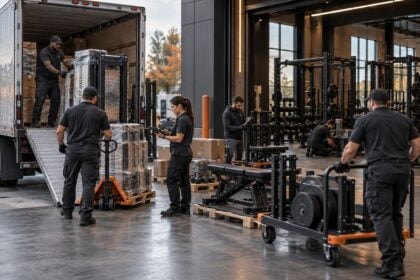
- Confirm delivery access. Check door widths, elevator dimensions and the delivery window the landlord permits before the freight is booked.
- Hold a reserve. Keep a defined share of the equipment budget unspent for ninety days after opening, so the schedule can correct the order.
Month eighteen: what the second order corrects
The second pilates studio equipment order is almost always smaller, more specific and better argued than the first. It buys one more reformer for the class that keeps filling, replaces the piece that never found an hour, and adds the storage the room needed from day one.
It also fixes layout errors that opening-day urgency created. Congestion in a studio behaves the way it does in a gym, showing up in where people stand before it shows up in a queue, and the second order is the first honest chance to respond to it.
Questions studio owners ask about pilates studio equipment
How many reformers should a first studio buy
Buy to the class size you can staff and fill, not to the room’s maximum. A room that holds ten machines and fills six leaves four machines paying rent. Starting one or two under capacity keeps the reserve intact and makes the first waitlist an argument for the second order rather than a rescue.
Is used apparatus a reasonable way to open
It can be, provided the wear points are inspected rather than described. Frames and rails survive well, while ropes, springs, straps and upholstery carry the previous studio’s class volume with them. Price the immediate replacement of every consumable into the purchase and judge the deal on that total.
What should stay out of the opening budget entirely
Anything without a named class or instructor attached to it. Specialist apparatus, retail fixtures and premium finishes all compete with the reserve that lets a founder correct the order at month three. The schedule, once it is real, is a far better buyer than the business plan was.
The order you can still afford in year two
A first order is judged on the wrong day. Opening week rewards the studio that bought widely, while month eighteen rewards the one that bought narrowly and kept cash for the machine the timetable actually demanded. Fix the capacity count, spend on spacing and consumables, and leave a reserve that the booking sheet gets to spend.