
Most buying conversations about modern strength equipment are conducted in adjectives, and adjectives are exactly what a strength floor cannot use four years later. Robust, premium, versatile, future-proof: none of these survives contact with a program change, a new coach, a relocated rig or a service call that needs a part nobody stocks. The quote is where those words go unchallenged.
- Six Questions That Separate Modern Strength Equipment From New Equipment
- Question One: Adjustability Range, Counted in Positions
- Question Two: Footprint Efficiency Per Trained Position
- Question Three: Modularity — What Changes Without a Forklift
- Question Four: Which Wear Parts Are Serviceable, and by Whom
- Question Five: Weight, Moveability and the Floor Underneath
- Question Six: The Attachment Ecosystem and Its Shelf Life
- What a Weak Answer About Modern Strength Equipment Sounds Like
- An Adaptability Scorecard for the Shortlist
- Before the Next Quote Goes Out
- Questions Buyers Ask Before Specifying a Strength Floor
- Is heavier always better in a strength frame?
- How do I compare modern strength equipment across brands fairly?
- Does modular equipment actually save money?
- What if a supplier will not answer in writing?
- What Buying for Change Actually Means
A better approach treats every claim as a question with a burden of proof attached. Ask what a machine can do, ask what evidence would demonstrate it, then listen for the shape of a weak answer. Six question-and-evidence pairs cover most of what decides whether a strength floor can be reprogrammed or has to be replaced.
Six Questions That Separate Modern Strength Equipment From New Equipment
New and modern are not the same property. New means recently manufactured. Modern strength equipment, in the only sense useful to an operator, tolerates change — in programming, in user population, in layout and in who services it. A twenty-year-old design can pass that test, and a launch-week product can fail it.
Each question below has a form of evidence a supplier can produce easily if the answer is genuinely yes. Where the evidence is unavailable, the honest reading is not that someone is hiding something — it is that the claim has never been tested, which is the same risk from your side of the table.
Question One: Adjustability Range, Counted in Positions
Ask for the number of usable positions and the dimensions at the extremes, not a description. A bench with seven back-pad detents and a fixed seat is a different product from one with seven detents and three seat heights, though both are sold as fully adjustable modern strength equipment.
The evidence to demand is a dimensioned drawing or a spec table showing each position, plus the smallest and largest user the range is designed around. A weak answer sounds like “it suits everyone” or defers to a photograph of somebody mid-set. Range that cannot be enumerated cannot be programmed against.
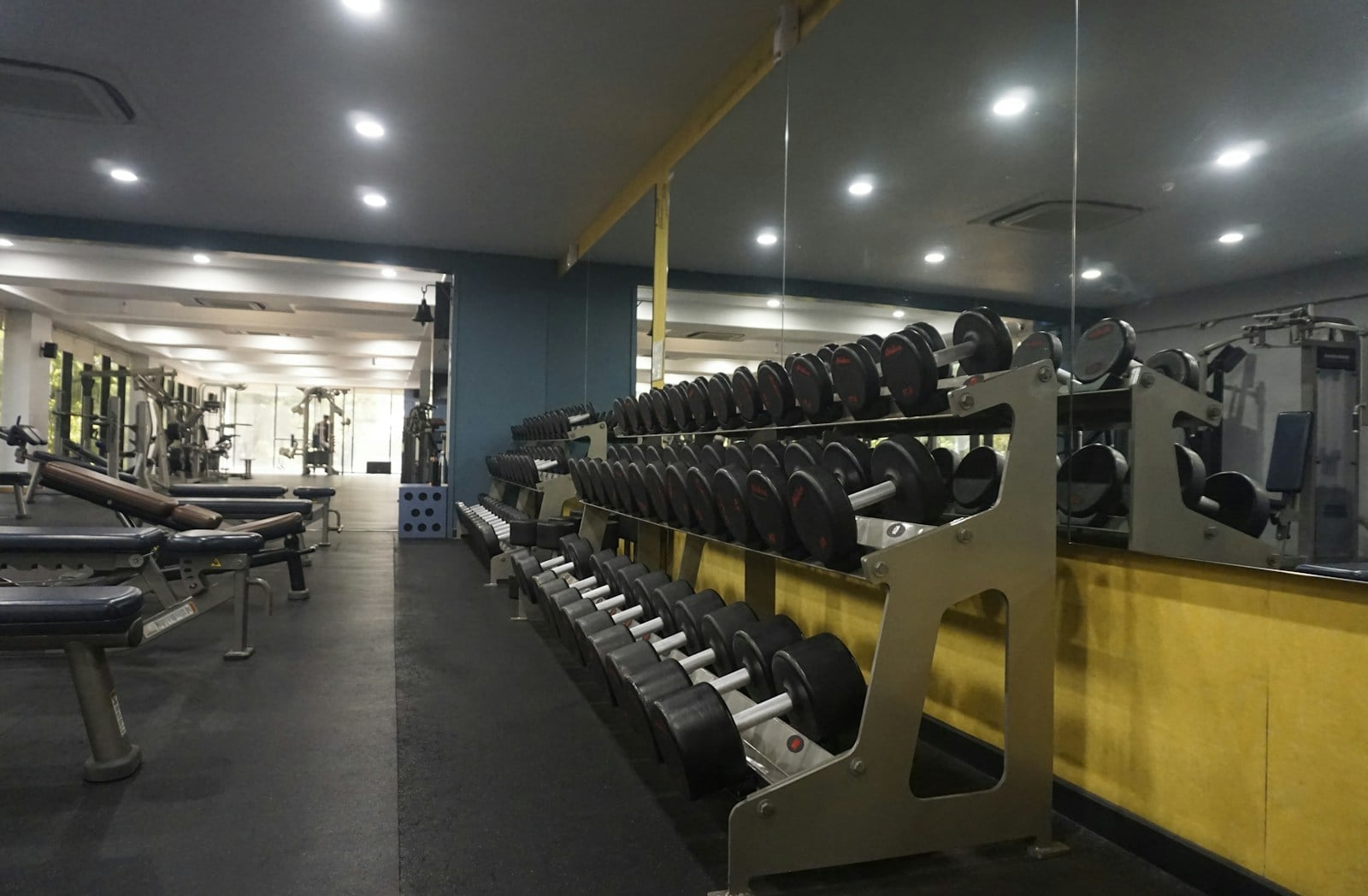
Question Two: Footprint Efficiency Per Trained Position
Footprint is usually quoted as chassis dimensions, which understates it. The number that matters is the floor area a user occupies while training: entry, exit, weight-stack access and room for a second person to pass. Two machines with identical footprints can differ by half a meter of working envelope.
Ask for a layout drawing showing the working envelope rather than the chassis. Then divide by the number of people who can train on it at once — a converging station serving two users on one frame is a genuinely different proposition from a single-position machine of the same size. This is where the pull of plate-loaded strength earns its keep, because loaded frames often serve more positions per square meter than selectorized ones.
Question Three: Modularity — What Changes Without a Forklift
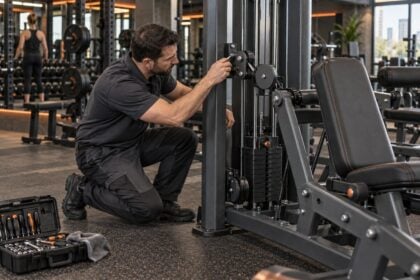
Modularity is claimed constantly and defined rarely. The operational definition: what can two staff change in under an hour with hand tools, and what needs an engineer, a lift or a shutdown? Attachments, uprights, storage horns and pad assemblies belong in the first group; anything needing the frame apart belongs in the second.
Ask for a parts list of everything designated field-changeable, with the tools required. A supplier who has genuinely designed modular strength equipment has this document already. A weak answer describes the concept rather than the components, and predicts a floor that stays exactly as installed.
Question Four: Which Wear Parts Are Serviceable, and by Whom
Every strength machine has a short list of parts that will wear out: cables, bushings, bearings, pads, grips, pulleys, and the fasteners around them. The question is not whether they wear but whether replacing them is a routine job or a specialist visit. That single distinction dominates the service cost of modern strength equipment across a decade.
Demand the wear-parts list with lead times and whether the parts are proprietary or standard. Ask explicitly whether in-house maintenance staff may replace them without voiding cover — and read the answer against the written warranty rather than the sales conversation, because the FTC’s guidance on written and implied warranties makes clear that a service contract and a warranty are not the same instrument.
Question Five: Weight, Moveability and the Floor Underneath
A machine that cannot be moved commits you to a layout. Ask for shipping weight, assembled weight, and whether the frame can be walked on skates or must be dismantled. Then ask what point loading the feet impose — the number your building manager wants when the room sits on an upper floor.
The evidence here is a load and handling sheet, which serious manufacturers produce as a matter of course. A weak answer treats the question as an installation detail. It is not — it is the constraint that decides whether next year’s layout change is a Tuesday morning or a capital project, a point that also shapes the question to ask before approving an upgrade.
Question Six: The Attachment Ecosystem and Its Shelf Life
An attachment ecosystem is a bet on continuity. Common hole patterns, standard post diameters and shared pad mounts let a floor absorb new programming cheaply for years. Proprietary geometry does the opposite, and quietly, because the constraint only appears when you try to buy the second thing.
Ask how long the current pattern has been in production, whether it superseded an earlier one, and what happened to owners of the previous generation. Ask whether third-party attachments fit. Standards work in this area sits with bodies such as ASTM’s subcommittee on fitness products, and a supplier who can speak to it in specifics is telling you something useful about how they think.
What a Weak Answer About Modern Strength Equipment Sounds Like
Weak answers share a grammar. They restate the question as a benefit, cite satisfaction rather than specification, and move to a different machine when pressed. None of it signals dishonesty; usually it signals a salesperson who has never been asked these things about modern strength equipment before.
The useful response is to write the question into the tender rather than the conversation. Documented answers behave differently from spoken ones, and the act of putting them in writing tends to surface the gaps by itself — one of several ways to reduce the points where equipment plans go off the rails.
An Adaptability Scorecard for the Shortlist
Run every shortlisted machine through this table before comparing price. Anything scoring well on price and badly on the last three rows is equipment you will replace early.
| Trait | Evidence to demand | Strong answer | Weak answer |
|---|---|---|---|
| Adjustability range | Dimensioned position table | Positions counted, extremes stated | “Suits all users” |
| Working envelope | Layout drawing with clearances | Envelope drawn, not just chassis | Chassis dimensions only |
| Positions served | Users trainable at once | Two or more on one frame | Not considered |
| Field-changeable parts | Parts list with tools required | Document exists already | Concept described, no list |
| Wear parts | Wear list, lead times, sourcing | Standard parts, stocked locally | Proprietary, order per incident |
| In-house service rights | Written warranty terms | Routine replacement permitted | Any intervention voids cover |
| Moveability | Load and handling sheet | Skate-moveable, point loads stated | “Talk to the installer” |
| Attachment pattern | Production history of the pattern | Stable for years; third-party fit | Recently changed; proprietary only |
Before the Next Quote Goes Out
- Turn the six questions into tender clauses. Paste them into the request for quotation with the evidence column attached, so answers arrive in writing and in comparable form.
- Price the wear parts, not just the machine. Ask for a five-year consumables list at current prices for each shortlisted unit. The ranking often reverses once cables, pads and grips are included.
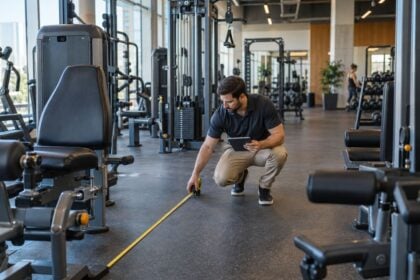
- Walk the working envelope with tape. Mark the real envelope of each shortlisted machine on your own floor before ordering. Layouts that work on a drawing regularly fail against a column or a fire route.
- Get the in-house service position in writing. One sentence confirming which routine replacements your staff may perform without affecting cover is worth more than a page of assurances.
- Score, then compare price. Complete the scorecard for every option before anyone sees a discount. Discounts read differently once adaptability is on the same page.
Questions Buyers Ask Before Specifying a Strength Floor
Is heavier always better in a strength frame?
Weight correlates with rigidity but is not the same thing. A well-braced lighter frame can feel more solid than a heavy one with poor triangulation, and it will be far easier to relocate. Ask about deflection under load and how the frame is braced, then treat mass as one input among several rather than the headline number.
How do I compare modern strength equipment across brands fairly?
Normalize everything to the same units first. Positions per square meter of working envelope, wear parts per year and hours of downtime per service event are comparable; feature lists are not. Build one table for all modern strength equipment on the shortlist, populate it from written answers, and leave cells blank where evidence was not supplied.
Does modular equipment actually save money?
It saves optionality, which converts to money only if you use it. A site with stable programming and no layout pressure may never exercise the modularity it paid for. A site expecting growth, new formats or a relocation within five years usually recovers the premium on the first reconfiguration.
What if a supplier will not answer in writing?
Treat silence as data and record it in the scorecard. Written answers are a low bar for a manufacturer describing its own product, and reluctance at the quoting stage rarely improves after the invoice is paid. It is also a fair predictor of how the relationship handles a warranty claim.
What Buying for Change Actually Means
Every strength floor gets reprogrammed sooner than its owners expected, usually because a coach leaves, a format arrives, or a lease changes the shape of the room. Equipment bought against a spec sheet meets that moment badly; equipment bought against six documented questions meets it as a Tuesday task. The difference is not the money spent, but the evidence gathered before it was. Modern strength equipment earns the label when the answers were in writing, and it is the same discipline that makes the supplier relationship worth something after the sale.