

Quotes from regional fitness equipment distributors look almost identical until a truck meets an actual building. The equipment lines match. Delivery is compressed into a single figure. Everything that will genuinely differ between two suppliers hides inside that one number, and none of it becomes visible until the week it turns expensive.
- Freight routes and the geography regional fitness equipment distributors quote against
- Truck size, turning radius and the cost of the wrong vehicle
- Loading docks, building rules and the hours you are permitted to work
- Door swings, corridor turns and the clearances that fix where a machine sits
- Elevator capacity when the floor is not at grade
- Permits, inspections and the calendar that outranks yours
- Technician density and what regional fitness equipment distributors actually cover
- Parts depots and the transit time behind every repair line
- Seasonal weather and the delivery window nobody priced
- Measure the route before you confirm the date
- Questions operators ask about local delivery conditions
- Who pays when a delivery fails because of access?
- How do I compare delivery pricing across suppliers?
- Does a longer route always mean higher cost?
- Should the supplier attend the permit inspection?
- The quote that survives contact with the building
Delivery is not one cost. It is a stack of physical conditions: the road, the vehicle, the dock, the door, the lift, the permit office, the technician’s drive time, and the weather in your delivery month. Each condition has a line where money actually leaves, sometimes on the quote and more often after it. What follows walks down that stack in the order a shipment meets it.
Freight routes and the geography regional fitness equipment distributors quote against
The first cost line is set before anyone loads a crate. A route with a low bridge, a weight-restricted road, a seasonal load limit or a residential street with parking on both sides changes the vehicle, and the vehicle changes the price.
Ask which route the carrier intends to use and whether anyone has driven it. Regional fitness equipment distributors that work a territory daily usually know its restrictions without checking. Urban sites often force a transfer from a line-haul trailer to a smaller local truck, which is a real charge and a real extra handling of your equipment. Rural sites carry the opposite problem: one delivery attempt a week, and a long wait if the first one fails.
Truck size, turning radius and the cost of the wrong vehicle
A fifty-three foot trailer cannot turn into a courtyard that a twenty-six foot box truck manages easily. Nobody discovers this on paper. They discover it with a driver on the phone and a crew already booked.
Get the truck length written into the delivery confirmation and check it against the approach, not just the address. Regional fitness equipment distributors quoting a vehicle they have not matched to your access are quoting a guess. The failed-attempt charge is the visible cost. The invisible one is the crew standing down and returning on a day when your electrician is also on site.
Loading docks, building rules and the hours you are permitted to work
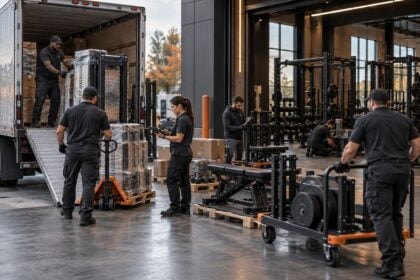
Docks are governed by rules that have nothing to do with equipment. Height mismatch needs a leveler or a ramp. Shared docks need a booked slot. Many buildings restrict deliveries to specific hours, require certificates of insurance filed in advance, or mandate that only building-approved labor operates the freight lift.
Each of those is a cost line and a schedule line at once. Ask the building manager, not the landlord’s agent, and get the answer in writing before regional fitness equipment distributors commit to a delivery date. Dock edges, ramps and temporary surfaces are also where install crews get hurt, which is why OSHA rules for walking and working surfaces are worth reading before the first pallet moves.
Door swings, corridor turns and the clearances that fix where a machine sits
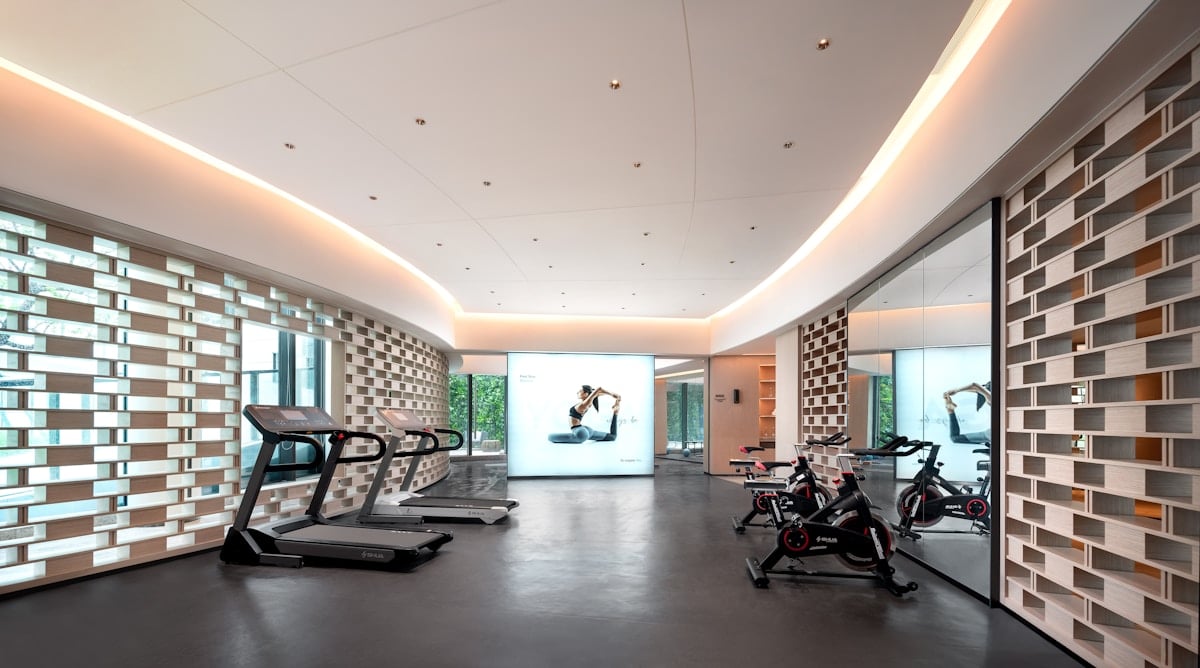
Door width is measured with the door removed, not with it hanging. A leaf that swings into the corridor takes several inches out of the opening and can make a turn impossible for a crated treadmill.
Measure clear opening width with the leaf removed, corridor width at the tightest point, the diagonal at every turn, and threshold height at each surface change. Getting this wrong produces uncrating in corridors, partial disassembly, or a scratched shroud. A machine that cannot travel a route also cannot sit where the layout drawing quietly assumed it would.
Settle who carries transit damage before the truck is booked, because a scratched shroud gets argued about afterward and paid for by whoever cannot prove otherwise. The FTC’s consumer guidance on written and implied warranties is a useful reminder that a service contract sold alongside a machine is not the same instrument as its warranty, and that neither one is a carrier claim.
Damage found at uncrating also constrains the delivery sequence, because a unit held back for a replacement panel loses its anchoring slot and the crew moves on. Rebooking that slot costs more than the panel did.
Elevator capacity when the floor is not at grade
Above or below ground level, the lift becomes the bottleneck. Three numbers decide everything: car dimensions, door opening, and rated capacity with the equipment plus the crew inside.
A long piece of cardio equipment may only fit diagonally or standing, and standing may exceed the car height. Where the lift will not take a unit, the options are a stair carry priced per flight, a crane lift through an opening, or a different model. Only the third is cheap, and only if you find out early.
Permits, inspections and the calendar that outranks yours
Anchoring racks into a slab, altering electrical circuits for a cardio bank, or hanging rigs from structure will usually pull in an inspection. Inspectors work to their own queue, and that queue does not move for your opening date.
Find out which items are inspected in your jurisdiction, the current lead time, and whether the supplier or your contractor books it. Regional fitness equipment distributors working locally will know the answer for your municipality. Equipment that is delivered but cannot be anchored until sign-off occupies your floor without earning anything, and that idle period is a cost even though it appears on no invoice.
Technician density and what regional fitness equipment distributors actually cover
Service response is a function of geography and headcount, not of promises. Ask how many technicians work your territory and how large that territory is in driving hours.
Two technicians covering four states behave differently from four covering one metropolitan area, regardless of what the contract says about response time. Ask where the nearest technician is based, how many sites they carry, and what happens during holiday weeks. Response time and repair completion are separate figures, and the gap between them is where the cardio costs that never reach the quote accumulate.
Parts depots and the transit time behind every repair line
A depot is only useful if it holds your parts. Ask which items are stocked for your specific models, at which location, and what the transit time is to your address for something not held.
Consoles, drive belts, cables, controller boards and rack-specific fasteners decide whether a machine is down for a day or three weeks, and they shape the distribution work that begins once the truck has gone. Regional fitness equipment distributors that answer this by model number are describing a real depot. Those that answer by category are describing a building.
Seasonal weather and the delivery window nobody priced
Weather is a scheduling cost that behaves like a physical one. Snow closes loading zones and adds days to line-haul. Heat affects crews working in an unconditioned shell. Spring thaw brings seasonal load restrictions on secondary roads in colder regions, which is a legal limit on truck weight rather than a matter of driver preference.
If your opening lands in a difficult month, buy buffer rather than optimism. Ask regional fitness equipment distributors what their delivery reliability looks like in that specific month. Two weeks of slack in the delivery window is cheaper than a failed attempt, a re-book and a crew rescheduled into the following month.
| Cost line | What triggers it | Usually paid by | How to remove it before signing |
|---|---|---|---|
| Vehicle downsize or transfer | Route cannot take a full trailer | Buyer, as a surcharge | Confirm truck length against the approach, not the address |
| Failed delivery attempt | Dock, hours or access not confirmed | Buyer | Written delivery slot from the building manager |
| Dock leveler or ramp hire | Trailer height does not match dock | Buyer | Measure dock height and note it on the order |
| Building-approved labor | House rules on freight lift operation | Buyer | Ask for building rules in writing at survey stage |
| Uncrate and partial disassembly | Clear opening narrower than the crate | Split or disputed | Measure with door leaves removed |
| Stair carry per flight | Lift too small or over capacity | Buyer | Check car size, door and rated capacity early |
| Idle floor awaiting inspection | Anchoring or electrical sign-off pending | Buyer, invisibly | Book the inspection before the delivery date |
| Extended downtime on a repair | Part not held in the territory | Buyer, in lost use | Get the stocked parts list by model number |
| Weather re-book | Seasonal load limits or site closure | Buyer | Build two weeks of slack into the window |
Measure the route before you confirm the date
- Measure the route, not the room. Clear opening widths with leaves removed, corridor width at the tightest point, every turn diagonal, threshold heights, lift car and door dimensions. One page, photographed.
- Get building rules in writing. Delivery hours, insurance certificates, dock booking process, who may operate the freight lift, and any restriction on which labor is permitted on site.
- Confirm the vehicle. Truck length on the delivery confirmation, checked against the approach and the turning space, with the transfer point named if a smaller truck is required.
- Book the inspections. Identify every anchoring and electrical item that needs sign-off in your jurisdiction, ask for the current lead time, and name who owns the booking.
- Request the territory numbers. Technicians covering your area, nearest base, stocked parts by model, and transit time for anything not held. Compare suppliers on those figures, not on the delivery line.
Questions operators ask about local delivery conditions
Who pays when a delivery fails because of access?
Almost always the buyer, unless the supplier surveyed the site and missed something. That is the practical argument for insisting on a physical survey: it moves responsibility for the access measurements onto whoever took them, and puts the failed-attempt charge in dispute rather than on your invoice.
How do I compare delivery pricing across suppliers?
Ask each one to price the same named conditions: truck length, dock or curbside, stair flights, lift use, after-hours labor and floor protection. Regional fitness equipment distributors quoting against identical assumptions produce comparable numbers. Quoting against their own assumptions produces a beauty contest.
Does a longer route always mean higher cost?
No. A straight run on a highway to a site with a proper dock is cheaper than a short trip to a building with restricted hours, a shared lift and no unloading zone. The last two hundred meters set the price far more often than the two hundred miles before them.
Should the supplier attend the permit inspection?
For anchored equipment, yes, or at least reachable during it. Inspectors ask specification questions only the supplier can answer, and a missing anchor detail sends the item back into the queue for another week. Agree attendance when you agree the delivery date.
The quote that survives contact with the building
The delivery figure on a proposal is a hypothesis about your address. It becomes accurate only once someone has driven the route, measured the openings, read the building rules and checked the lift plate. Compare regional fitness equipment distributors on those measured conditions and the delivery line stops being a mystery. Do it afterward and you are discovering, one invoice at a time, what schedule control was actually worth.