

Equipment insurance coverage gets bought once, renewed by email, and read closely for the first time on the morning a sprinkler head opens over a pallet of treadmills.
- The schedule of values is the argument, filed years in advance
- Equipment insurance coverage is six promises, not one
- Goods in transit leave the property form behind
- The installation window nobody owns
- Products liability and recall expense are two different forms
- Business interruption pays on records, not on argument
- Equipment insurance coverage on units you do not own
- The claim file opens before the loss does
- A line-by-line matrix of what each form answers for
- Five checks to run before the renewal date arrives
- Questions buyers ask about equipment insurance coverage
- Does my property policy cover equipment while it is on the truck
- Do I need an installation floater if the customer signs for delivery
- Who should be listed as loss payee on financed gym equipment
- Does insurance pay for the cost of a recall
- The renewal is the only lever that moves
That is not carelessness. A program arrives as separate forms with different triggers, valuation rules and proof requirements, and nobody in the building is paid to reconcile them against the racks.
The size of the loss is settled long before an adjuster walks the aisle. It is settled by a schedule of values somebody updated or did not, and by which form the damaged goods happen to fall under.
What follows walks those lines the way a controller walks a cost sheet: one at a time, with the document that proves each claim named beside it.
The schedule of values is the argument, filed years in advance
Every property form pays against a stated value. When the schedule says a warehouse holds one figure and the racks hold considerably more, the shortfall is not an adjuster’s opinion. It is arithmetic the policyholder wrote and signed.
Distributors drift into that gap quietly. A line card grows, a container lands early, a liquidation lot bought at auction parks indoors for a season, and the stated value stays where the last renewal left it.
Valuation wording compounds it. Replacement cost buys an equivalent new item; actual cash value pays what the old one was worth the minute before it was lost. The error is not knowing which attaches to which asset class until a claim is open.
Equipment insurance coverage is six promises, not one
Read as a single document, a policy looks like a promise to make the business whole. Read line by line, it is six narrower promises with unpriced gaps between them.
The gaps are where losses live: the hours a machine sits on a tail lift, the week it waits in a lobby before install, the year after a unit was signed for and something on it fails. A distributor who can name which line answers for each of those moments is running equipment insurance coverage as a system rather than as six unrelated invoices.
Goods in transit leave the property form behind
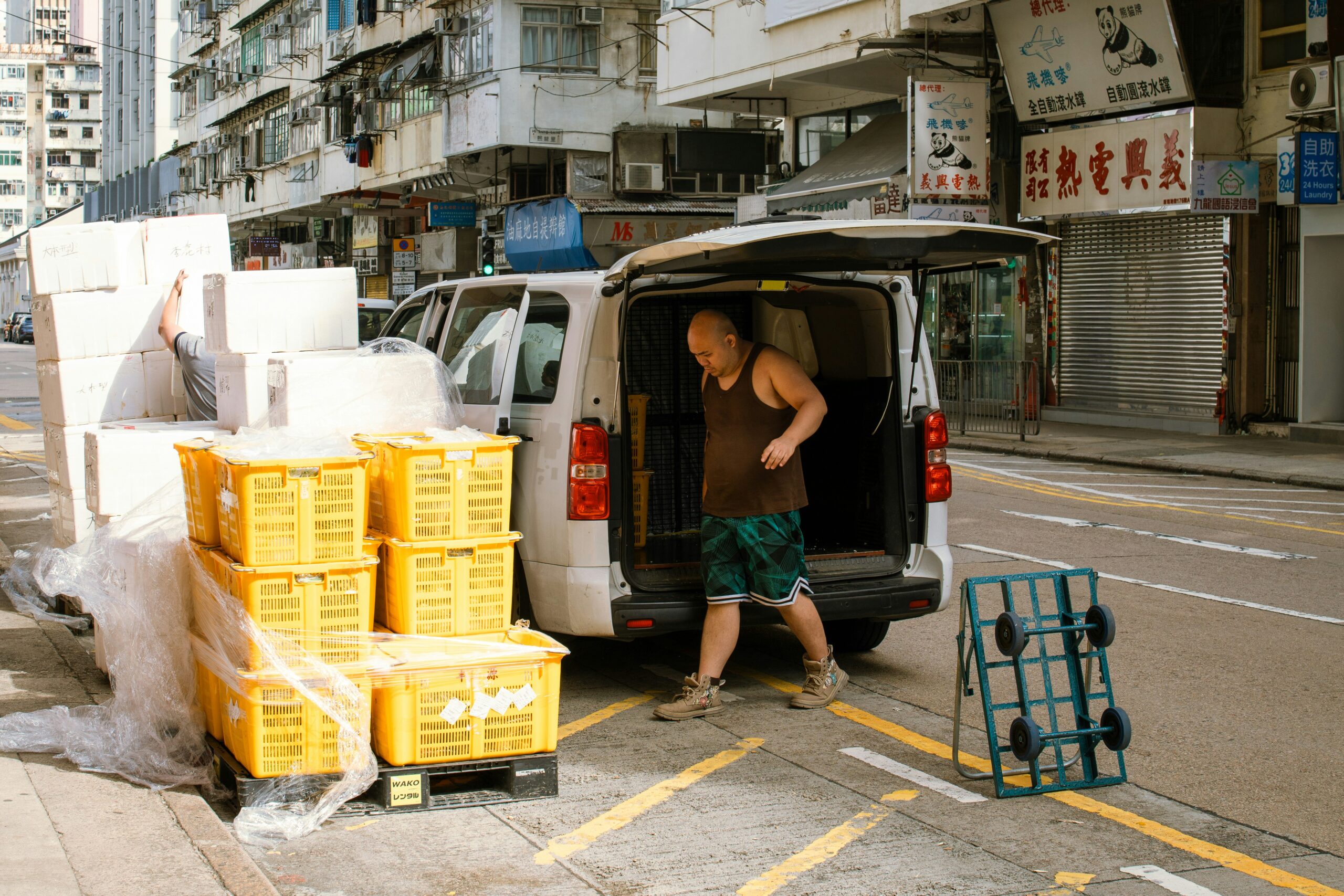
The moment a pallet clears the dock, most property forms stop and an inland marine or motor truck cargo form takes over. Its limit is usually written per conveyance rather than per location, which is the number to check before a full trailer of cardio moves.
Equipment insurance coverage in transit also has to survive the paperwork. A delivery receipt signed clean under time pressure weakens the cargo claim and the carrier claim in the same moment, and the minutes a driver waits at the dock decide more than most owners expect.
The installation window nobody owns
Between delivery and sign-off, a rack is off the truck, out of the warehouse, and not yet the customer’s property. Standard forms treat that window inconsistently, and an installation floater exists precisely for it.
A dealer that installs its own product without a floater absorbs the theft, water and handling risk of those days on its own balance sheet. The question to settle in the sales contract is when the customer’s insurable interest attaches: on delivery, on completion, or on the invoice date.
Products liability and recall expense are two different forms
Products and completed operations coverage answers for a machine once somebody else is using it. For a pure reseller that is often the manufacturer’s position to defend, and it stops being the manufacturer’s position the moment a distributor assembles, modifies, refurbishes or rebrands. An own-brand logo on a frame is the clearest version of that shift.
Recall cost sits outside both. The U.S. Consumer Product Safety Commission announced recall 26-150 on December 18, 2025, covering about 1,900 AMP MP2 machines whose arm could fail to lock; the commission’s notice records ten reports of that failure and a remedy carried out by an authorized technician at each address. Somebody funds that campaign before any liability question is reached.
Business interruption pays on records, not on argument
Business interruption restores lost earnings after a covered physical loss, and the calculation runs off historical financials. The quality of the records decides the size of the check.
Two provisions shrink it: a waiting period before anything is owed, and a thin extra expense sublimit.
Equipment insurance coverage on units you do not own
Leased and financed machines carry contractual insurance requirements enforced by the lender rather than the insurer. A lapse becomes a default event before it becomes a coverage problem.
Loss payee and additional insured wording has to match the schedule attached to the lease, name by name. Equipment insurance coverage that is technically in force but names the wrong party sends the settlement check somewhere the operator cannot reach it.
The claim file opens before the loss does
OSHA’s warehousing guidance names the hazard families that generate most of these claims and ties each to a standard: powered industrial trucks at 29 CFR 1910.178, portable fire extinguishers at 29 CFR 1910.157, and control of hazardous energy at 29 CFR 1910.147. The agency’s hazards and solutions page lists the full set.
Those citations do double duty. They point at where the next incident starts, and they produce the training and maintenance record an adjuster asks for afterward, which is the same paperwork behind a tipped pallet in aisle three.
A line-by-line matrix of what each form answers for
The table sets equipment insurance coverage out the way a claim arrives: trigger, valuation, and the document that must already exist.
| Coverage line | What triggers it | How it values | Document the claim needs | Usual gap |
|---|---|---|---|---|
| Scheduled property | Physical loss at a listed address | Replacement cost or actual cash value, as written | Current schedule of values | Stated value trailing actual stock |
| Inland marine or cargo | Loss while goods are in transit | Invoice value, per conveyance limit | Bill of lading and noted delivery receipt | Full trailer exceeds the per-load limit |
| Installation floater | Loss between delivery and sign-off | Contract value of the installed goods | Signed install scope and completion record | No floater where the dealer self-installs |
| Products and completed operations | Injury or damage after the unit ships | Defense and indemnity to the policy limit | Assembly records, serial log, manuals issued | Rebranding or modification not disclosed |
| Recall expense endorsement | A safety recall of a product sold | Notification, retrieval and labor cost | Serial-to-customer traceability | Endorsement absent from the policy |
| Business interruption | Income lost after a covered property loss | Gross earnings less continuing expenses | Financial statements and order book | Waiting period and extra expense sublimit |
| Equipment breakdown | Mechanical or electrical failure of plant | Repair or replacement of the damaged unit | Service history for the failed asset | Assumed to sit inside the property form |
Five checks to run before the renewal date arrives
Each step below closes a gap that equipment insurance coverage cannot close once a loss is open.
- Reprice the schedule against the rack. Pull the current stock valuation and compare it to the declared figure at every listed address before the renewal quote is issued.
- Read the per-conveyance limit out loud. Set it against the largest single trailer the business ships, not the average one.
- Name the moment interest transfers. Put delivery, completion or invoice in writing in the sales contract, then match the floater to that answer.
- Disclose every modification. Assembly, refurbishment, rebranding and custom fabrication each change the products classification, and an undisclosed one is a denial waiting to happen.
- Check the loss payee names. Walk the lease schedule line by line and confirm each financed unit lists the party the lender requires.
Questions buyers ask about equipment insurance coverage
Does my property policy cover equipment while it is on the truck
Usually not. Most property forms respond at a scheduled address, and transit sits with an inland marine or motor truck cargo form instead. Check whether the limit is written per conveyance or per shipment, then compare it to the largest trailer the business loads in a normal week.
Do I need an installation floater if the customer signs for delivery
It depends on when insurable interest transfers, which the sales contract should state. If the customer’s interest attaches only at completion, the dealer carries the risk through assembly, and a floater is the form built for that window. A delivery signature does not settle the question by itself.
Who should be listed as loss payee on financed gym equipment
Whoever the lease schedule names, spelled exactly as written there. Lenders enforce these requirements themselves, so a mismatch can trigger a default clause even when the underlying equipment insurance coverage is perfectly valid. Confirm the names at every renewal rather than once at signing.
Does insurance pay for the cost of a recall
Liability coverage pays for harm caused by a product, not for finding and fixing units in the field. Notification, retrieval and repair labor sit under a separate recall expense endorsement. Without it, the campaign is funded from working capital while the liability question is still open.
The renewal is the only lever that moves
An insurance program cannot be improved after a loss. Every variable that decides a settlement, from stated values to the per-conveyance limit, the floater, the endorsements and the named parties, is set at renewal and frozen until the next one. Equipment insurance coverage is worth one afternoon a year, because that afternoon is the only point at which any of it is negotiable.