
New strength equipment brands arrived twice in the space of three days this month, and neither announcement mentioned a distributor.
- New strength equipment brands are entering through retail, not distribution
- Question one: who answers the phone when a part fails
- Question two: which warranty class applies in a staffed room
- Question three: can the spec sheet be matched
- Question four: what happens to residual value
- Technogym’s reformer entry runs the other direction
- What this means for a dealer’s line card
- A buyer’s checklist for new strength equipment brands
- Four steps before a branded line reaches the floor
- Questions buyers are asking about new strength equipment brands
- Is a retail-channel strength line safe for a commercial gym
- Does a big consumer brand entering the category change pricing
- What should I tell a club owner who asks for one of these lines
- Will these brands open dealer programs later
- Two launches, one open question
On September 15, 2026, Jordan Brand introduced Jordan Strength, a line of dumbbells, kettlebells, barbells, a soft plyo box, an adjustable bench, interlocking bumper plates and a half rack with integrated storage. The company’s release puts the line on sale October 13, 2026, through NikeStrength.com and participating Dick’s Sporting Goods stores, designed and distributed by Dimension 6 Fitness of Portland, Oregon.
Two days later, on September 17, Technogym launched its first Pilates reformer in the United States, the Technogym Reform, positioned for homes, hotels, residential developments and fitness clubs at once.
Neither event is a threat to a commercial dealer this quarter. Both are worth reading closely, because the questions they leave unanswered are the questions a staffed room has to answer before the equipment lands.
New strength equipment brands are entering through retail, not distribution
The Jordan Strength release names two routes to the buyer: the brand’s own site and a sporting goods retailer. It names the company that designs and distributes the line. It does not name a commercial service network.
That is a deliberate structure, not an oversight. A line aimed at home gyms and, in the release’s own words, elite performance facilities does not need the parts logistics a four-hundred-member club consumes in a year.
The structure matters anyway, because members read the same announcements owners do. New strength equipment brands generate floor requests long before they generate a dealer program.
Question one: who answers the phone when a part fails
A consumer channel handles failure by replacement. A commercial floor handles failure by repair, because a machine out of service is revenue stopped rather than an inconvenience at home. Most new strength equipment brands launch with the first capability and acquire the second only when commercial volume justifies the cost.
The evidence to ask for is a parts list with numbers and a stated lead time, not a promise of support. If the answer is an email address and a returns policy, the line is a consumer product being sold into a staffed room.
Question two: which warranty class applies in a staffed room
Almost every strength line carries different warranty terms for residential and commercial placement, and the difference is usually stated in facility type rather than in years. New strength equipment brands sold through retail often publish only the residential schedule, because that is the buyer the channel was built for.
Buying through a retail channel makes this harder, not easier, because the seller is not the party that will adjudicate the claim. Denied claims rarely fail on the part; they fail on where the unit was placed and who sold it.
Question three: can the spec sheet be matched
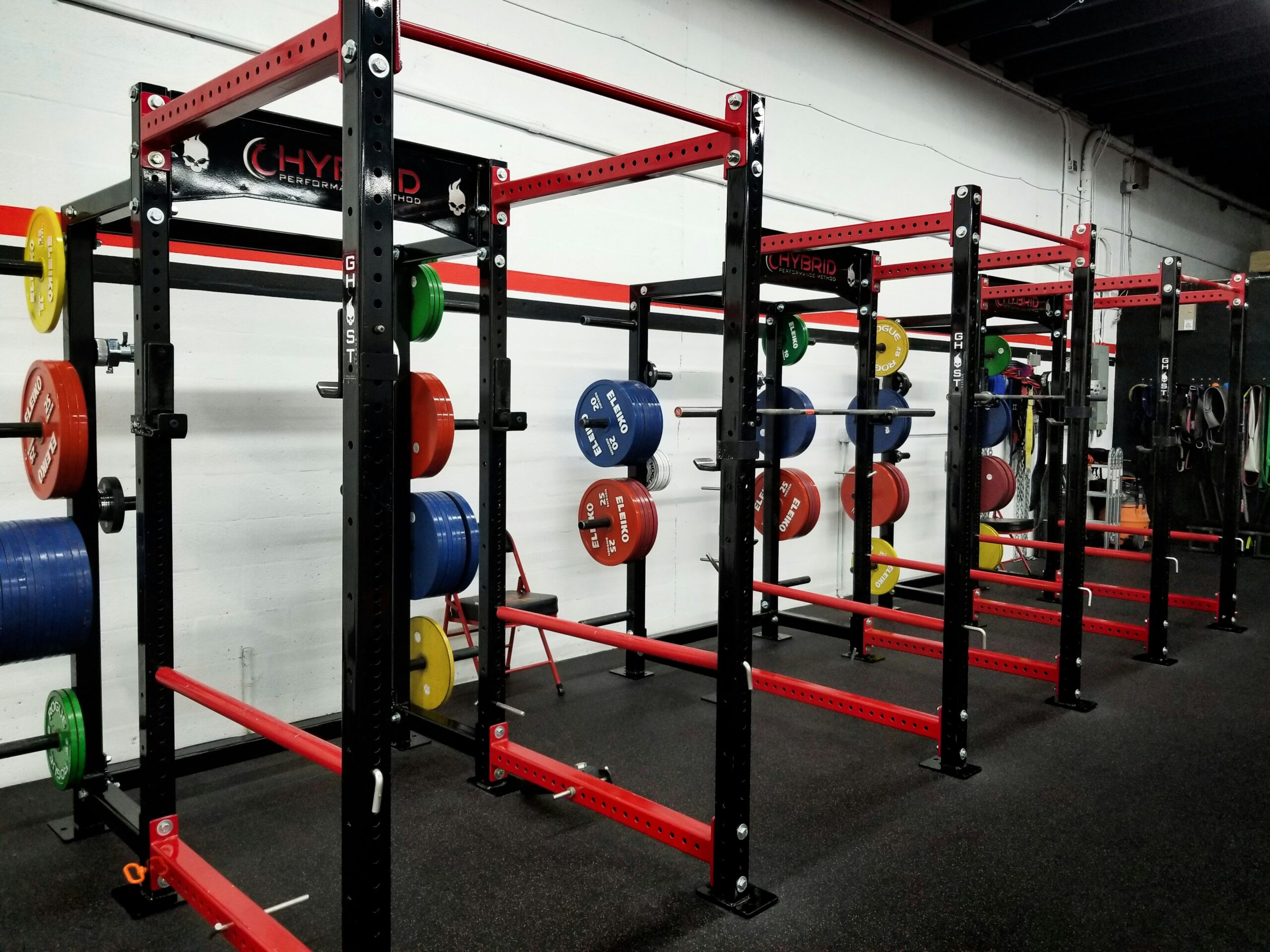
A half rack is defined by upright gauge, hole spacing, footprint, anchor pattern and rated capacity. Those numbers decide whether it can stand beside the racks already on the floor and share the same attachments.
A release that leads with design language and a launch event is not a spec sheet. Ask for the dimensioned drawing before the aesthetic comparison starts, which is the check that first-year equipment usually fails.
Question four: what happens to residual value
Resale and trade-in pricing follow known service networks, and new strength equipment brands have not built one yet by definition. A brand with no established commercial parts channel has no established secondary market either, however strong the name is.
That is not a reason to avoid it. It is a reason to write the machine down faster in the capital plan than an equivalent from an incumbent line.
Technogym’s reformer entry runs the other direction
The Technogym Reform is an incumbent commercial manufacturer entering a category dominated by specialists, with Athletech News reporting on September 17, 2026 that it competes with Balanced Body, Merrithew, iFIT’s NordicTrack and Your Reformer, and that it is positioned for homes, hotels, residential developments and clubs.
For a studio owner the question inverts. The service network exists; what is unproven is the hardware in a room running sessions all day, where ropes and springs are the wear items that decide the machine’s second year.
What this means for a dealer’s line card
A distributor cannot stock what is sold direct, and chasing every announcement about new strength equipment brands is how a parts desk ends up carrying six orphan lines. The useful response is informational rather than commercial.
Be the person who can explain the difference between a retail line and a commercial one, in specifics, when a club owner asks. Adding a line to win one account is the expensive alternative.
A buyer’s checklist for new strength equipment brands
The table turns each open question into a document to request before an order is placed.
| Check | Why it matters in a staffed room | Request in writing | Red flag |
|---|---|---|---|
| Parts availability | Repair, not replacement, keeps stations open | Part numbers and stated lead times | Support offered only by email |
| Warranty class | Terms differ by facility type | The commercial schedule, by component | One warranty for every setting |
| Service network | Somebody has to hold a wrench locally | Named technicians or an authorized list | Returns policy offered as service |
| Dimensioned drawing | Footprint and anchor pattern fix the layout | Drawing with hole spacing and capacity | Marketing copy in place of a spec |
| Attachment compatibility | Existing accessories should carry over | Post gauge and hole diameter | Proprietary spacing left unstated |
| Freight and install terms | Retail delivery is not an install | Inside delivery, assembly and anchoring | Curbside drop treated as delivery |
| Residual assumption | Trade-in value follows service networks | Any published trade-in program | No secondary market evidence at all |
Four steps before a branded line reaches the floor
These steps apply to any of the new strength equipment brands a member is about to ask about.
- Separate the brand from the builder. Identify the company that actually designs and distributes the line, then evaluate that company’s commercial record rather than the logo on the shroud.
- Get the commercial warranty in writing before purchase. A schedule that names facility type and component is the only version that survives a claim.
- Price a five-year parts assumption into the case. If the parts path is unproven, shorten the depreciation and say so in the capital request.
- Buy one station, not a row. Put a single unit on the floor, log its service events for a season, and decide from evidence rather than from the launch.
Questions buyers are asking about new strength equipment brands
Is a retail-channel strength line safe for a commercial gym
Safe and supportable are different questions. The hardware may be entirely sound, but a line sold through consumer channels usually carries a residential warranty class and no local service path. Place one unit, confirm the commercial terms in writing, and keep a parts assumption in the budget.
Does a big consumer brand entering the category change pricing
Not directly, and not quickly. These launches target home gyms and performance facilities rather than the club procurement channel, so list pricing on commercial lines is unaffected. What changes is the conversation, because members and owners now arrive with a brand already in mind.
What should I tell a club owner who asks for one of these lines
Ask them which room it is going in, then walk the four questions: parts, warranty class, spec match and residual value. An owner who wants the aesthetic can often get it from an incumbent line, and the ones who still want the brand will at least buy it with the exposures written down.
Will these brands open dealer programs later
Some do and some never do, and the announcement rarely says which. Treat the absence of a stated commercial channel as the current fact rather than as a gap about to be filled, and revisit when a parts list and an authorized service list actually exist.
Two launches, one open question
Jordan Strength reaches buyers on October 13 through a website and a retailer. The Technogym Reform reaches studios through a manufacturer that already knows what a service call costs. Both are legitimate businesses making legitimate products, and neither has yet answered the question a staffed floor asks first: when this breaks in month fourteen, who arrives, how fast, and with which part in hand.