

Nobody in a project meeting says the opening slipped because equipment lead times moved. They say the freight was late, or the vendor was unresponsive, or the install crew got pulled. The truthful version is usually visible in public data a quarter before the order was ever placed.
- Week 41: the doors did not open
- Week 36: the freight was not the problem
- Week 28: the acknowledgment that moved
- Week 12: where equipment lead times are actually set
- Capacity utilization is the other half of equipment lead times
- A reading table for equipment lead times
- Week 0: the decision that caused all of it
- What buyers systematically get wrong
- Beating equipment lead times without ordering more
- Questions project teams ask
- How far ahead should I order for a new build
- Are published equipment lead times reliable
- What public data actually helps a buyer
- What do I do when a vendor revises a date twice
- The calendar is the variable you control
What follows runs backward from a missed opening to the week the decision was made, because that is the order in which the evidence becomes useful. Equipment lead times are the last thing blamed and the first thing that could have been read.
Week 41: the doors did not open
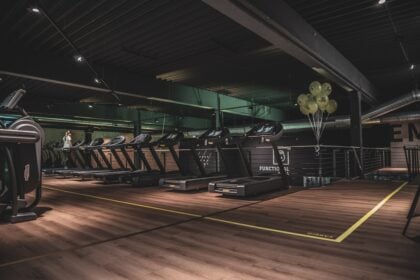
Equipment lead times were not mentioned once in the opening-day meeting. Sixteen cardio units and two selectorized lines were on site. Four cable stations and the functional rig were not. A floor missing its anchor pieces cannot open, so the whole opening moved five weeks and the pre-sale membership campaign moved with it.
The operator’s post-mortem named the vendor. That is where most post-mortems stop, and it is why the same slip happens on the next build.
Week 36: the freight was not the problem
The missing items had never shipped. Freight was blamed because freight is visible and a delayed truck produces a tracking number, while a factory that has not started building produces nothing at all.
This is a recurring confusion in the trade. A freight problem is measured in days and has a document trail. A production problem shows up in equipment lead times, is measured in weeks, and announces itself with silence. Distinguishing them early changes what you can do about it, and the mechanics of the first are covered in our work on how density rules rewrote rack quotes.
Week 28: the acknowledgment that moved
The original order acknowledgment carried a date. A revised acknowledgment arrived eight weeks later with a date four weeks further out, and nobody escalated it because four weeks still cleared the opening.
A second revision followed. Two revisions in the same direction is the single most reliable signal that equipment lead times at that plant are extending, and it is available to the buyer for free.

Week 12: where equipment lead times are actually set
A quoted lead time is a forecast made by a salesperson about a factory they do not control. The factory’s own constraint is the ratio of what it has promised to what it can build, and that ratio is published monthly at the sector level.
The Census Bureau’s M3 survey defines new orders as “a communication of an intention to buy for immediate or future delivery” supported by binding legal documents, and defines order backlog as beginning unfilled orders plus new orders net of cancellations, “less net sales.” Backlog is the series that matters to a buyer, because a growing backlog is unbuilt promises accumulating.
The M3 definitions the Census Bureau publishes also cover shipments and total inventory, which is “the value of the end-of-month stocks regardless of stage of fabrication.” Read backlog against shipments: rising backlog with flat shipments is a queue.
Capacity utilization is the other half of equipment lead times
A queue only matters if the plants cannot absorb it. The Federal Reserve’s G.17 release measures how hard industry is running relative to capacity, and it is the cleanest public check on whether extension is likely.
In the G.17 release published on August 18, 2026, total industry capacity utilization stood at 76.3 percent for July 2026, which the Board notes is “3.1 percentage points below its long-run (1972-2025) average.”
That is slack, not tightness. A reading below its long-run average means the average factory has room, which in turn means a lengthening quote from one vendor is more likely a company-specific problem than an industry-wide one. That distinction decides whether you wait or you switch.
A reading table for equipment lead times
Two public series and three things your own vendor tells you decide where the queue is heading. Check the combination quarterly and before any dated project.
| Signal | Source | Reading that shortens waits | Reading that extends them |
|---|---|---|---|
| Unfilled orders | Census M3 | Flat or falling | Rising three months running |
| Shipments | Census M3 | Rising with backlog | Flat while backlog rises |
| Inventories | Census M3 | Building at finished stage | Building at work-in-process |
| Capacity utilization | Federal Reserve G.17 | Below long-run average | Above long-run average |
| Order acknowledgments | Your vendor | One date, held | Two revisions, same direction |
| Deposit terms | Your vendor | Unchanged | Raised mid-quarter |
| Substitution offers | Your vendor | None offered | Alternate model proposed unprompted |
| Parts availability | Your parts desk | Same-day from stock | Quoted from the factory |
Week 0: the decision that caused all of it
The order went in nine weeks after the lease was signed, because the equipment package was still being value-engineered. Every week of that redesign was a week added to the end of the project, invisibly.
That is the real cause. Equipment lead times did not sink the opening. The calendar between lease signature and purchase order did, and the factory queue simply refused to absorb it.
What buyers systematically get wrong
The common error is treating equipment lead times as a property of the product rather than a property of the moment. The same rig quoted at ten weeks in one quarter and eighteen in the next is the same rig.
The second error is averaging. A package delivers when its slowest item delivers, so the planning number is the maximum across the order, never the mean. One custom-color rig sets the date for everything behind it.
Beating equipment lead times without ordering more
- Release the long-pole items on their own purchase order. Rigs, custom finishes and anything built to order go in first, weeks before the cardio package that ships from stock.
- Write the acknowledgment date into the contract, not the quote. Quotes carry estimates; contracts carry dates with consequences attached.
- Escalate the first revision, not the second. One revised date is information; two is a pattern that has already cost you a month.
- Check the two public series each quarter. Backlog against shipments, and utilization against its long-run average. Fifteen minutes, and it tells you whether a lengthening quote is the market or the vendor.
- Freeze the specification before the freight is booked. Value engineering after release resets the clock at the factory and nobody records that as a delay.
Questions project teams ask
How far ahead should I order for a new build
Work backward from the floor-cure date rather than the opening date, and place built-to-order items first. On most projects that means the rig and any custom-finish equipment goes on order within two weeks of lease signature, with stock cardio following once the layout is frozen. The sequencing matters more than the total notice.
Are published equipment lead times reliable
They are a forecast, not a commitment, and they are usually accurate at the moment they are quoted. What makes them unreliable is elapsed time between quote and order, since the factory queue moves in between. A quote older than thirty days should be re-confirmed before it drives a project schedule.
What public data actually helps a buyer
Two series carry most of the value: the Census M3 survey for unfilled orders and shipments, and the Federal Reserve’s G.17 for capacity utilization. Neither is specific to fitness equipment, but both move before vendor quotes do, and both are free. Use them to decide whether a slipping date is the sector or the supplier.
What do I do when a vendor revises a date twice
Treat it as a sourcing decision rather than an expediting problem. Ask what specifically is missing, request a partial release of the items that are built, and price the alternative before you need it. Waiting quietly through a second revision is how five-week slips become ten.
The calendar is the variable you control
A buyer cannot change a factory’s queue, and equipment lead times do not shorten because someone pressed harder. What a buyer controls is the number of weeks between the decision and the purchase order, and that is almost always where a late opening was actually created. Read the two public series, sequence the long-pole items first, and escalate on the first revision. Then price the rest of the risk the way any dated project should, as set out in our work on delivery confirmed for the 30th and a floor that cures on the 34th, on a price letter with sixty days against a quote that runs ninety, and on ordering against a season rather than a quarter.