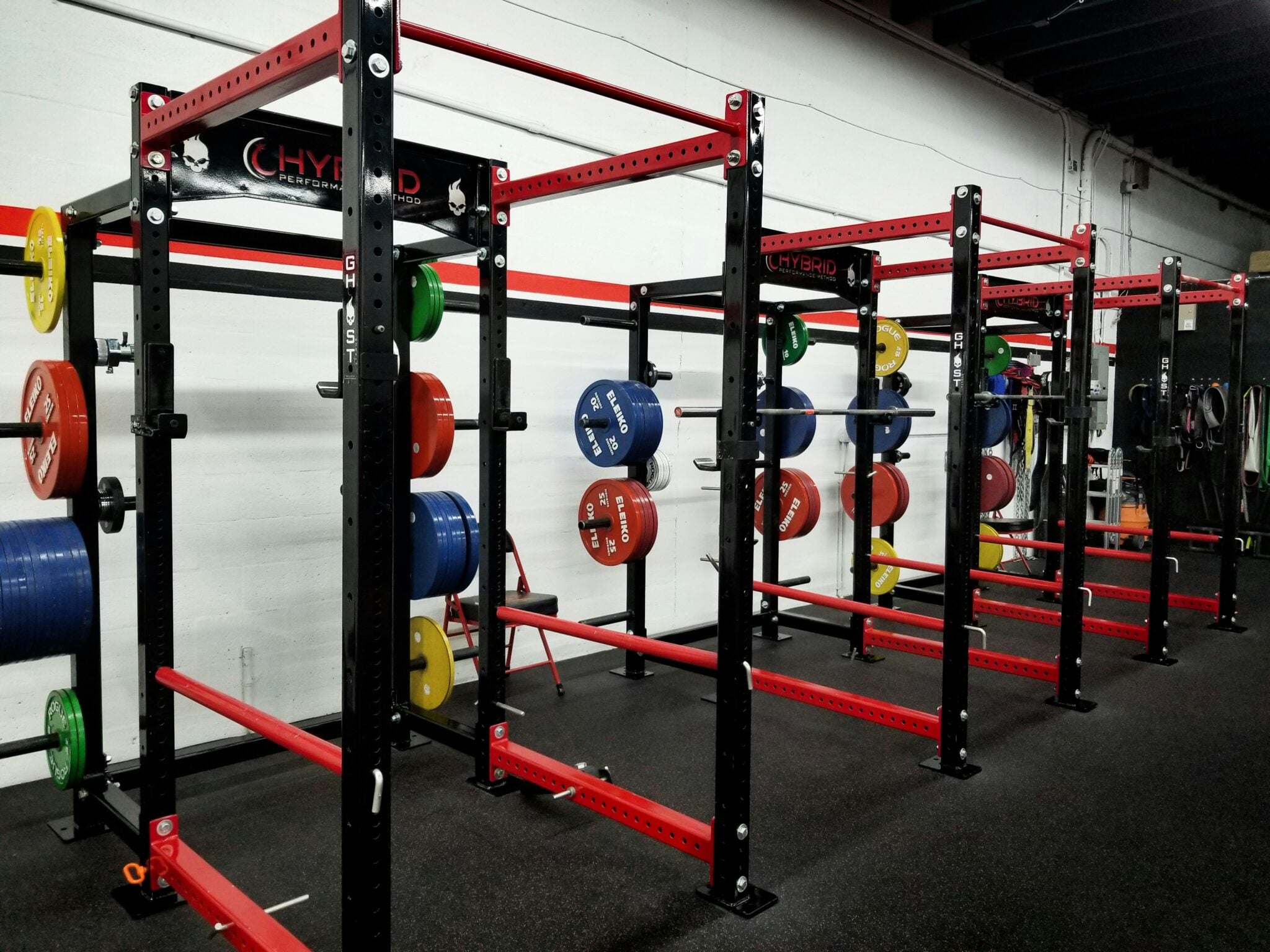

A club in its fourth year ordered six half racks to match twelve already bolted to its strength floor. The uprights arrived drilled on a one-inch hole pattern where the installed units used two-inch spacing, and the J-cups from the original order would not seat. Nothing was defective. An equipment model changeover had landed between the quote and the delivery.
- The failure shows up at the bolt hole, not on the invoice
- Working backward from the mismatch to the equipment model changeover
- The supersession letter almost nobody reads
- Six weeks earlier: the quote that named no revision
- What a part number actually promises
- An equipment model changeover scorecard for the quote stage
- The parts bin is where the cost actually lands
- Five moves that close the gap before the next order ships
- How senior buyers price the change risk
- Equipment model changeover questions buyers ask
- How do I find out which revision I already own?
- Can a supplier substitute a superseded model on an open order?
- Is a retrofit kit worth buying if nothing is broken?
- Where this leaves the next purchase order
The buyer held a purchase order, a countersigned quote and a clean bill of lading. None of the three named a revision level. The rack on the truck was the current production version of a model that had carried the same commercial name for nine years. The manufacturer considered the order filled. The club considered twelve racks orphaned.
The failure shows up at the bolt hole, not on the invoice
Changeovers rarely announce themselves through price. A superseded machine usually costs the same or slightly less, ships on the same lead time and carries the same warranty language. The break appears at the interface: a hole pattern, a pin diameter, a shroud footprint, a console harness plug, a roller seat. Those are the surfaces that have to match what is already on the floor.
Operators find out at install, with a crew on the clock. Distributors find out later, when a parts order returns a substitution notice.
Working backward from the mismatch to the equipment model changeover
Reverse the sequence and the decision points become visible. The install fails because the accessory does not fit. The accessory does not fit because the upright changed. The upright changed because the factory retooled. The retooling was announced in a dealer bulletin the buyer never saw, because the buyer purchases through a distributor with no obligation to forward them.
Nobody in that chain acted badly. An equipment model changeover is an ordinary manufacturing event, and a line that never changes is usually a line about to be discontinued. The difficulty is that the change travels through the channel faster than it travels through the paperwork.
The supersession letter almost nobody reads
Most manufacturers issue a supersession or engineering change notice. It names the outgoing part number, the incoming part number, an effective date or serial break, and whether the new part is backward compatible. The last field decides your install, and it is often written as compatible with existing installations without saying which.
Treat that sentence as a question. Compatible with units built before which serial number, and does compatibility cover the accessories or only the frame? An equipment model changeover that is compatible at the frame and incompatible at the attachment is the most common version of this trap, and it passes every paper check until a J-cup is in somebody’s hand.
Six weeks earlier: the quote that named no revision
Go back further and the decisive document is the quote. Most equipment quotes carry a model name, a finish code, an upholstery color and a quantity. Very few carry a revision letter, a drawing number or a serial-range commitment. The quote is the last point at which a buyer holds leverage, because it is the last point before money moves.
One added line changes the outcome: supplied units to match the hole pattern and accessory interface of the units on site, serials listed in Exhibit A. A supplier who will not accept that line has just disclosed that an equipment model changeover is under way, which is useful intelligence delivered at no cost. The same discipline that catches a bench with three numbers out of tolerance catches a revision break.
What a part number actually promises
A model name is a marketing asset and moves slowly. A part number is a manufacturing record and moves whenever the plant needs it to. The space between them is where mid-order substitution lives.
Distributors who stock deep feel it first. Inventory built against the outgoing revision becomes harder to pair with new sales, and an equipment model changeover can strand a pallet position of accessories that were perfectly saleable the week before. Category data points the same way at the top line: SFIA’s 2026 Manufacturers’ Sales by Category Report, published in March 2026, put 2025 wholesale sporting goods sales at $130 billion, up 3.7 percent, and noted institutional fitness equipment growing while parts of the consumer segment declined. Demand of that shape pulls factories toward retooling, not away from it.
An equipment model changeover scorecard for the quote stage
Run this against a quote before signature rather than against a delivery afterward. Every line is a question a supplier can answer in one sentence if the answer exists at all.
| Check | What to request | Acceptable answer | Escalate if |
|---|---|---|---|
| Revision level | Drawing or revision letter per line item | Letter stated on the quote | Current production with no letter |
| Serial break | Serial number where the change takes effect | A specific serial or build date | Sometime this quarter |
| Accessory fit | Written check against your installed serials | Named serial range confirmed | Frame-only compatibility |
| Hole pattern | Upright spacing in inches | Matches units already on site | Any change with no retrofit path |
| Console harness | Connector type and firmware baseline | Same plug and same baseline | New plug with no adapter offered |
| Parts overlap | How long outgoing parts stay stocked | Five years or more, in writing | No stated period at all |
| Retrofit kit | Price and lead time of the bridging kit | Quoted now, held 12 months | Available if needed |
| Price protection | Whether superseded pricing holds | Held to the purchase order date | Reprice on supersession |
The parts bin is where the cost actually lands
The purchase price of a changeover is usually zero. The ownership cost is not. A floor carrying two revisions needs two sets of wear parts, and the technician must identify which is which from a serial plate behind a shroud.
Distributors carry the mirror image. A parts desk that stocked one roller now stocks two, and an equipment model changeover quietly doubles a line item that was already slow-moving. The stocking arithmetic behind that sits in our note on the parts that stop machines rather than the parts that sell.
Five moves that close the gap before the next order ships
- Capture the installed base by serial. A model name is not an identity. Record serial, build date and accessory interface for every machine, the way a working asset register tracks a fleet through a recall.
- Put a revision line on every quote. One sentence binding the supplier to match the interface of named serials converts a future argument into a present negotiation.
- Ask for the supersession policy, not the notice. The notice arrives after the decision. The policy tells you how much warning the channel gives and who is responsible for passing it on.
- Price the retrofit kit at quote stage. A bridging kit quoted while you still hold the order is cheap. The same kit quoted at install is priced against your closed floor.
- Score change discipline at renewal. Suppliers who notify early should win points for it, which is what an annual supplier scorecard is for.
How senior buyers price the change risk
Experienced buyers do not try to stop changeovers. They price them. A line that supersedes every three years with a published retrofit path is a lower-risk line than one that has not changed in a decade and will change without warning. Certification status is part of that read as well: fitness product standards are maintained through ASTM Subcommittee F08.30 on Fitness Products, and a revised machine should still carry current test documentation, not documentation issued against the outgoing build.
The practical output is a tolerance, agreed internally before the order: the floor will accept an equipment model changeover on cardio, where interfaces are self-contained, and will not accept one on racks and attachment-driven strength, where the interface is shared across a dozen units.
Equipment model changeover questions buyers ask
How do I find out which revision I already own?
Read the serial plate, not the console. Send the serial numbers to the manufacturer’s technical desk and ask which drawing revision those units were built to. Most manufacturers will answer within a few days. Distributors can often pull the same record from their original order file, which is faster if the units were bought through one channel.
Can a supplier substitute a superseded model on an open order?
Usually yes, unless your purchase order says otherwise. Standard terms give the manufacturer the right to supply current production. The remedy is contractual rather than legal: name the revision on the order, or add an interface-match clause. Once the goods ship against a compliant order, the leverage is largely gone.
Is a retrofit kit worth buying if nothing is broken?
It depends on how shared the interface is. For a single machine, wait. For a rack row where one accessory set serves a dozen uprights, buying the bridging kit with the order is usually cheaper than buying it later at a service rate, and it keeps the floor on one spare parts list instead of two.
Where this leaves the next purchase order
The club with six mismatched racks eventually bought an adapter set and absorbed two days of closed floor. The cost was small. The lesson was that every document in the transaction described a model and none described a machine. An equipment model changeover will happen on any line worth buying. The only question worth settling in advance is whether your paperwork names the revision, or names the marketing.